

If you’re thinking about which art will hold or grow its value, you need to understand what the market actually rewards. This article does not claim to define universal laws, but rather outlines unwritten patterns I have gathered over time through conversations, research, and observation of where successful collectors tend to direct their attention.
Subject matter
Beautiful woman > elderly woman > anonymous man
Nude > clothed
Female nude > male nude
Calm water > turbulent water > shipwrecks
Figure > landscape > still life
Abstraction as stand-alone case
Purebred > mixed breeds
The single biggest driver of long-term appreciation, beyond the artist’s reputation, is what the painting depicts.
Portraits of beautiful women and children consistently outperform portraits of elderly subjects or anonymous men.
Nude figures tend to sell better than clothed ones. And female nudes, historically and still today, outperform male nudes by a significant margin.
Water is a fascinating case. Calm water adds value, think of how Monet’s Water Lilies series has performed. Turbulent water tends to reduce value. Shipwrecks reduce it further.
Figurative works outperform landscapes, and landscapes outperform still lifes. Within still lifes, however, flowers outperform fruit, and there is an entire sub-hierarchy of floral desirability.
Abstraction is a peculiar case: when produced by certain artists, it can reach extraordinary price levels. Yet figurative imagery attracts a broader collector base, including less specialised buyers. Abstract works, by contrast, often require a more educated and historically aware audience, which can reduce the pool of potential buyers at any given time.
Animal subjects follow a fairly strict hierarchy. Purebred dogs sell better than mixed breeds. Horses associated with nobility or sport outperform working horses. Among birds, hunting scenes command the highest prices.

Color
Red > white > blue > yellow > green > black
Bright, saturated > muted, opaque
Primary palette > tertiary palette
Color follows a surprisingly consistent market logic.
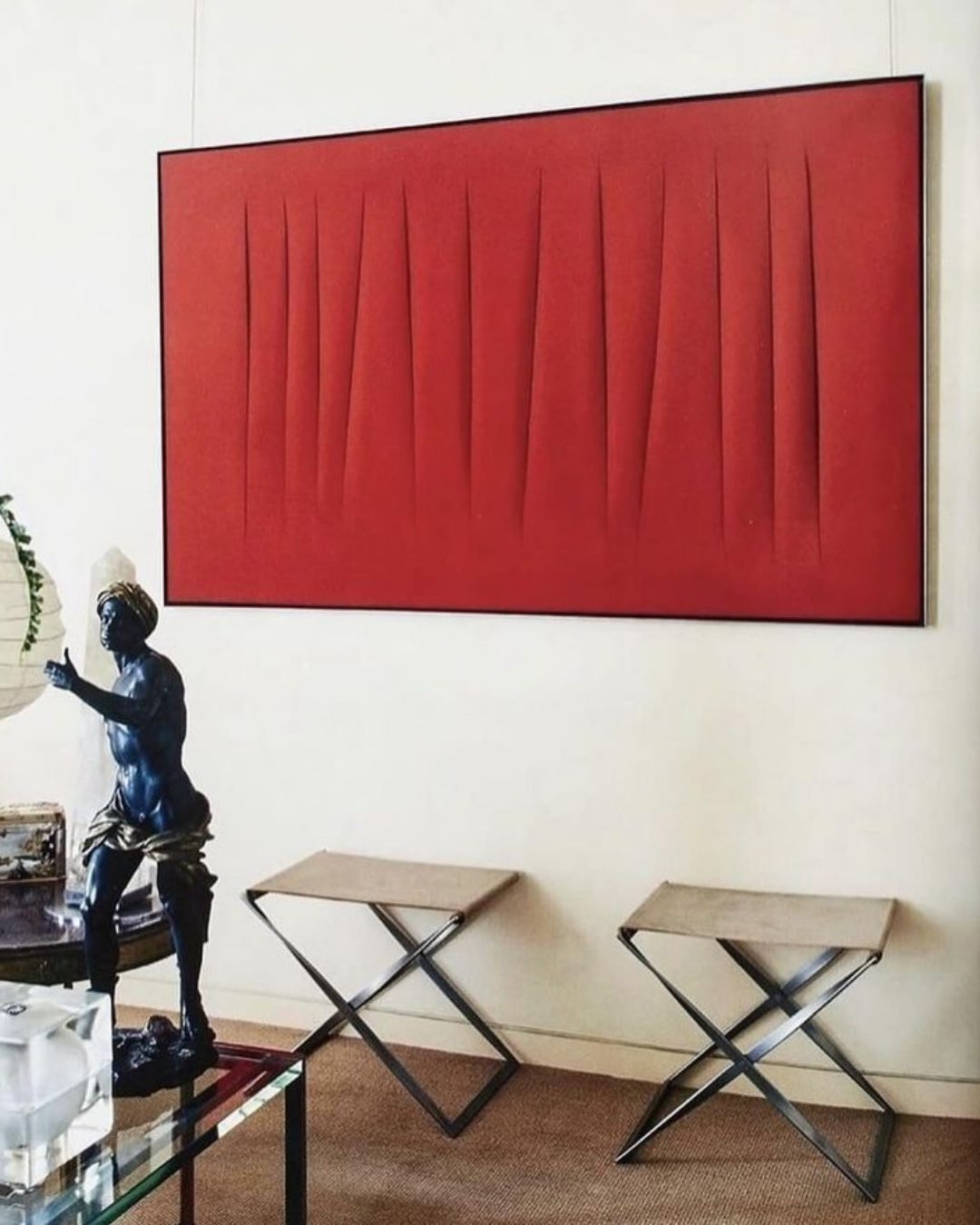
Bright, saturated hues outperform muddy or muted ones. When two works by the same artist are otherwise equal, the warmer and brighter one will typically command a premium. Works dominated by violet, brown, or grey tend to struggle unless they are the artist’s unmistakable signature, as in the case of the deep blue developed by Yves Klein.
Brett Gorvy, International Head of Post-War and Contemporary Art at Christie's, articulated a descending order of market-friendly colors: red, white, blue, yellow, green, black. There is one famous exception worth noting: for Warhol, green performs exceptionally well because green is the color of money, as economist Donald Thompson expressed in his book The $12 Million Stuffed Shark: The Curious Economics of Contemporary Art.
Format and Orientation
Horizontal > vertical
Square = strong in contemporary
Mid-size > very large (in terms of liquidity)
Horizontal canvases sell better than vertical ones. They integrate more easily into domestic and corporate interiors, and they read more naturally in large-scale contemporary living spaces.
Square formats have gained considerable prestige in the contemporary market, particularly for works by living artists.
Size matters, but in a nuanced way. Larger works command higher prices in absolute terms, but they are less liquid: the pool of buyers shrinks with the dimensions. Mid-size works are consistently the most tradeable over time.
Obscenity and Transgression
Decency > Obscenity (for most artists)
Transgression = brand (for a handful of superstars)
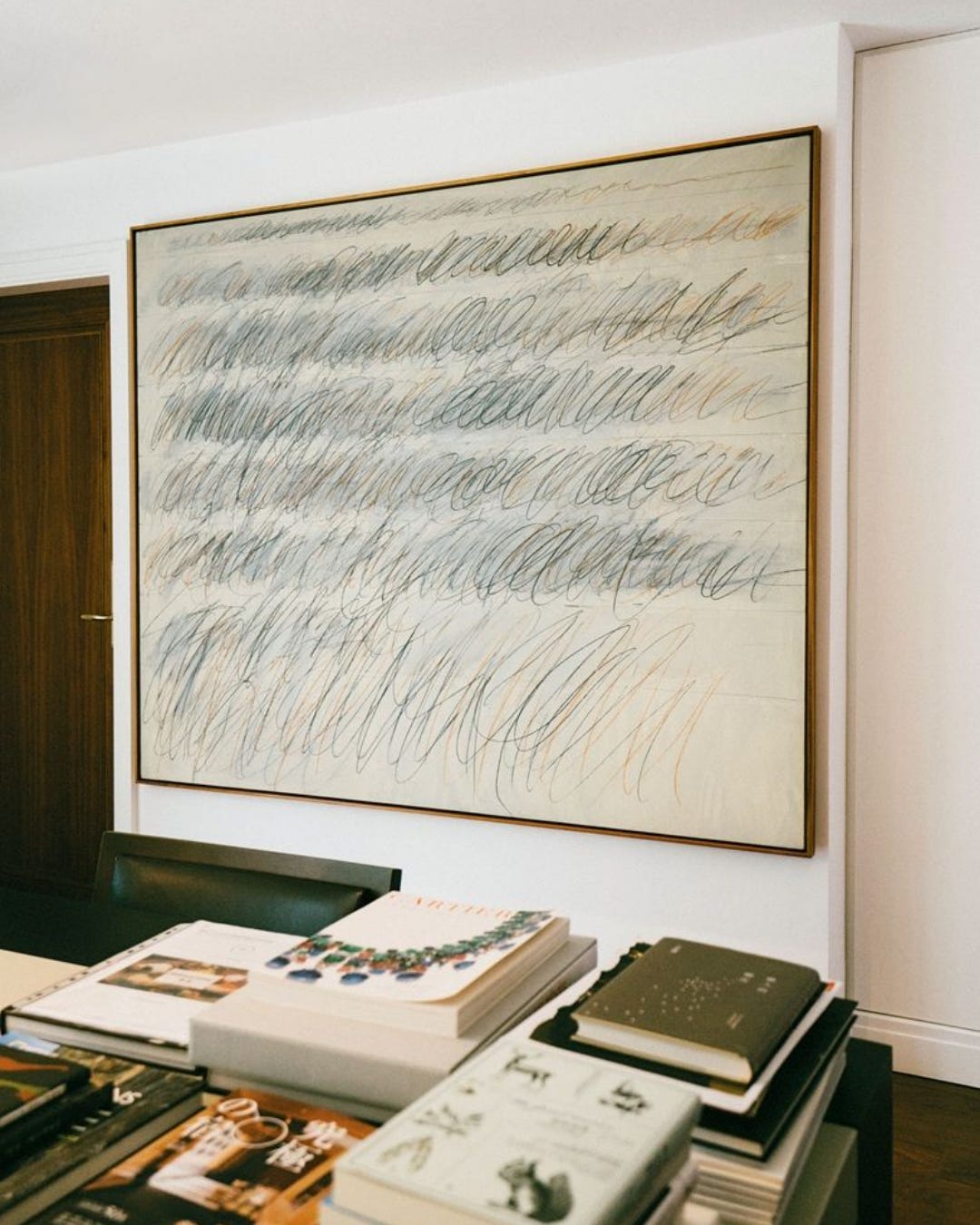
The market generally does not reward shock for its own sake.
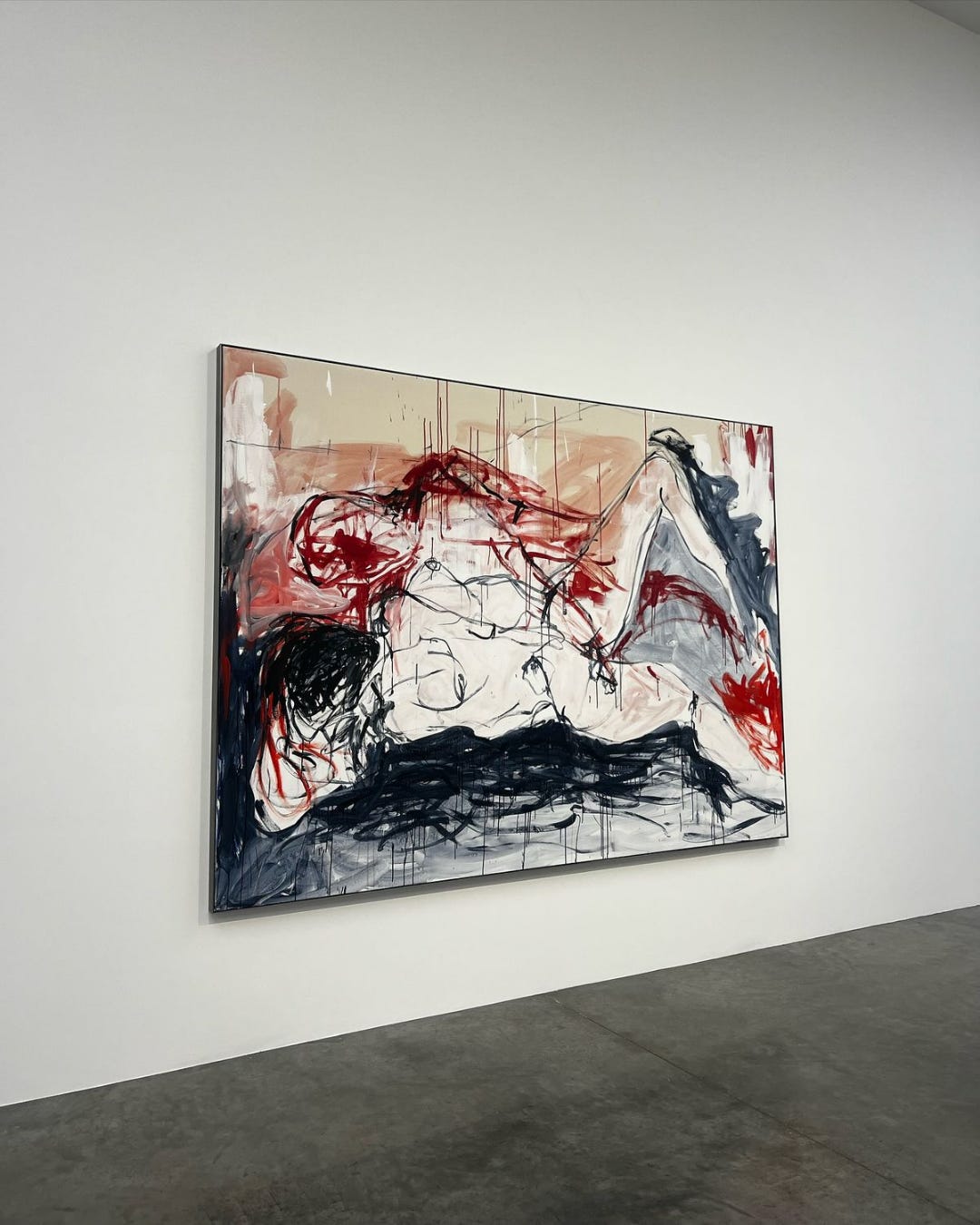
Controversial content complicates institutional loans, insurance, and resale. But for certain artists whose entire market identity is built around provocation, obscenity amplifies rather than diminishes demand. This is a privilege of dominant market position, not a general strategy.
Provenance and Period
Exhibited, catalogued > never shown publicly, undocumented
Signed on front > signed on back
Mature period > early or experimental work
Recognizable work > one-off
Beyond what a work depicts and how it looks, its history matters enormously.
Institutional exhibition history, catalogue documentation, and distinguished prior ownership all add measurable value.
Works signed on the front generally trade more easily, all else being equal.
Within an artist’s career, the mature phase, when the signature style is most fully formed, usually commands the highest prices.
A work that looks immediately and unmistakably like that artist will almost always outperform experimental detours, even when the latter may be artistically more interesting as the market rewards legibility.
A Final Note
Everything above describes tendencies, not certainties. Works that go against every observation listed here can achieve extraordinary results if the artist, the moment, and the collector chemistry align. What these patterns offer is a baseline: an understanding of what the market tends to reward when all else is equal.
Thanks for reading ! Subscribe to my newsletter for more and follow along on Instagram 💋
This was sooo interesting !!