

I. THE WORD AND ITS WORLD
In 1528, Baldassare Castiglione published Il Libro del Cortegiano (The Book of the Courtier), a manual for navigating the refined and highly codified world of Renaissance courts. In it, he describes an essential quality that the perfect courtier must possess: a certain nonchalance, a cultivated ease that conceals the labor behind every gesture, every word, every display of talent.
Its root, sprezzare, means to despise or disregard. To practice sprezzatura is to perform a kind of visible indifference toward the very mastery you are displaying.
“Avoid affectation in every way possible. Practice in all things a certain sprezzatura, so as to conceal all art and make whatever one does appear to be without effort.”
— Baldassare Castiglione, Il Libro del Cortegiano, 1528

II. WHERE VALUE CANNOT BE MEASURED, BEHAVIOUR BECOMES THE PROOF
Most industries rely on one thing: the number. Revenue, yield, occupancy rate, return on equity. The art world, like luxury, like certain corners of architecture and high-end advisory, does not. The question of what something is worth cannot be answered by pointing at a spreadsheet. It can only be answered by pointing at the people who have decided it is worth something.
This is the structural condition that makes sprezzatura not merely attractive in these fields, but functionally necessary. When there is no formula for value, the people who appear most comfortable with ambiguity become the de facto arbiters of it. Confidence in the absence of certainty is, in itself, a credential. And the particular form that confidence takes, unhurried, underdressed, unimpressed, is exactly what Castiglione meant.
The psychological mechanism is precise: in a market without objective pricing, the person who most visibly needs to transact is the one who loses the most in the transaction. Desire becomes a liability. And so the learned behavior is the management of visible desire, not its elimination, because total indifference reads as ignorance, but its careful rationing. You signal that you see the value. You do not signal that you need it.
III. WHY IT WORKS: THE PSYCHOLOGY
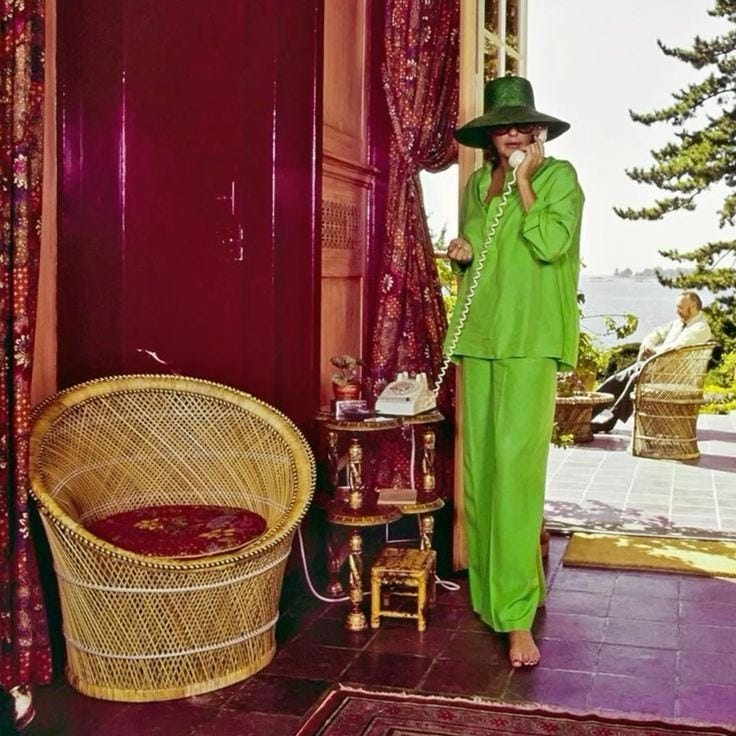
Effortlessness signals surplus. When we perceive that someone is not straining, we unconsciously register that they possess more resources than the current task requires: time, experience, social capital, financial cushion. Surplus, in social and economic terms, is one of the clearest markers of power.
Humans are acutely sensitive to signals of effort and need. When something, or someone, appears to strive too visibly, it introduces a subtle asymmetry, suggesting that value must be argued for rather than assumed. Sprezzatura, by contrast, removes the visible traces of striving and, in doing so, shifts perception.
Scarcity of desire creates desire. This is not manipulation, or rather, it is, in the same way that all social behavior involves some choreography of impression. What distinguishes sprezzatura from mere pretension is that the underlying competence is real. The effortlessness is performed; the mastery is not.

IV. THE PARADOX OF EFFORT
Here is the central irony: sprezzatura requires enormous effort to maintain. In Castiglione’s time, it required discipline, practice, and a deep internalization of the codes one was expected to navigate. Today, it demands a similar foundation. The ability to appear effortless in high-stakes environments is often built on a significant accumulation of competence, taste, and experience. Without this underlying substance, attempts at sprezzatura risk reading as an emptiness disguised as ease.
In business, the most effective practitioners share a specific quality: they are intensely deliberate in private and entirely relaxed in public. Sprezzatura is therefore an enduring strategy for operating within systems where perception, discretion, and symbolic capital matter as much as explicit declarations of value. In a cultural moment defined by overexposure and constant articulation, that restraint becomes not only elegant, but powerful.
Advice in this regard is inherently tricky. You cannot learn sprezzatura from an article about sprezzatura. The awareness that you are practicing it undermines the practice itself. What you can do is something slower and less glamorous: accumulate genuine competence, reduce your attachment to specific outcomes, and cultivate the patience of someone who has seen how most things unfold.
Thanks for reading ! Subscribe to my newsletter for more and follow along on Instagram 💋