

Some rooms ask to be seen the moment you enter. They are designed to be noticed and demand constant attention. Rooms that hold take a different approach. They receive you first, and only later reveal themselves, allowing a sense of ease to settle in almost before you realise it has.
Members clubs, hotels, restaurants, and concept stores that manage to create this kind of environment often share a quiet intelligence. They understand how atmosphere is built over time, and how art can support that process not by competing for attention within other elements, but by anchoring a space and reinforcing brand’s cultural identity.
In this first article I will touch upon:
why many contemporary spaces exhaust us
the role art and time play in environments that hold
how these rooms influence behavior, often to a brand’s advantage
Why many contemporary spaces exhaust us
The majority of contemporary spaces fail not because they lack taste, but because they try too hard to articulate it. The room asks something from you — to look, to react, to understand — and in doing so, creates a low but constant tension. You are never fully at ease, because the space is asking for a response and curation feels insistent. When everything tries to speak at once, attention fragments, and the room becomes restless. This is often where excessive statement art fails in lived spaces. The issue is rarely the quality of the art itself. Art has an extraordinary capacity to shape atmosphere, it can amplify intimacy, authority, reflection, even discomfort but only when it is placed with an understanding of the room’s emotional economy. It is a matter of choosing where attention should be directed: toward people, conversations, objects, music, or simply the passing of time.
Consider the example of a restaurant, in spaces with poor emotional economy, every wall carries bold statement art, lighting is aggressive throughout, and multiple focal points compete at once. Music and visuals fight for attention, leaving guests subtly overstimulated. Conversations fragment, eyes wander around the room instead of meeting across the table, and the space exhausts rather than holds.
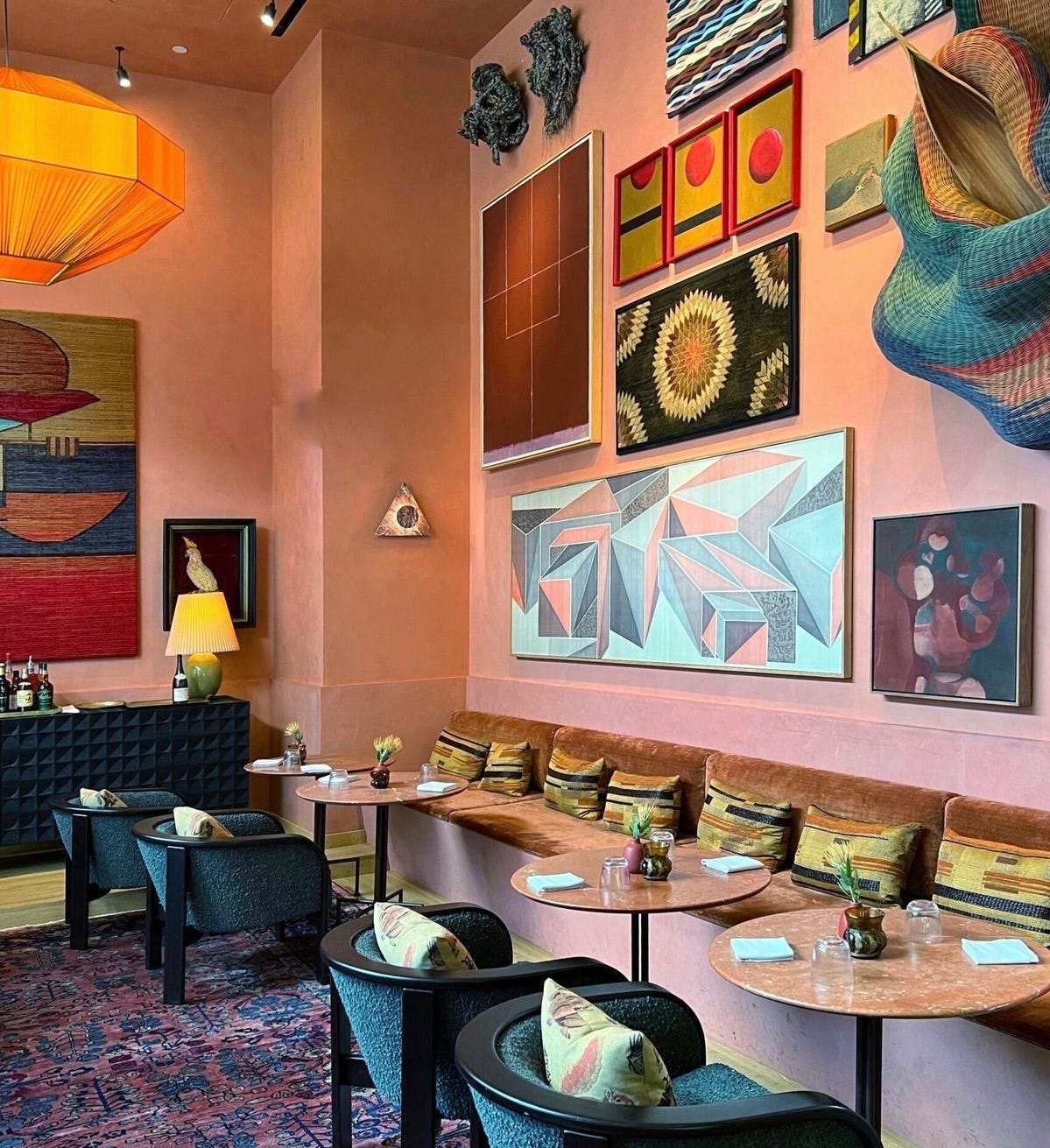
On the other hand in places with strong emotional economy, the experience is shaped more deliberately. Attention is anchored in one place, large areas are left visually calm, and art is positioned where it supports the room instead of competing within it. Lighting guides focus rather than dispersing it. In these spaces, attention settles naturally, people look at each other, conversations deepen and time stretches without effort.
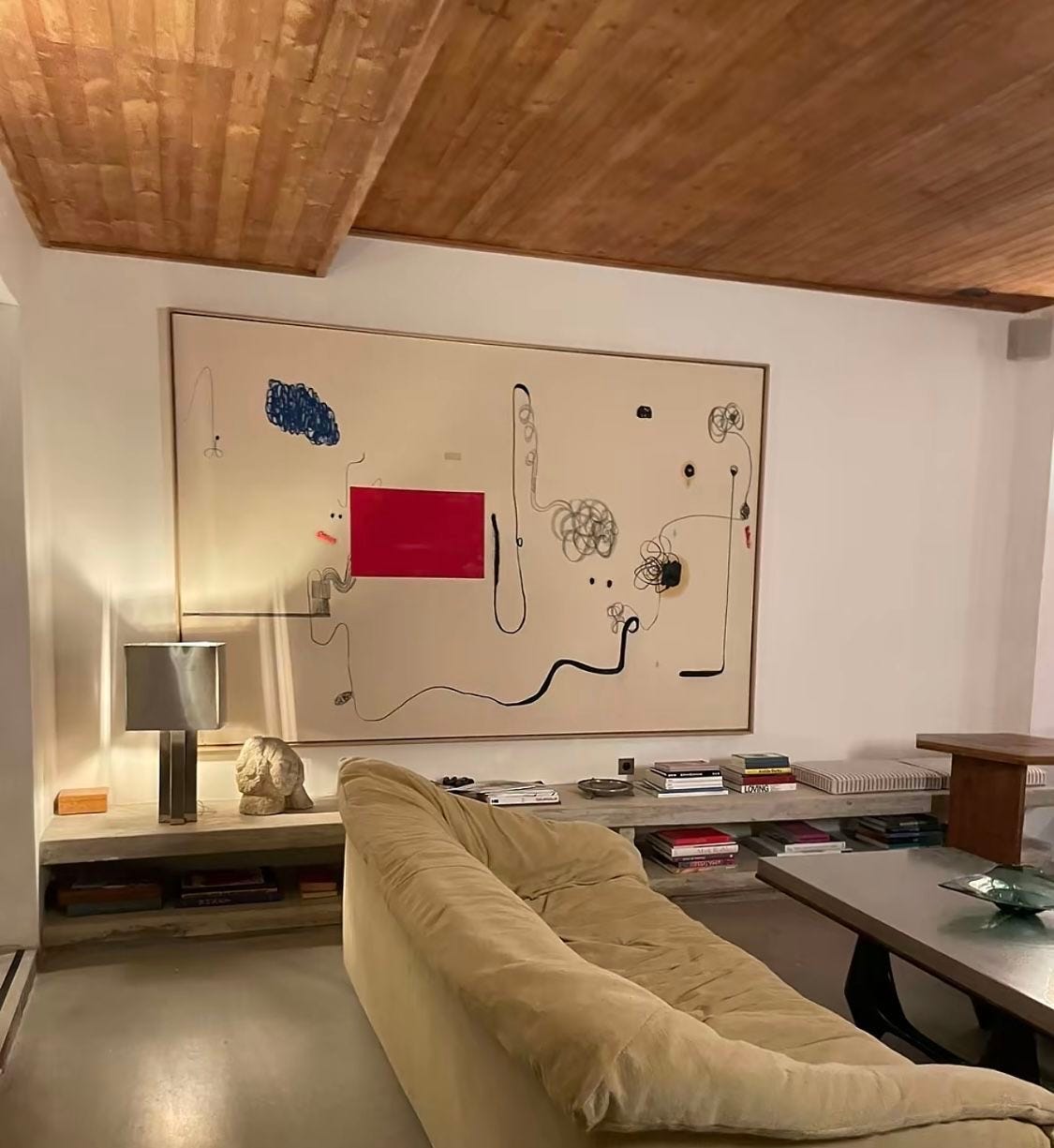
The role of art and time in rooms that hold
What has always struck me is how rare these spaces are to encounter. They are not necessarily expensive or inaccessible (even though many times they happen to be), what distinguish them is their unwillingness to hurry perception. Much like in life, places that do not feel the need to perform often feel the most authentic drawing people in without insistence. These tend to be those “if you know, you know” environments, whose reputation is built through repetition, memory, and word of mouth. By contrast, spaces that rush to attract attention rely on loud external cues that may generate short-term interest but rarely align with a brand’s identity in the long run. Instead of coherence, they compete for visibility.
Art in rooms that hold behaves differently. It settles into the space with the quiet authority of structure. Like architecture, it gives the room weight and continuity therefore its role is not to impress, but to anchor. Time is the invisible material that reveals this. On a first visit, it may feel simply interesting. On the tenth, it makes perfect sense. The true coherence unfolds slowly and inevitably over time.
How these rooms influence behavior, often to a brand’s advantage
The consequence of this on human behavior is interesting to notice. In a culture increasingly shaped by visibility and speed, rooms that hold teach us how to simply be. Gestures soften. Conversations linger. Silences feel natural rather than awkward. Voices lower. Behavior adjusts almost unconsciously. They model a slower, more grounded way of occupying space that benefits not only the people inside them, but also the brands and institutions behind them. Ease builds trust. Trust builds loyalty. Loyalty, over time, becomes cultural value.
Thank you for reading my first article! For more art related content find me on Instagram 💋
"Emotional economy" is the phrase I didn't know I needed for something I've felt in every room that worked and couldn't explain why. The distinction is razor sharp: spaces that exhaust because they demand a response vs. spaces that hold because they don't. And art as anchor rather than spectacle that reframes the entire conversation about curation. Curious where you'll take this: do you have specific rooms in mind that nail this? I'd love to see the theory meet a real address.