

Los Angeles’ most successful spots have mastered the art of appearing effortless. Casual, unbothered, almost accidental and yet very little is left to chance.
What distinguishes them is the accumulation of stories, habits, and repeated gestures that give a place weight beyond its physical appearance. Art plays different roles in each context: anchoring, receding, or rotating depending on what the space is meant to hold.
In this article I touch upon 3 venues I spent time in during my recent stay in LA:
What Chateau Marmont understands about silence
Craig’s on the mastery of familiarity
Galerie On Sunset and the construction of atmosphere over time
What Chateau Marmont understands about silence
Chateau Marmont does not explain itself. It never has. Its power lies precisely in what it withholds.
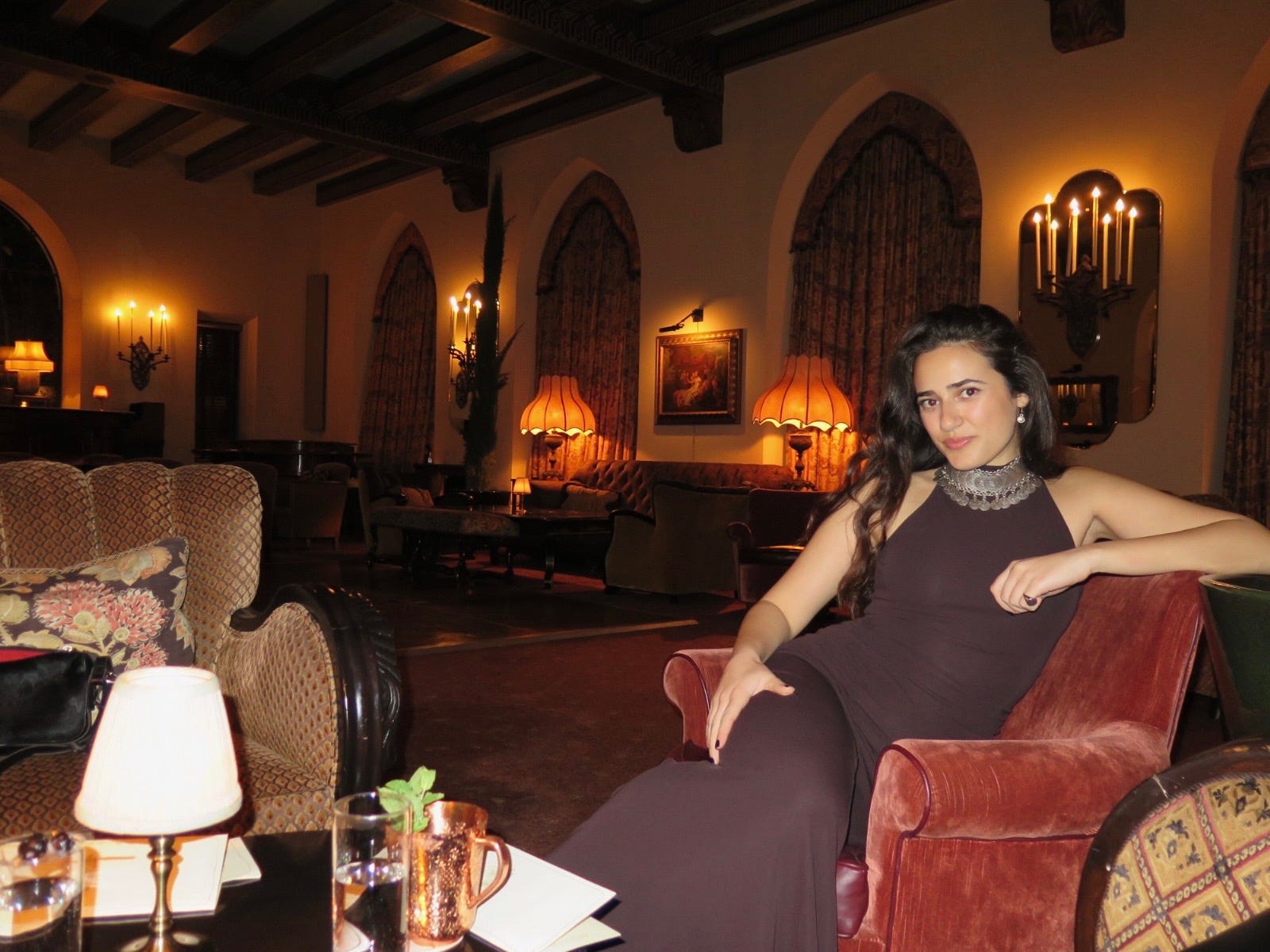
The interiors are not overly articulate. Art is present, but never declarative. There are no moments that insist on interpretation, no works that demand attention. Instead, the space relies on silence as a form of authority.
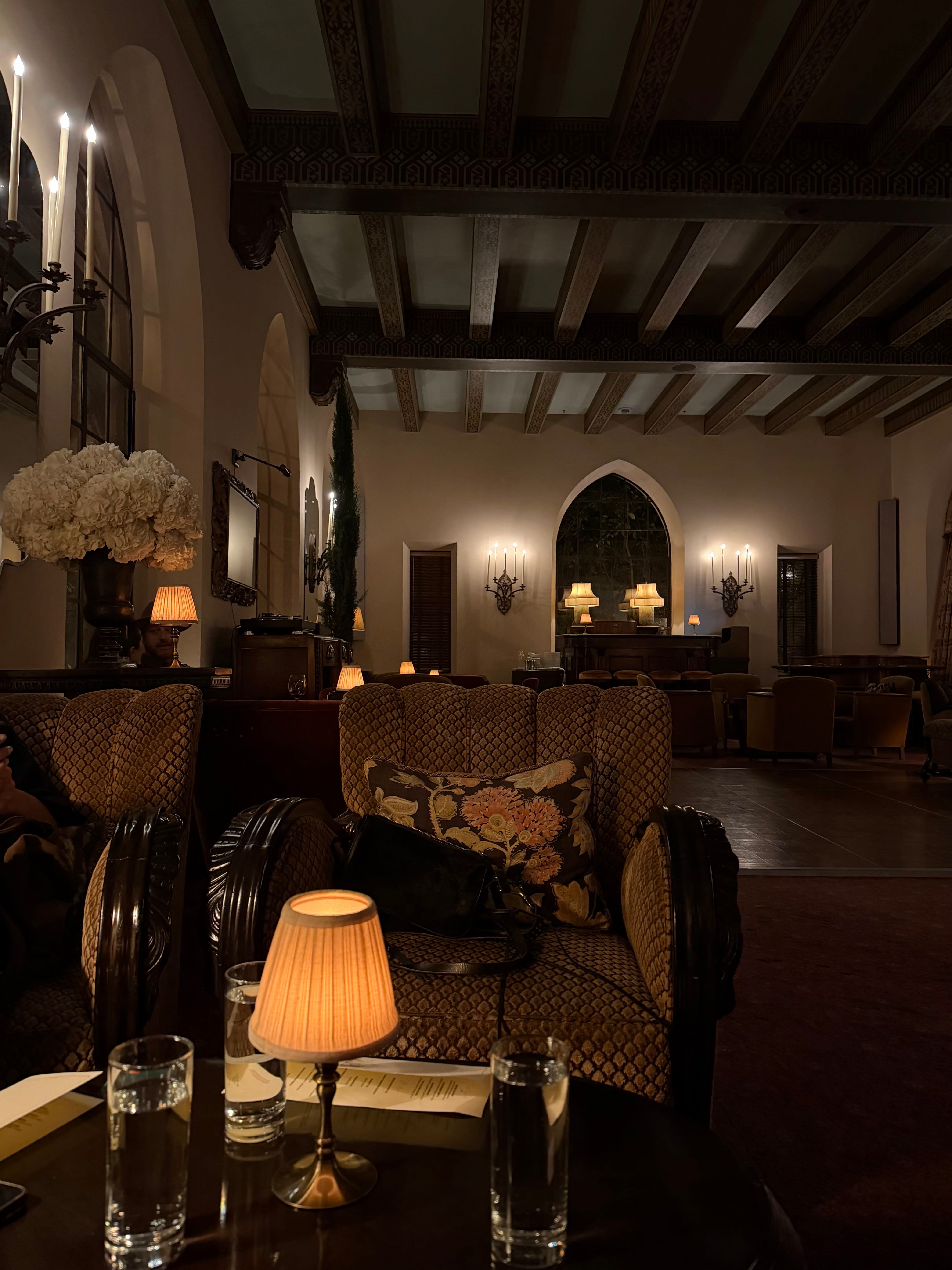
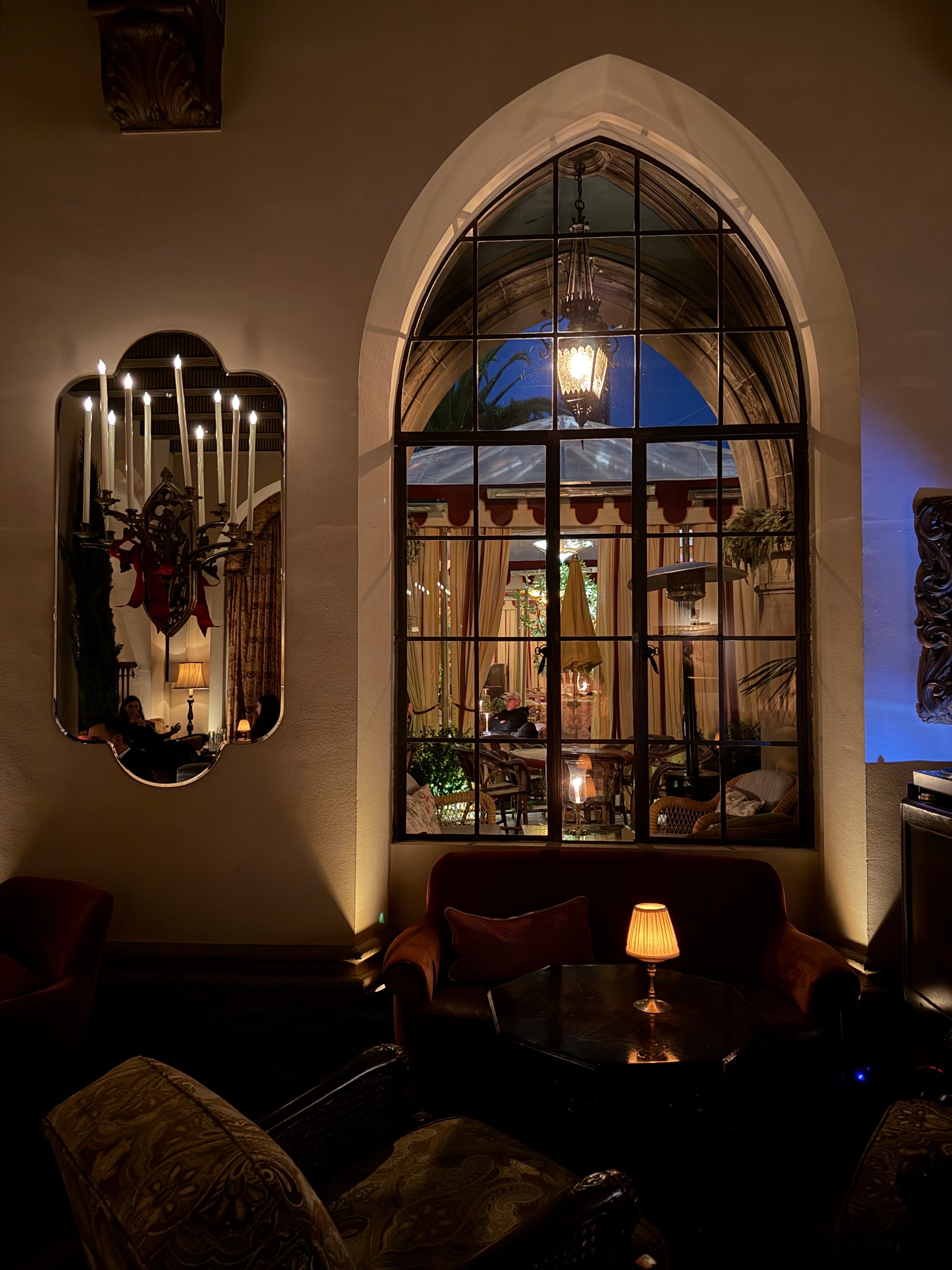
This absence of explanation is deliberate. The hotel does not need to assert relevance through overly performative design choices, and because the space does not rush to define itself, people project meaning onto it. Over time, this quietly assumed confidence becomes self-reinforcing. Here, art behaves as background structure rather than a focal point. It stabilizes the atmosphere, quietly supporting a narrative built through repetition, privacy, and memory. The room holds because it leaves room, and the result is a place that feels inhabited rather than staged.
Craig’s on the mastery of familiarity
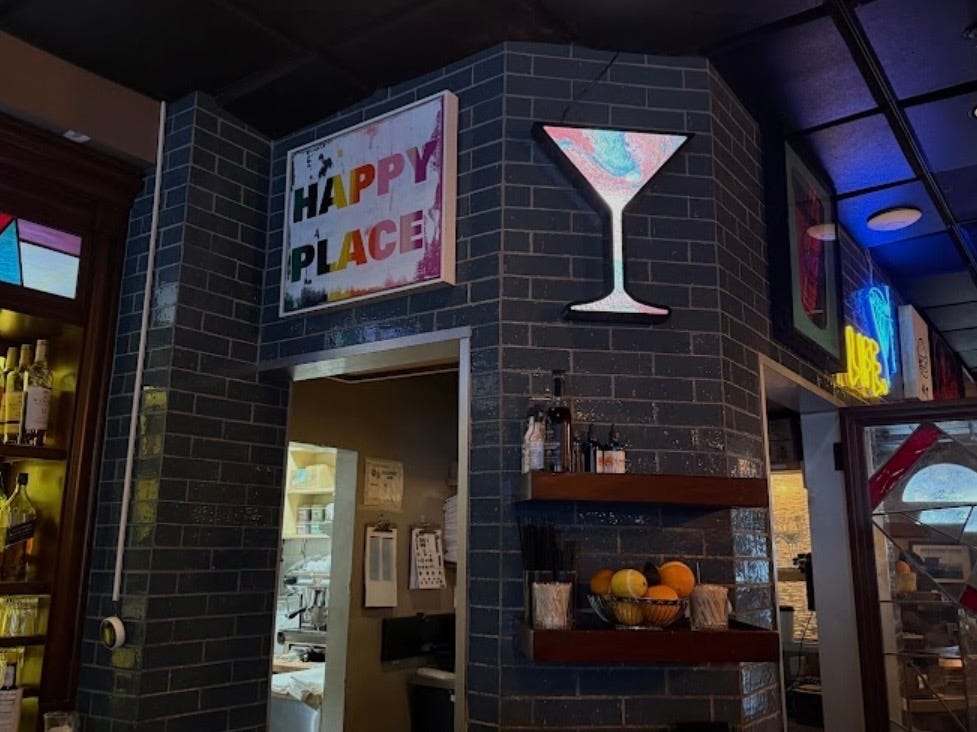
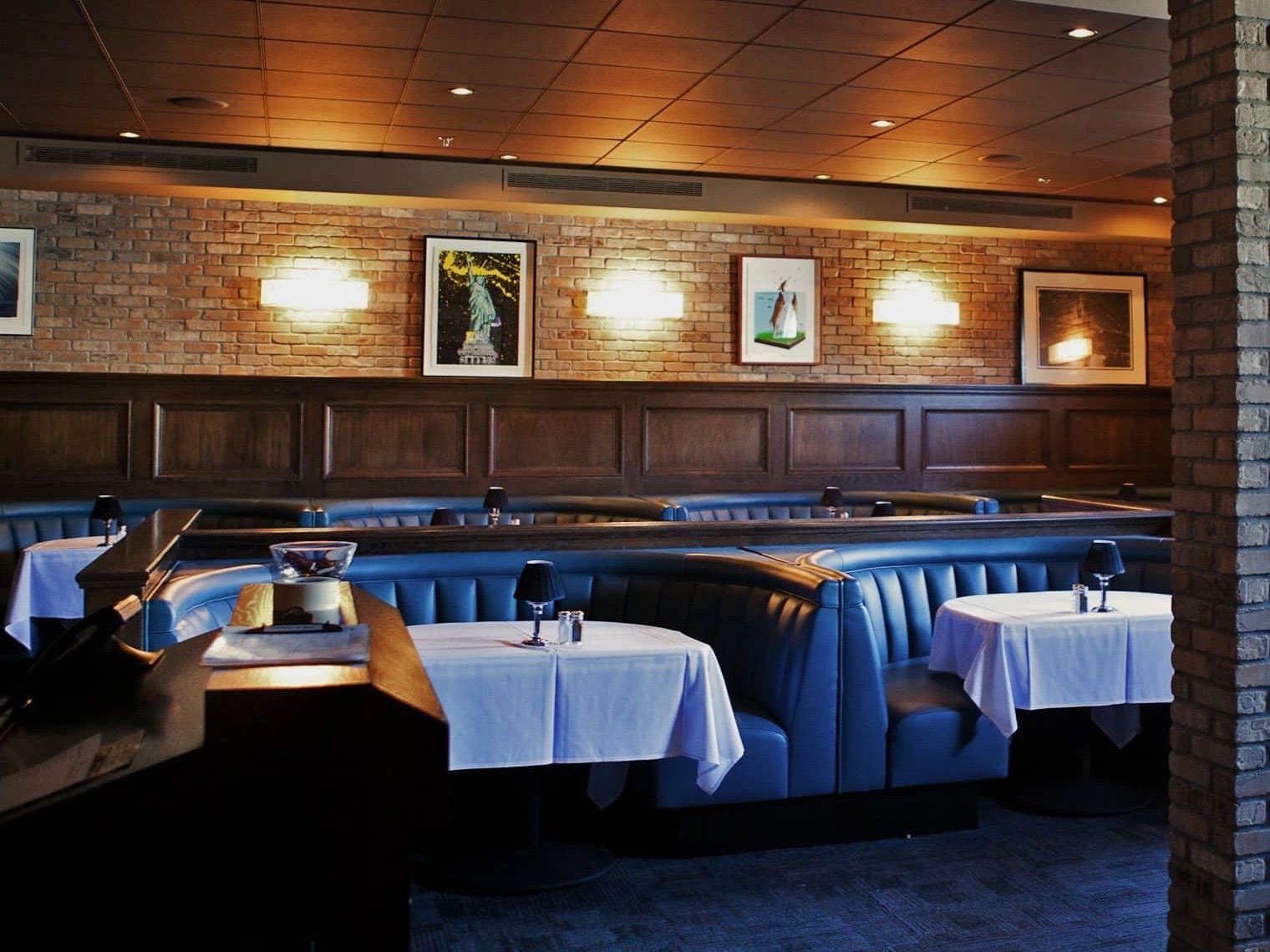
Craig’s operates on a different logic, and socially, it does so extremely well. What keeps people returning is not aesthetic coherence in the traditional sense, but familiarity. Craig’s works because it understands social choreography. It knows how to sustain habit and create belonging.
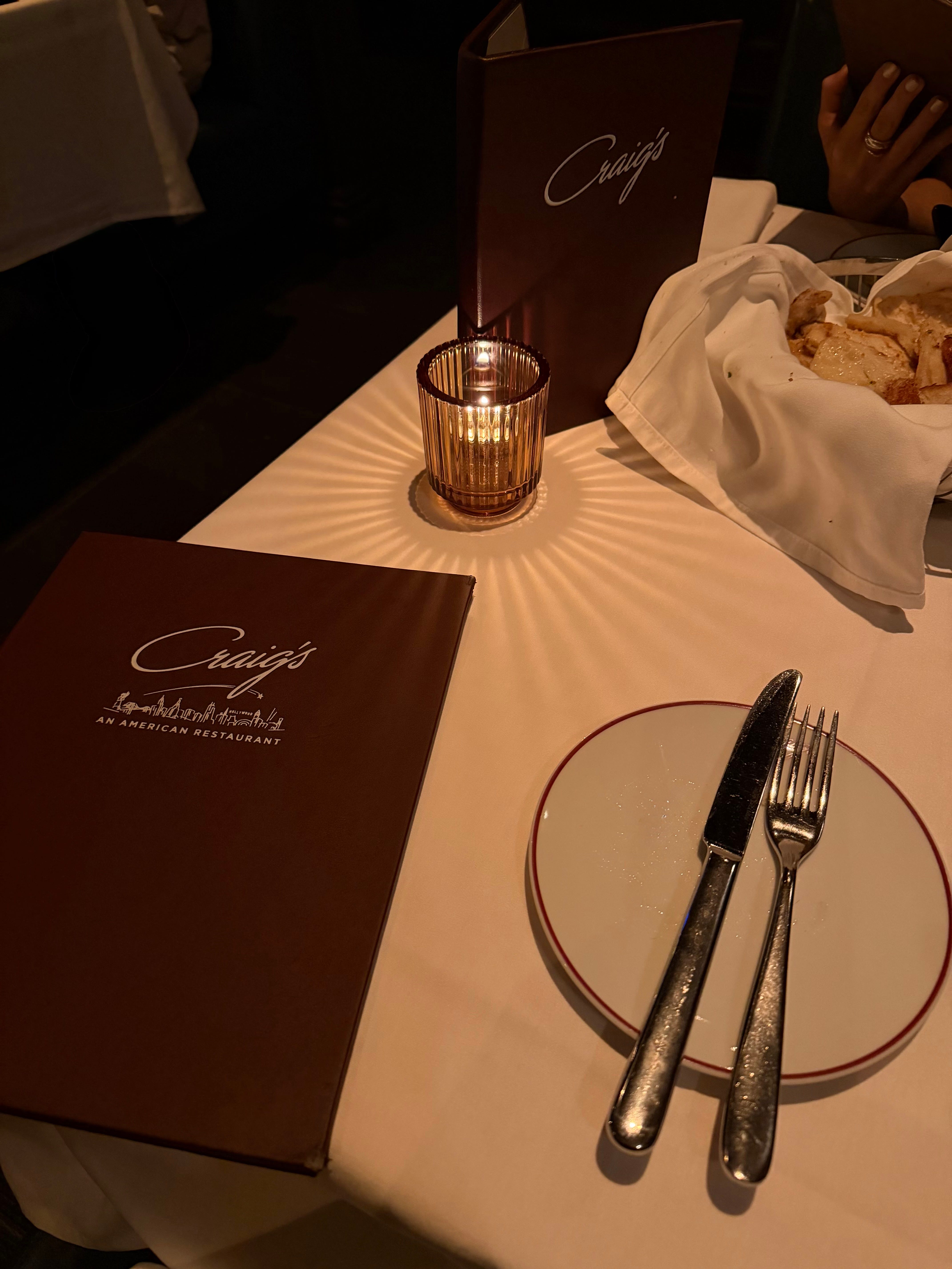
The art, however, does not carry the same intelligence. Its presence feels random, almost incidental, and at times disconnected from the atmosphere the space is otherwise so good at producing. Unlike Chateau Marmont, where art quietly supports the narrative, here it neither anchors the room nor adds meaning to it. Social consistency sustains the room’s success despite the lack of visual cohesion. Over time, that familiarity becomes its aesthetic, yet I believe a more deliberate, understated curatorial choice could quietly elevate the space further.
Galerie On Sunset and the construction of atmosphere over time
I went to Galerie On Sunset for a party, just across the street from Chateau Marmont and close to the Are We On Air? kiosk-othèque, a location that immediately places it within a very specific cultural radius.
The room pays homage to Old Hollywood, drawing on the Glam Rock era of the 1970s, with Carlo Scarpa–inspired sofas alongside cantilevered rattan chairs, while artworks and a deep-walnut DJ booth anchor the space.
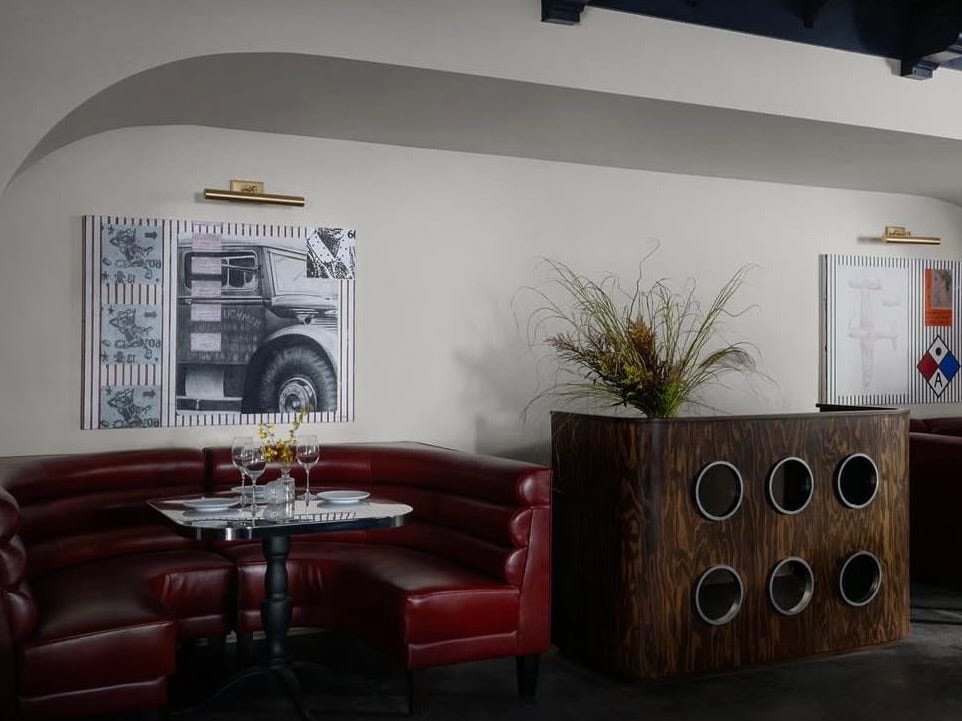
Galerie On Sunset is conceived as a late-night hangout and dining spot which also hosts regular DJs, jazz nights, and rotating art exhibitions curated by Tyler Santangelo of ALLGORITHIM, expanding how and where art is experienced. The works displayed were by Los Angeles–based artist Samual Elliot Phillips, whose collaged compositions draw on archival imagery, print culture, and fragments of text. His pieces introduce a visual counterbalance, which works because they bring a sense of lightness and graphic clarity to the room’s heavier materials.
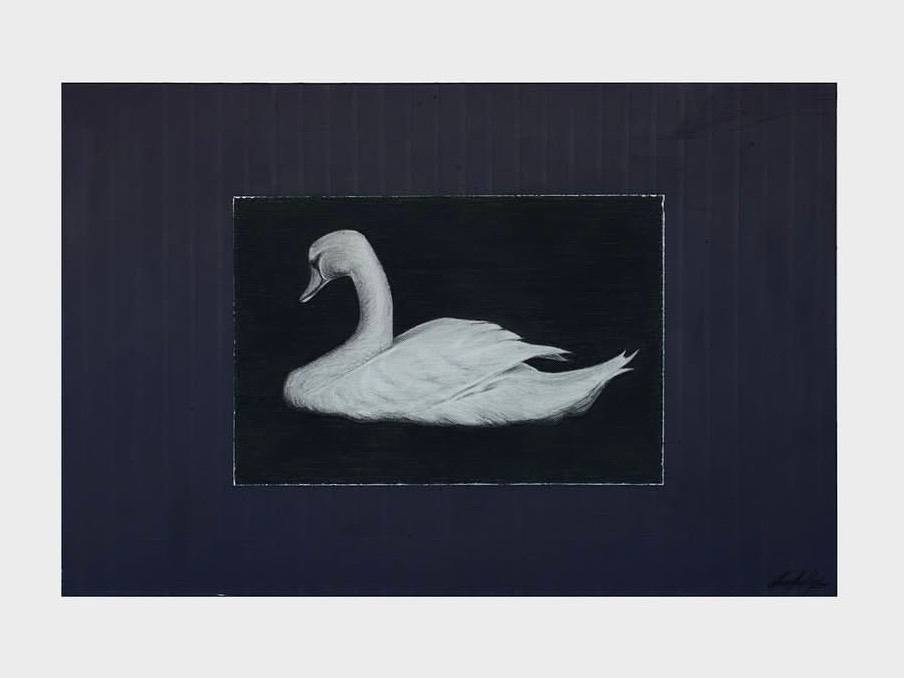
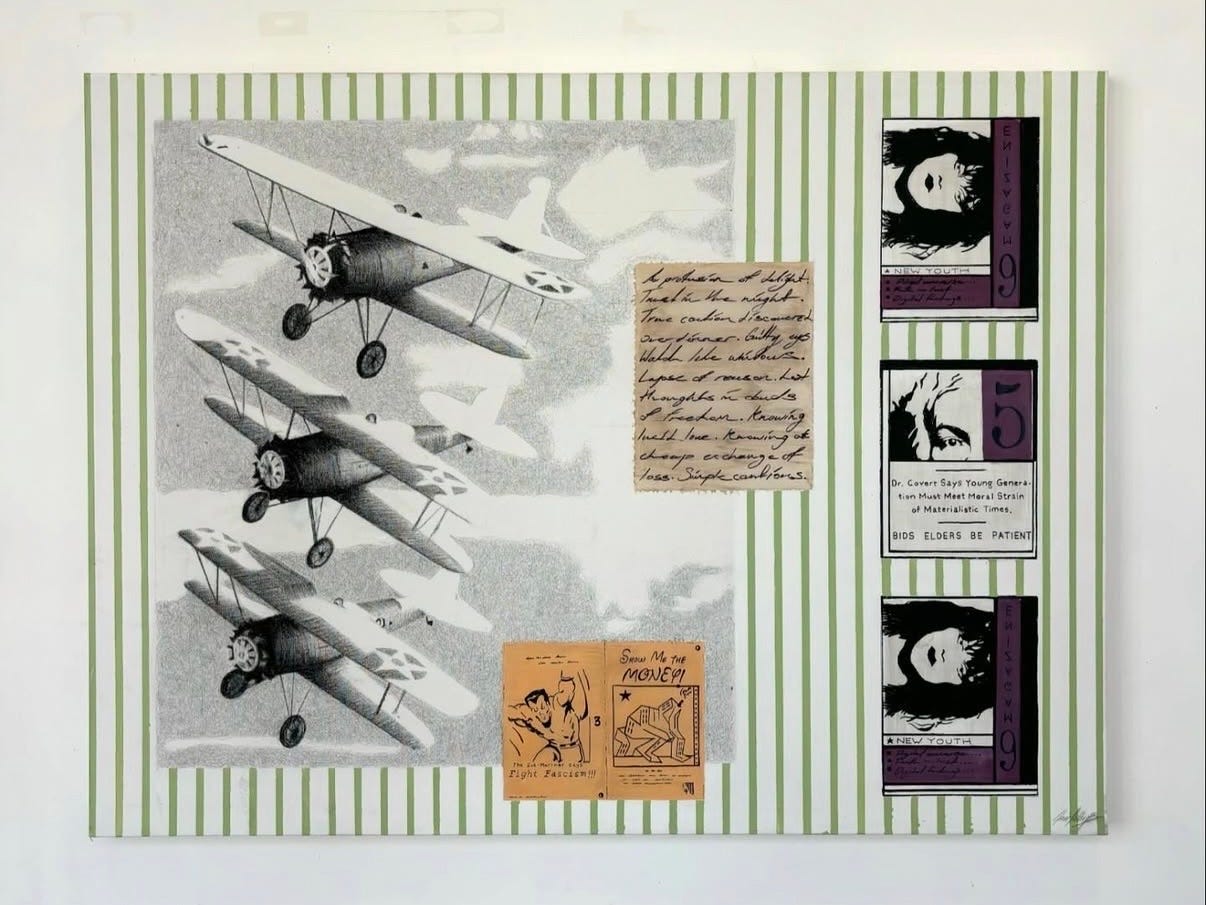
What Galerie On Sunset seems to understand is that new spaces cannot fabricate a social narrative, they can only prepare the ground for one. In fact, the space doesn’t impose its identity rigidly. Here, art, music, furniture, and light are aligned toward the same mood. Over time, repetition may do the rest.
Thanks for reading ! Subscribe to my newsletter for more and follow along on Instagram 💋