

We tend to think of art through the lens of individuality, originality, and authorship, often assuming that the value of a work is intrinsically tied to the physical act of its making, to the idea that the artist’s hand must be directly and materially present in order for the work to be considered authentic. This assumption begins to feel far less stable when placed in a broader historical perspective.
Indeed, much of the concern that surrounds copying, imitation, and delegation in the art world seems to rely on the figure of the artist as a solitary genius, singularly responsible for both the conception and the execution of the work. While this figure has become central to how we evaluate artistic legitimacy, it does not accurately reflect how art has been produced for most of its history.
If one considers the structure of Renaissance workshops, the distance between our current expectations and historical reality becomes immediately apparent. Artists such as Leonardo da Vinci did not operate in isolation, but rather within highly organized studios in which apprentices and assistants played an essential role, not only in learning the craft but also in actively contributing to the production of works that would ultimately bear the master’s name. These workshops functioned as sites of transmission, replication, and refinement, where copying was not only accepted but actively encouraged as a primary mode of training and dissemination.
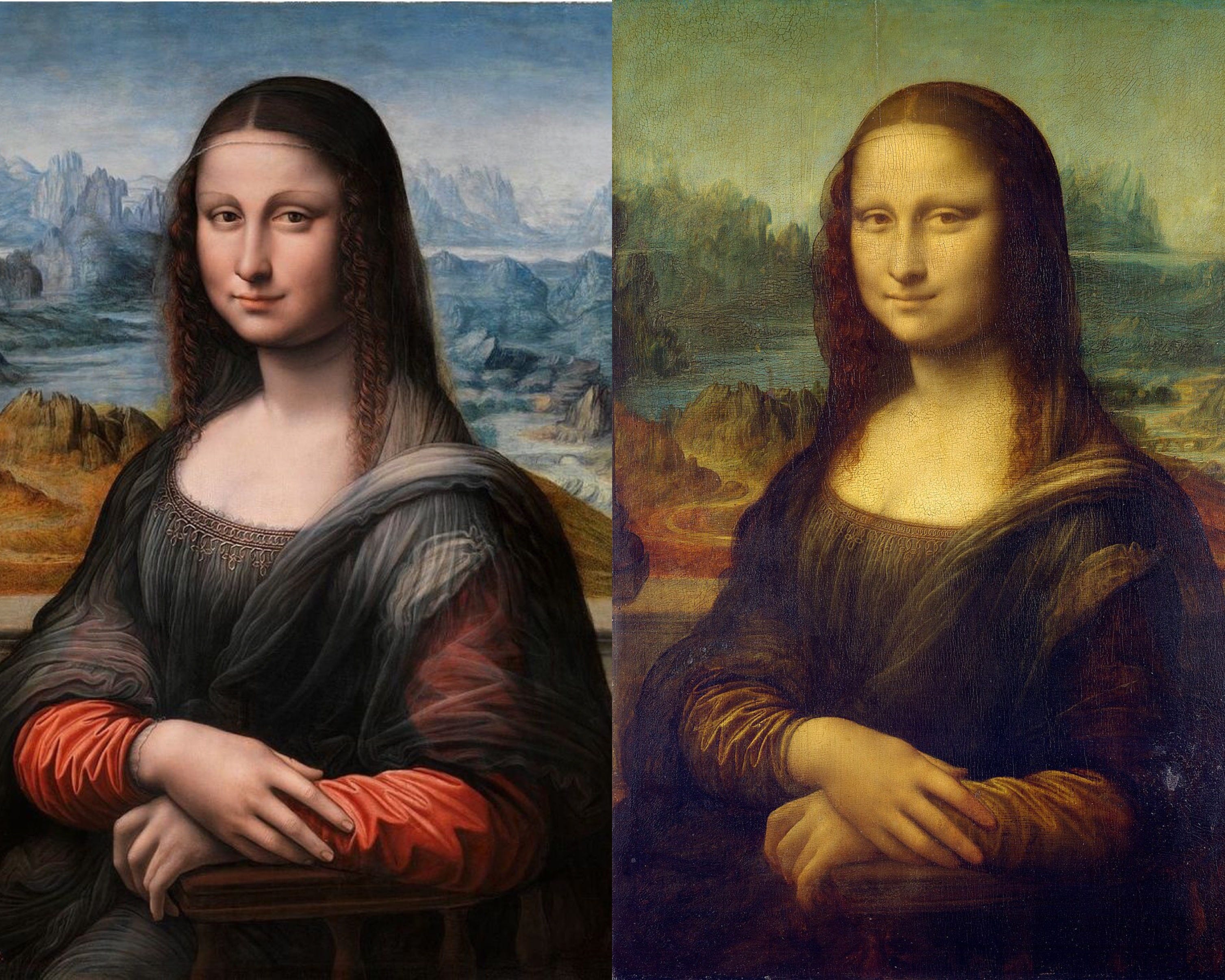
A similar model can be observed in the practice of Peter Paul Rubens. In his case, assistants were often responsible for executing substantial portions of a painting, from backgrounds to secondary figures, while the artist himself would intervene selectively, focusing on key areas that required his direct input and ultimately ensuring the coherence of the composition. The resulting work, though materially collective, was nonetheless understood as authentically his.
The idea that a work of art is the singular, irreplicable product of one person’s hand is a fantasy that we have somehow absorbed as an art-market truth.
What emerges from these examples is a conception of authorship in which the artist’s role is defined less by the execution of every detail and more by the orchestration of a vision, by the ability to conceive, direct, and finalize a work that may, in practice, be the result of multiple hands.
Fast forward three centuries, and we arrive at Damien Hirst. His spot paintings, which now number in the thousands, are made almost entirely by assistants. He has said this openly. The dots are mechanically even, the colors mixed by others, the execution delegated. When asked whether this bothered him, he replied that he could not actually paint as well as his assistants. The spots are better without him.
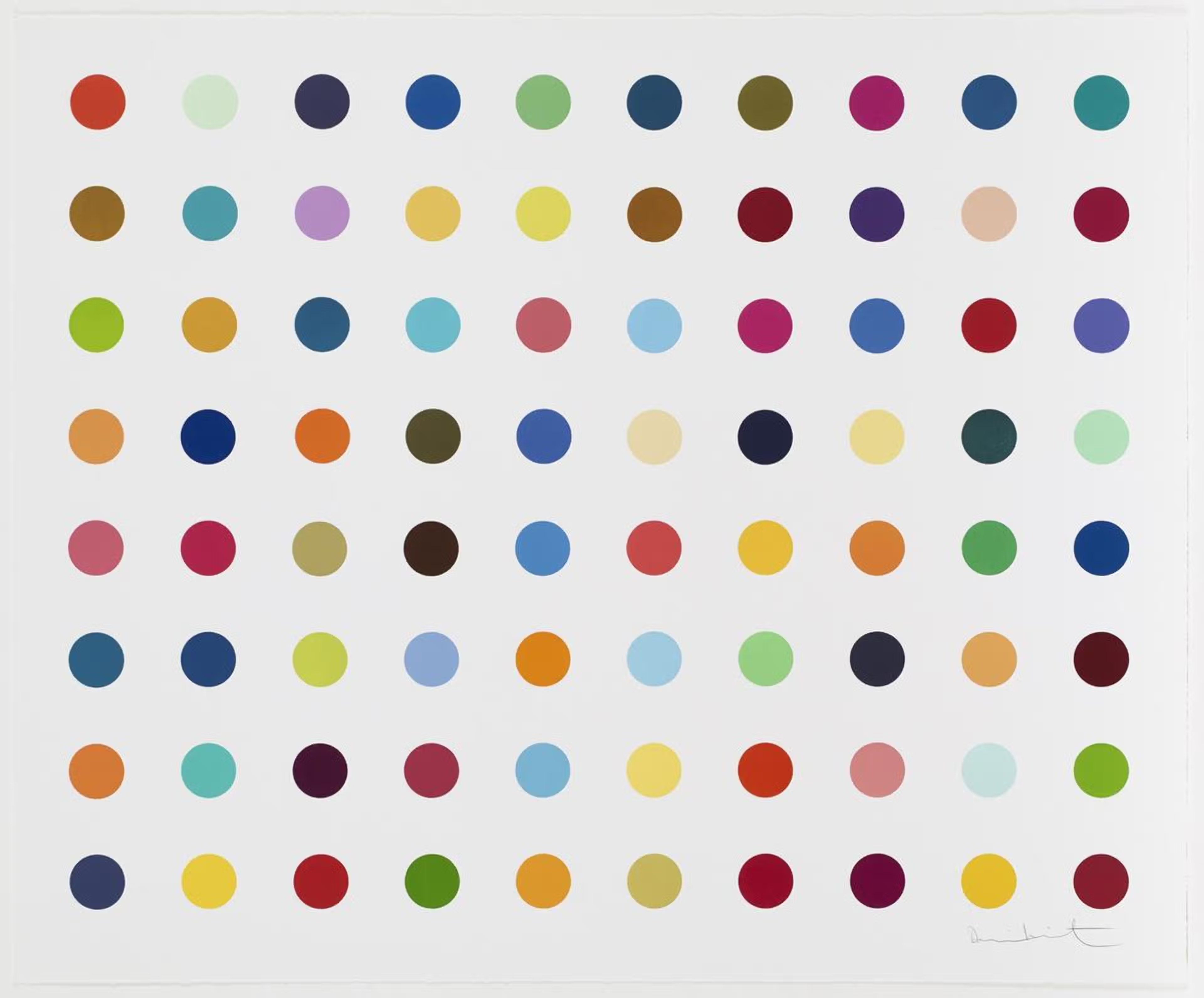
A spot painting by Damien Hirst sells for a Damien Hirst price, because what they are buying is not the physical labour of his hand but access to the concept, the signature, the cultural position.
Jeff Koons operates similarly. Koons has described himself as working “more like a director.” His studio at peak production employed over 150 people. The shining stainless steel surfaces of his sculptures require a level of technical finish he does not himself possess. What he contributes is the concept, the vision, and the cultural authority to make those works.
In the current art market, the model of the artist as a conceptual originator and director clearly outweighs that of the artist as a maker, as value is assigned not to the physical labor of production, but to the intellectual and symbolic framework that defines the work. Artistic authorship has long operated through structures that are more collective, more mediated, and more complex than we are often willing to acknowledge.
Understanding this complexity does not mean dismissing the ethical questions it raises about credit, about visibility, about whether the assistants who spend years executing a famous artist’s vision should have more claim on the work than the signature allows them. These are worth having. Yet the art market now is not just a market for unique objects. It is a market for stories. For the narrative of genius, of scarcity, of cultural inevitability that institutions and dealers and auction houses construct around certain names and not others. The physical work is the vessel.
It is in this sense that the discourse around artistic value as residing entirely in the physical act of making is far more complex than it appears, encompassing a combination of concept, context, intention, and market positioning. The hand is only one component within this framework, and historically, not always the most significant one.
Thanks for reading ! Subscribe to my newsletter for more and follow along on Instagram 💋