

It’s a question that floats around quietly. You notice it at openings, at fairs, at dinners. Who is listened to first, who is trusted faster, who seems to move through spaces with fewer obstacles.
So, do you have to be beautiful to succeed in the art world?
Yes — but what is meant by beautiful?
At first glance, the industry seems to reward a certain visual polish: the well-groomed gallerist, the effortlessly composed advisor, the collector who looks as intentional as their collection. Luxury, after all, is an economy of perception.
In sales and advisory roles, attractive or impeccably presented people do perform better on average. This is known as the Halo Effect: when we perceive someone as visually appealing, we subconsciously assume they are also more competent, more intelligent, and more trustworthy.
Multiple studies show that people judged as attractive receive higher evaluations in professional contexts, even when their actual performance is identical to others. We listen more closely. We hesitate less. We say yes more easily. This is sometimes called “pretty privilege.” Some brands have famously built entire retail strategies around it, with staff functioning as living extensions of brand desirability. But the art industry is not retail, and beauty here works differently.
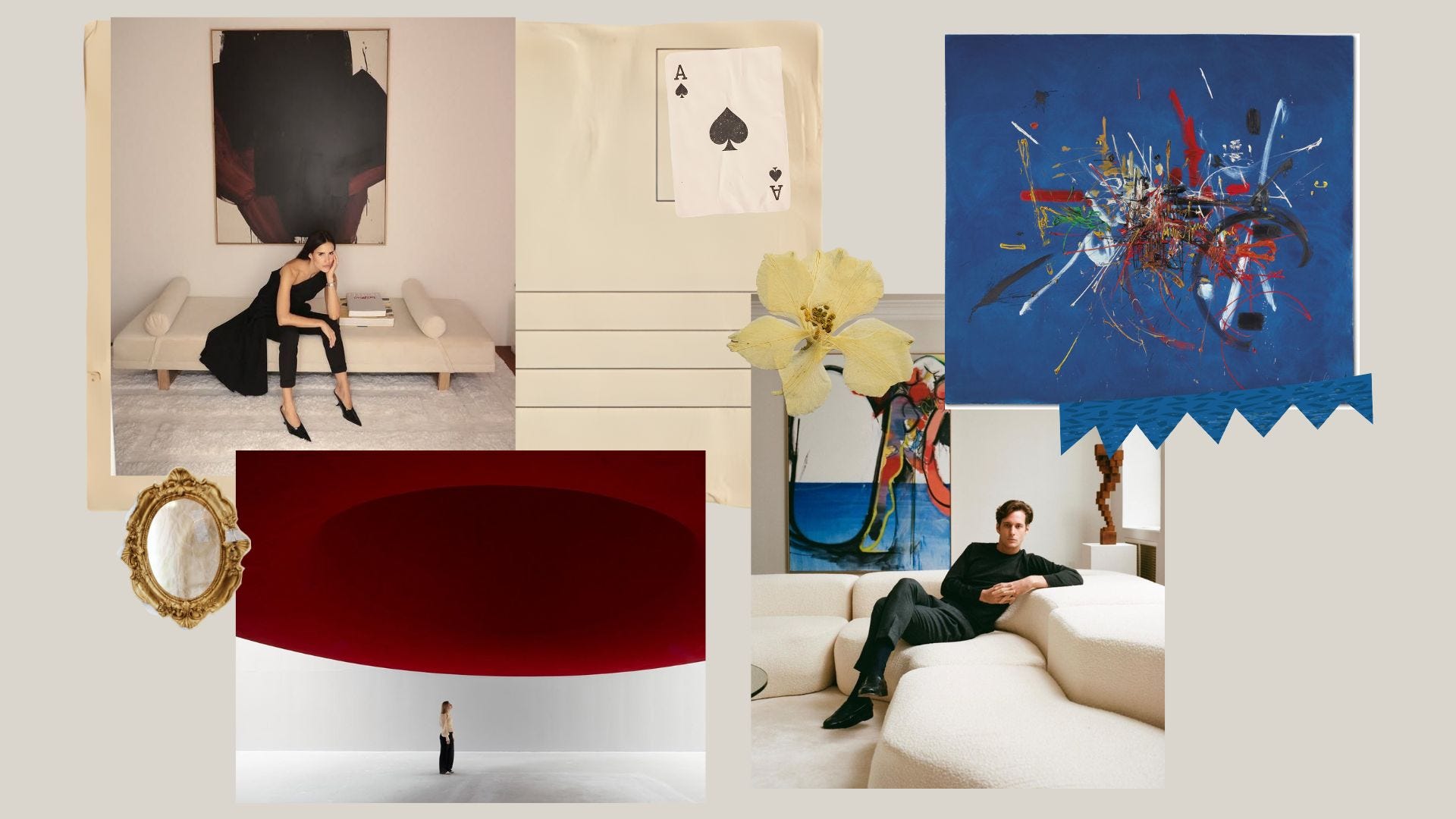
In the art world, it is not about beauty in a conventional sense. It is about elegance, class, and presence: how someone occupies space, how contained their gestures are, how considered their appearance feels rather than how striking it is. And yes, this is also conveyed through how you look. Not because looks are the point, but because appearance is one of the fastest carriers of information in a perceptual economy.
When someone exudes elegance, we intuitively assume that they know when to speak, when to step back, when not to interfere. That they will not impose themselves on the artwork, the collector, or the sale. Elegance suggests that attention will be placed correctly. It is not necessarily about charisma or performance. It’s often the opposite. It is the absence of excess effort. In art sales especially, over-explaining a work, over-justifying its value, or pushing too hard for agreement can quietly erode trust. Collectors tend to read contained behavior as confidence in the object itself. Studies on interpersonal trust show that people subconsciously associate calm, grounded behavior with competence and reliability, even when no objective evidence is present.

Then there is style as coherence. When the way you dress, speak, and move aligns, people do not have to work to read you. Inconsistency, on the other hand, creates friction and leads to mistrust. When someone’s visual language clashes with their verbal or intellectual one, the brain registers cognitive dissonance. In environments where decisions are symbolic and high-stakes, that dissonance is expensive.
Refinement is what signals reliability because it implies discernment. Someone who is considered in how they present themselves is assumed to be considered in their choices as well.
Adding on this, there is care. How someone treats their own appearance, time, and attention is read as a preview of how they will treat artworks, collections, and relationships. Someone who arrives consistently prepared, rested, and attentive signals that they respect the weight of what they are handling. Someone who neglects themselves often leaks that neglect into how they handle everything else.
In an industry where objects are handled on behalf of others, where narratives are shaped carefully over time, and where relationships compound over decades, care becomes credibility: this person understands stewardship. And stewardship, ultimately, sits at the core of cultural power.
This is why beauty matters professionally in the art world.
Because people are not just asking whether you are knowledgeable. They are asking something else entirely: Would I trust this person to choose for me?
Success, therefore, is correlated to a broader concept of beauty in a world that trades in perception. Luxury has always understood this. When the person presenting value appears intentional, composed, and aesthetically coherent, we assume the value itself is legitimate.
In the art world, where value is rarely self-evident, this mechanism is amplified.
Thanks for reading ! Subscribe to my newsletter for more and follow along on Instagram 💋