

Across the world, a new generation of travellers is following a different map: one drawn not by traditional landmarks, but by artists, architects and collectors who have transformed remote landscapes into destinations.
Art has become one of the most powerful tools for attracting a different kind of refined tourism: intellectually curious, culturally engaged, and willing to travel beyond the obvious. These places have built their cultural identity around a single work or a sustained artistic vision, and the results suggest that beauty, seriously pursued, is one of the most enduring economic arguments in existence.
Here are ten destinations where art is the reason to go.
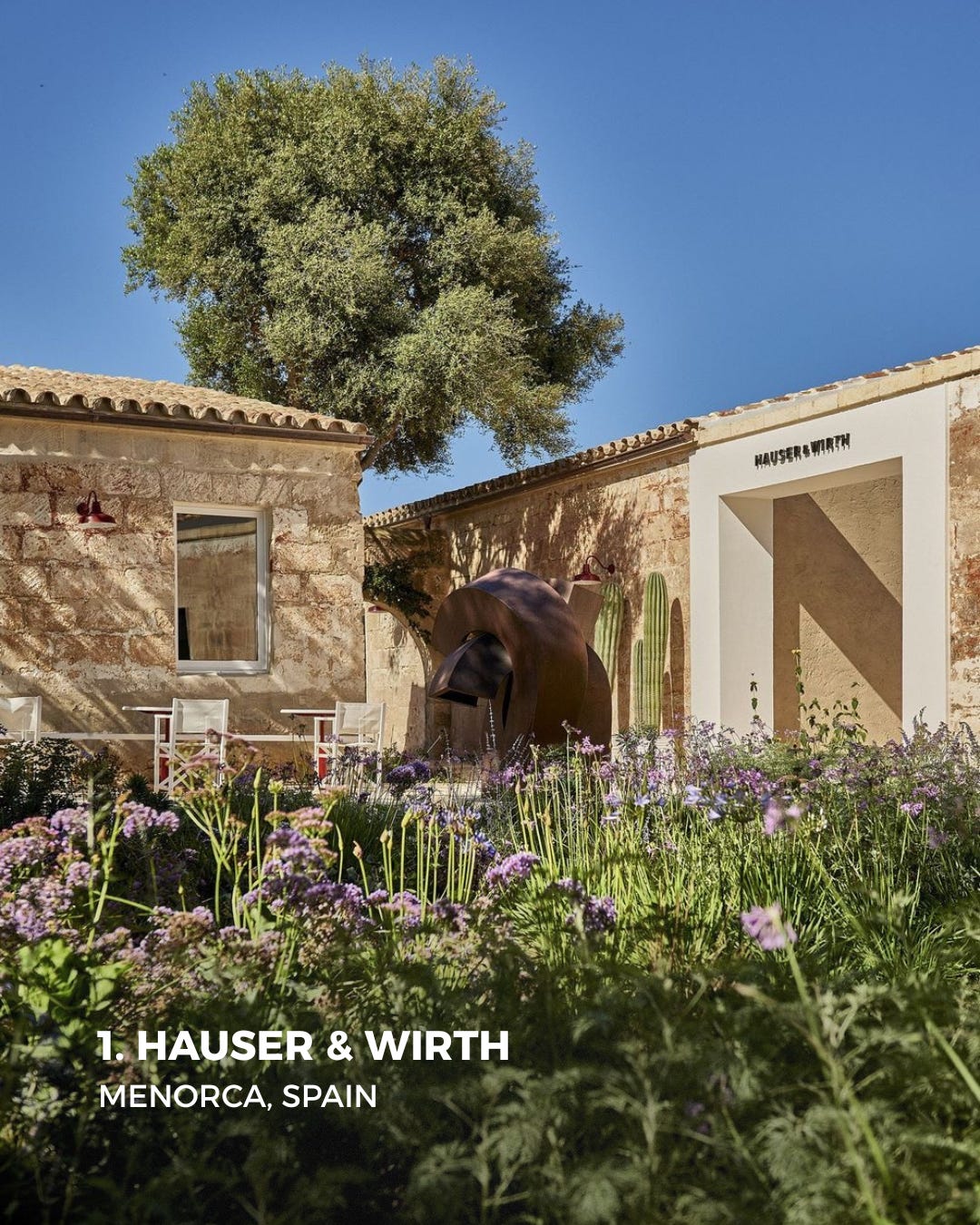
1. Hauser & Wirth • Menorca, Spain
Menorca’s beauty lies in its untouched landscapes, prehistoric ruins, hidden beaches and a slower rhythm of life.
When Hauser & Wirth opened its outpost on Illa del Rei, a small island in Mahón Harbour, it transformed a forgotten eighteenth-century naval hospital into one of Europe’s most beautiful art destinations.
The project is not simply a gallery. It is a complete experience: sculpture gardens, Mediterranean landscaping, historic architecture and exhibitions by internationally renowned artists. The journey itself becomes part of the artwork.
It is a perfect example of how culture can bring attention to a place without destroying its character.
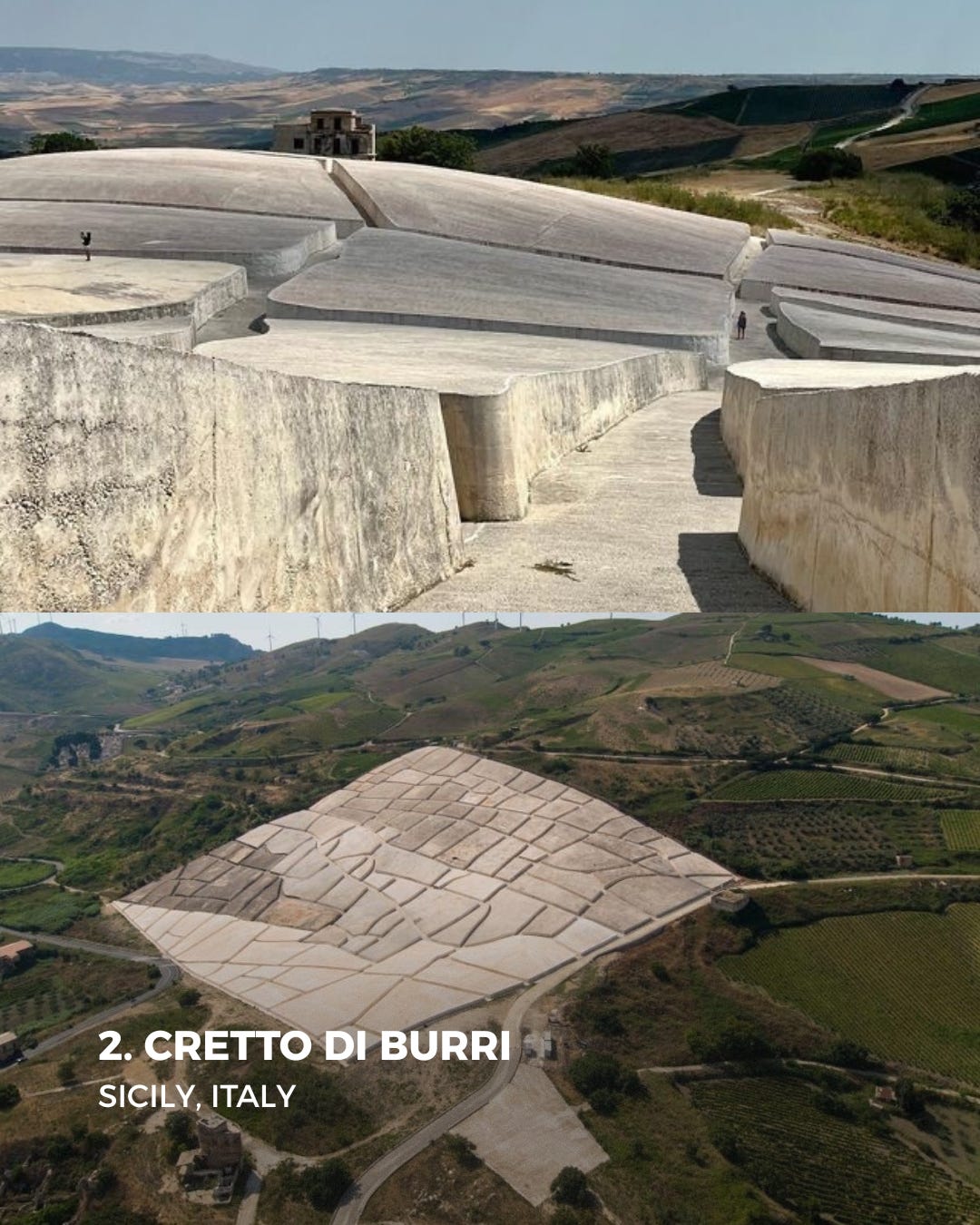
2. Cretto di Burri • Sicily, Italy
Some artworks do not sit within landscapes. They become landscapes.
After the earthquake that destroyed the Sicilian town of Gibellina in 1968, Alberto Burri proposed something that had never been done before: covering the entire ruined town in white concrete while preserving its original street plan. The result is a monumental land artwork that preserves the footprint of a dead city as a single continuous work. Walking through it feels like moving through a frozen memory.
It is part sculpture, part architecture and part archaeological site.
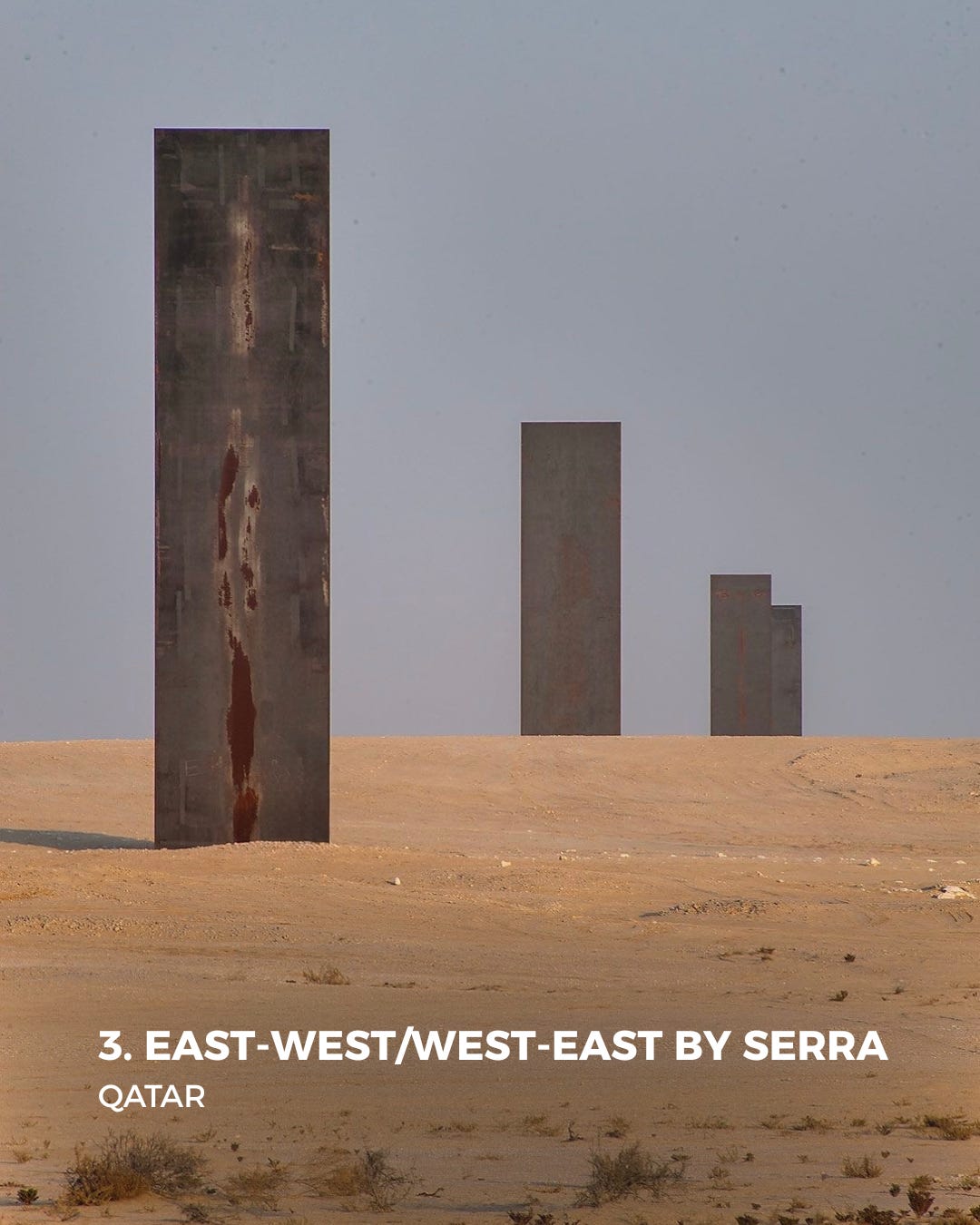
3. East-West/West-East by Richard Serra • Qatar
In the middle of the Qatari desert, four enormous steel monoliths stand across an empty landscape.
Created by Richard Serra, East-West/West-East is a work about scale, time and human presence. The four steel plates stretch over a kilometre between limestone formations, creating a dialogue between industrial material and earth.
It is a reminder that contemporary art can make even the most remote landscapes worth travelling for.
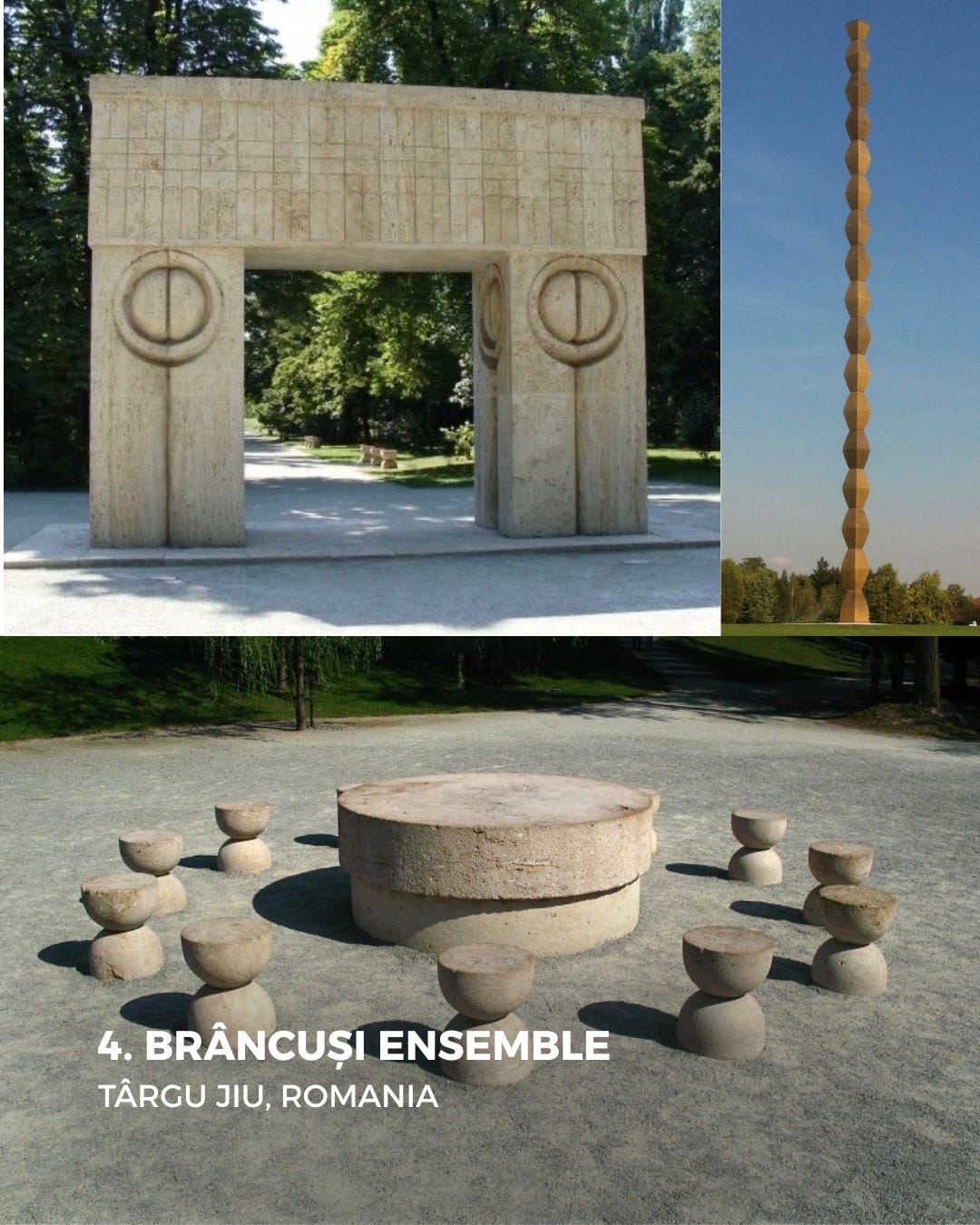
4. Brâncuși Monumental Ensemble • Târgu Jiu, Romania
In his Romanian homeland, Constantin Brâncuși created one of the greatest sculptural ensembles of the twentieth century: The Table of Silence, The Gate of the Kiss and the iconic Endless Column.
Together, the works transform an ordinary urban landscape into a philosophical journey about memory, sacrifice and infinity. In 2024, the ensemble was inscribed on the UNESCO World Heritage List, recognising it as one of the defining achievements of modern sculpture.
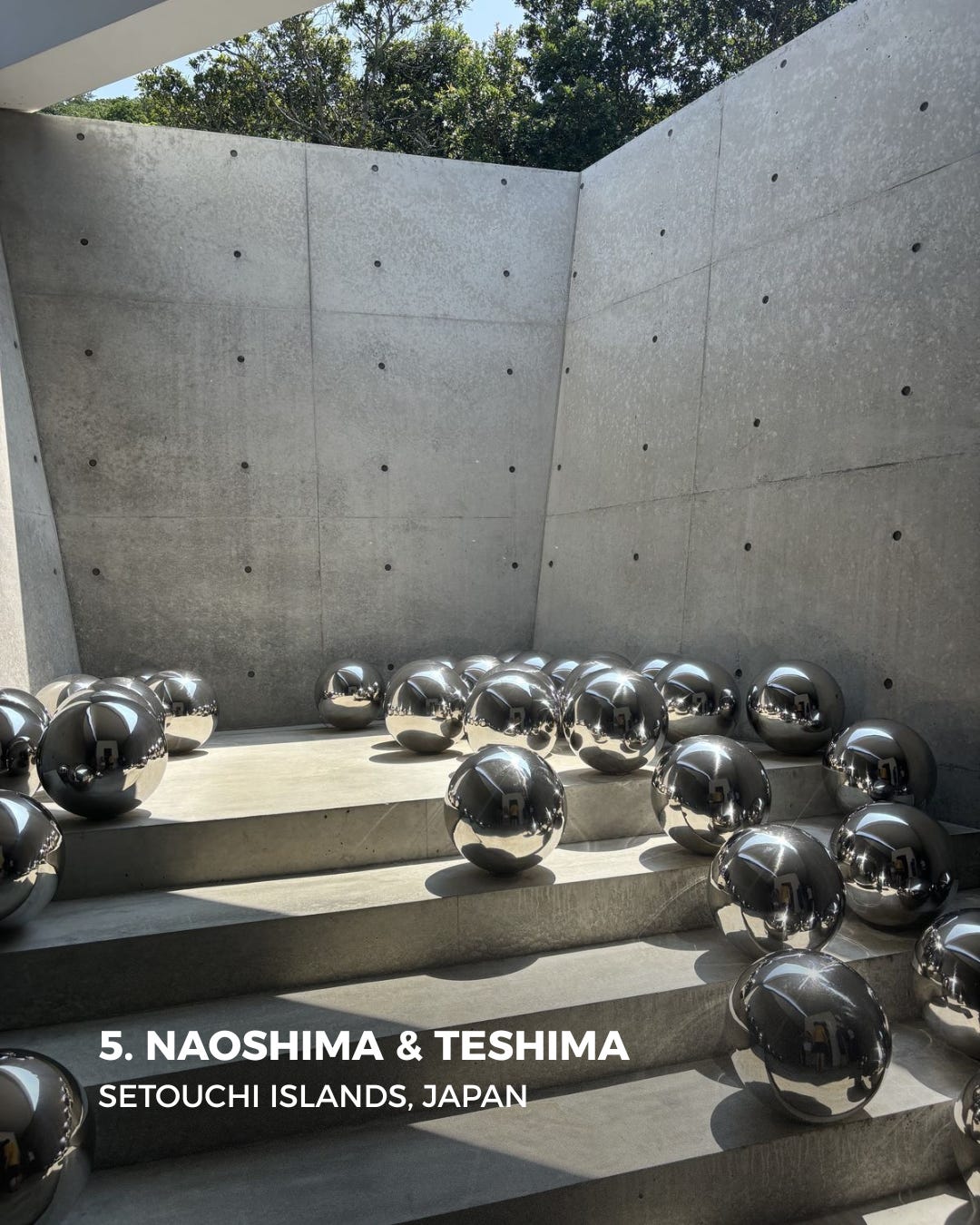
5. Naoshima & Teshima • Setouchi Islands, Japan
Once declining industrial communities, Naoshima and Teshima have been transformed into global art destinations through the vision of collector Soichiro Fukutake and architect Tadao Ando.
Here, museums disappear into hillsides, abandoned houses become artworks and the natural landscape becomes part of every exhibition. Visitors move between islands by ferry, discovering works by artists including Yayoi Kusama, James Turrell and Lee Ufan.
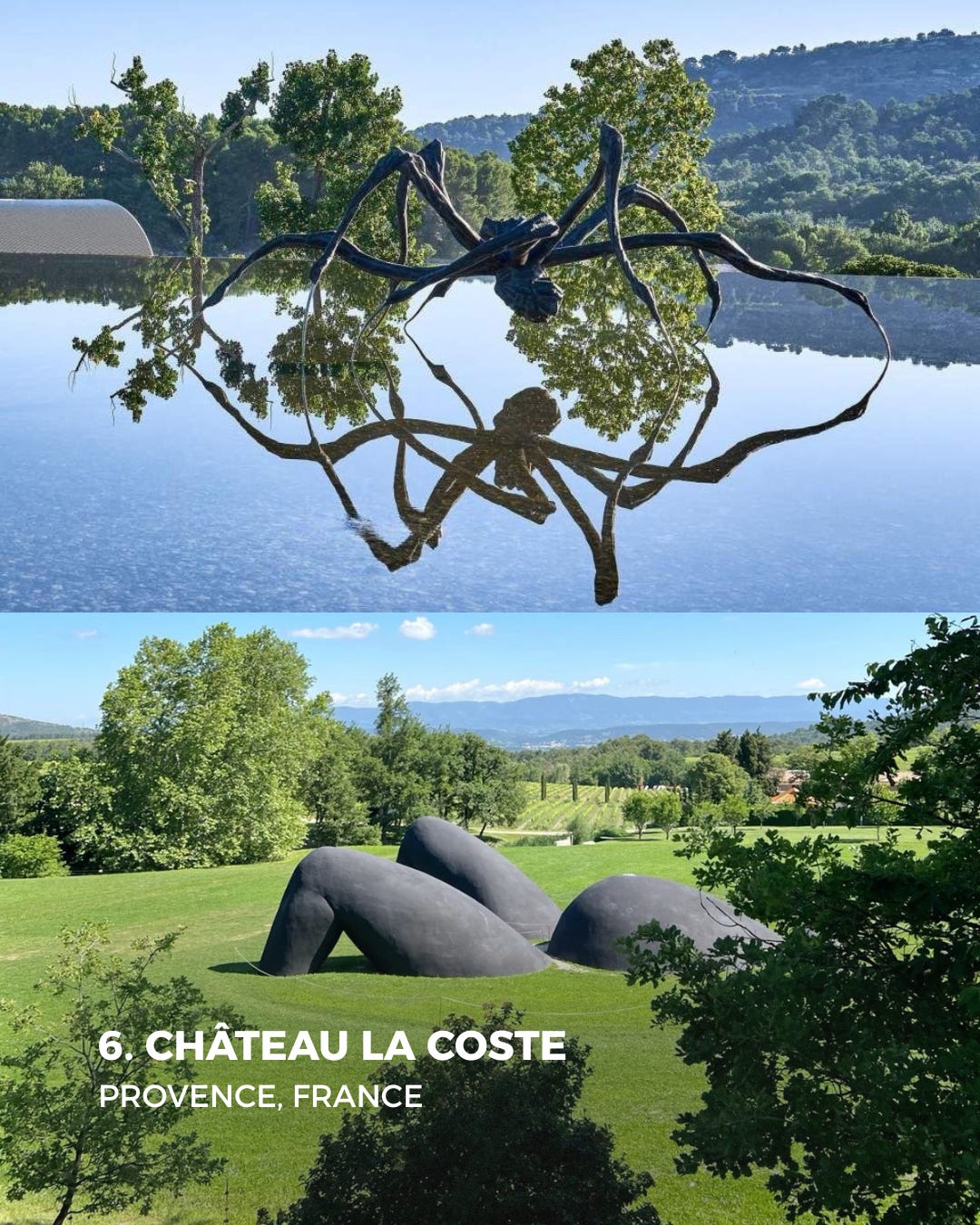
6. Château La Coste • Provence, France
Château La Coste combines wine, architecture and contemporary art across hundreds of hectares of Provençal landscape. Works by artists and architects including Louise Bourgeois, Alexander Calder, Ai Weiwei, Tadao Ando and Renzo Piano are scattered throughout the estate.
The magic lies in the discovery. You walk through olive groves and vineyards and suddenly encounter a sculpture, a pavilion or a building that completely changes your perception of the landscape.
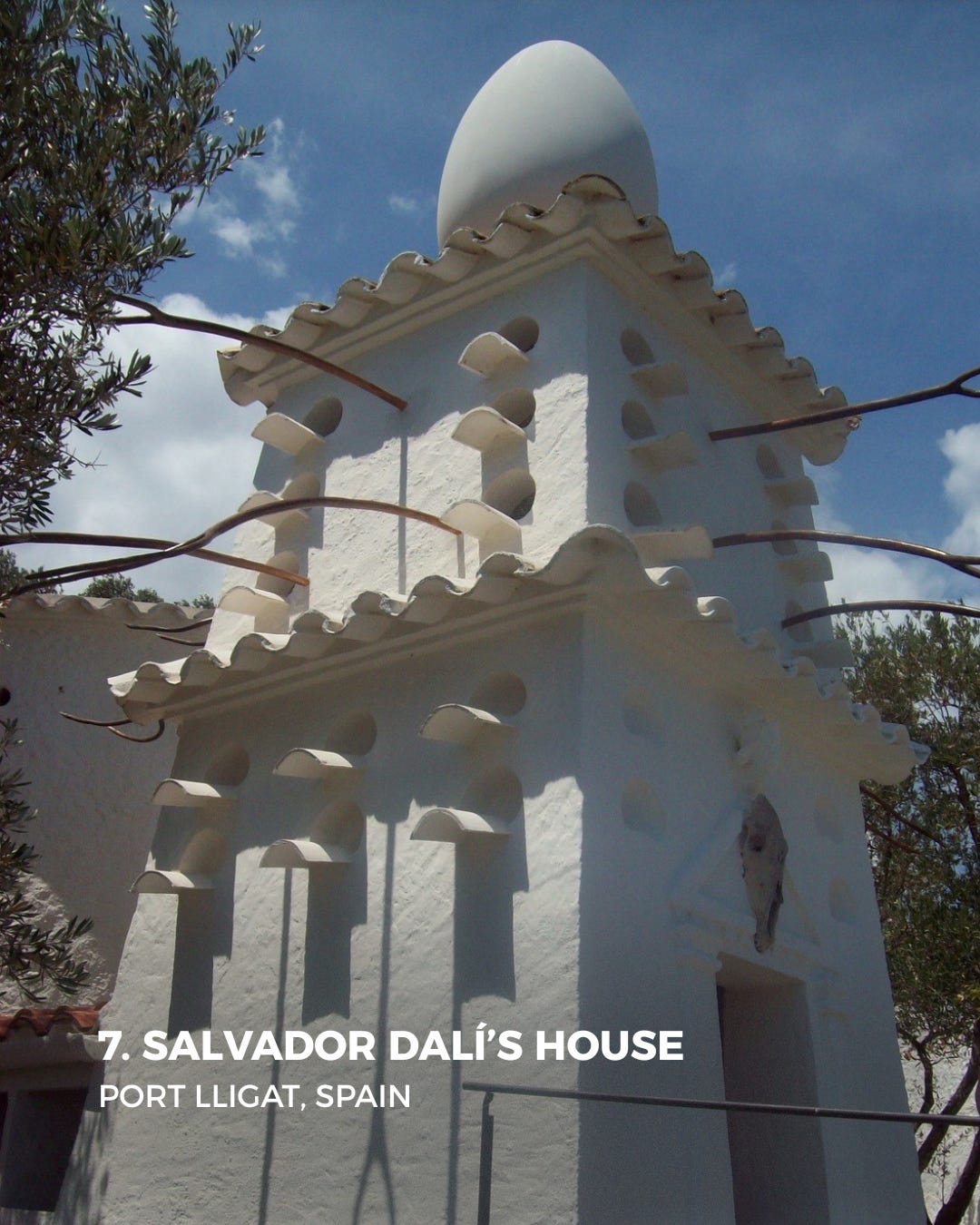
7. Salvador Dalí’s House • Port Lligat, Spain
Salvador Dalí’s home in Port Lligat, on Spain’s Costa Brava, grew organically over decades as he added rooms, objects and surreal details. Everything feels unmistakably his. It is an accumulation of passageways, unexpected rooms and spaces that seem designed for no logical human purpose.
The landscape itself shaped his imagination. The same cliffs, light and silence that inspired Dalí became inseparable from his work.
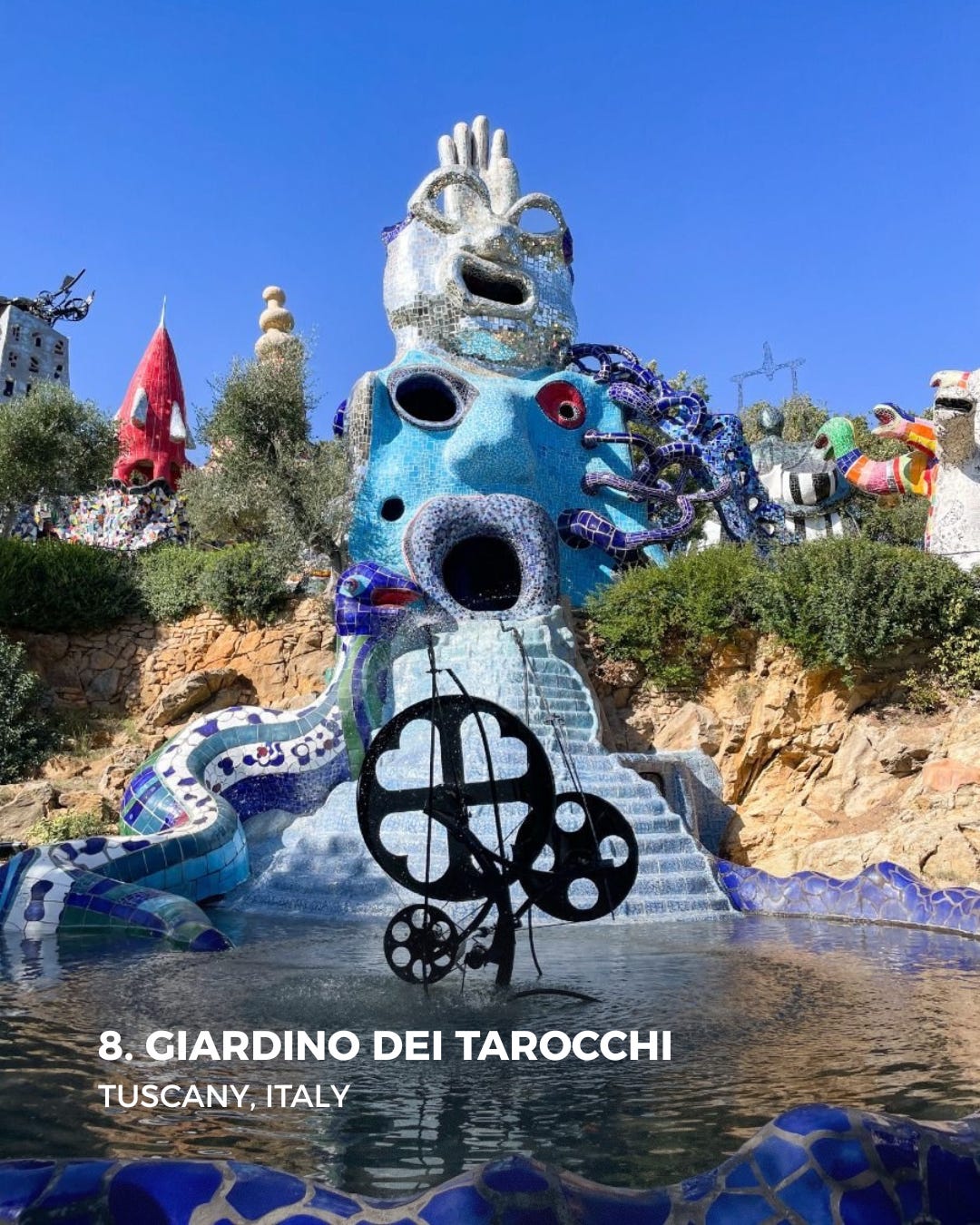
8. Giardino dei Tarocchi • Tuscany, Italy
Hidden in the hills of southern Tuscany, the Giardino dei Tarocchi is one of Italy’s most eccentric art environments.
In 1979, French-American artist Niki de Saint Phalle began building twenty-two monumental sculptures above Capalbio, each representing one of the cards of the Tarot’s Major Arcana.
Walking through the garden feels like entering a dream where architecture, sculpture and mythology merge. It is playful, extravagant and completely unique.
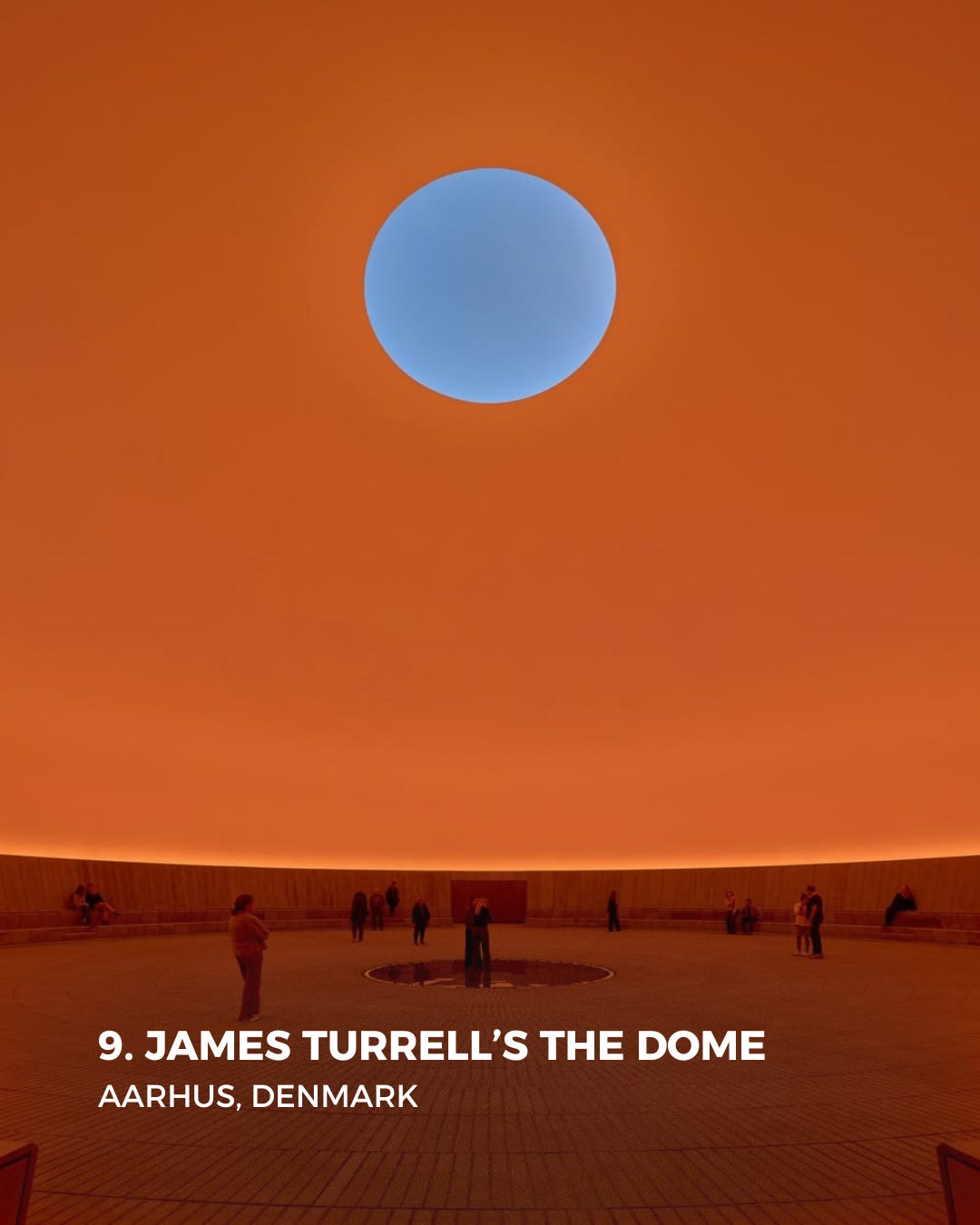
9. James Turrell’s The Dome • Aarhus, Denmark
Aarhus is Denmark’s second city quietly building a reputation as one of Northern Europe’s most ambitious art destinations.
ARoS museum already had Olafur Eliasson’s Your Rainbow Panorama (2011), the circular glass walkway wrapping the its roof in colour. In June 2026, it added its perfect counterpoint: James Turrell’s As Seen Below – The Dome, the artist’s 100th Skyspace and the largest ever created for a museum.
Turrell described the work as “an experience of consciously entering the earth and emerging in the heavens.” That is more or less exactly what it feels like.
10. Storm King Art Center & Dia Beacon • New York, USA
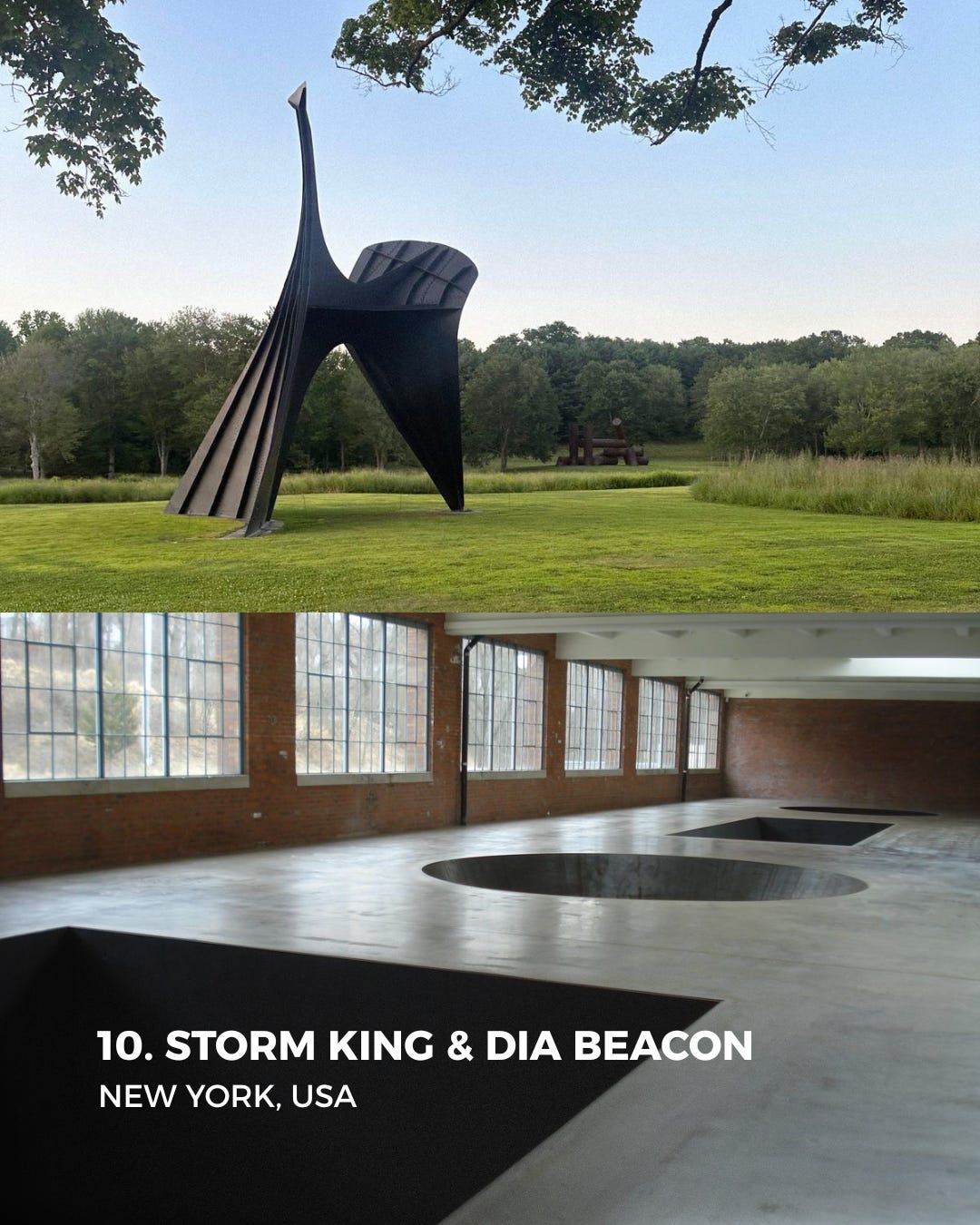
The Hudson Valley has become one of America’s most compelling art destinations.
Storm King Art Center transforms hundreds of acres into an open-air sculpture park, where works by Alexander Calder, Mark di Suvero and Maya Lin exist in constant dialogue with the landscape.
Nearby, Dia Beacon occupies a former Nabisco factory and houses one of the world’s finest collections of Minimalist and contemporary art. The vast industrial spaces were adapted specifically for the scale of Donald Judd’s stacks, Dan Flavin’s fluorescent installations, Michael Heizer’s monumental works and Sol LeWitt’s wall drawings.
Together, they represent a different way of experiencing art: not as something contained within four walls, but as something inseparable from space, architecture and the surrounding landscape.
Thanks for reading ! Subscribe to my newsletter for more and follow along on Instagram 💋
🙌 great list - I’ve been to most of these and can vouch they’re worth visiting.