

In 1958 a young man not yet thirty, soon to become the Aga Khan, sailed past a stretch of granite coastline in the north of Sardinia and could not stop thinking about it. There was nothing there. No roads, no water, no electricity, just rock sculpted by wind and a sea so clear it looked invented. He came back, bought the land with a handful of friends, and in 1962 founded the Consorzio Costa Smeralda with a single, slightly mad ambition: to build a place where architecture would not dominate the landscape but disappear into it. He brought in Jacques Couëlle and Michele Busiri Vici among others, and within a few years a genuinely new architectural language had been invented from nothing, white and curved and carved like sculpture, built almost entirely from local granite and wood. What followed was sixty years of artists, architects, eccentrics, and dreamers adding their own chapters to that founding obsession.
The most interesting thing about Costa Smeralda is that it was never designed by hoteliers. It was designed by dreamers.
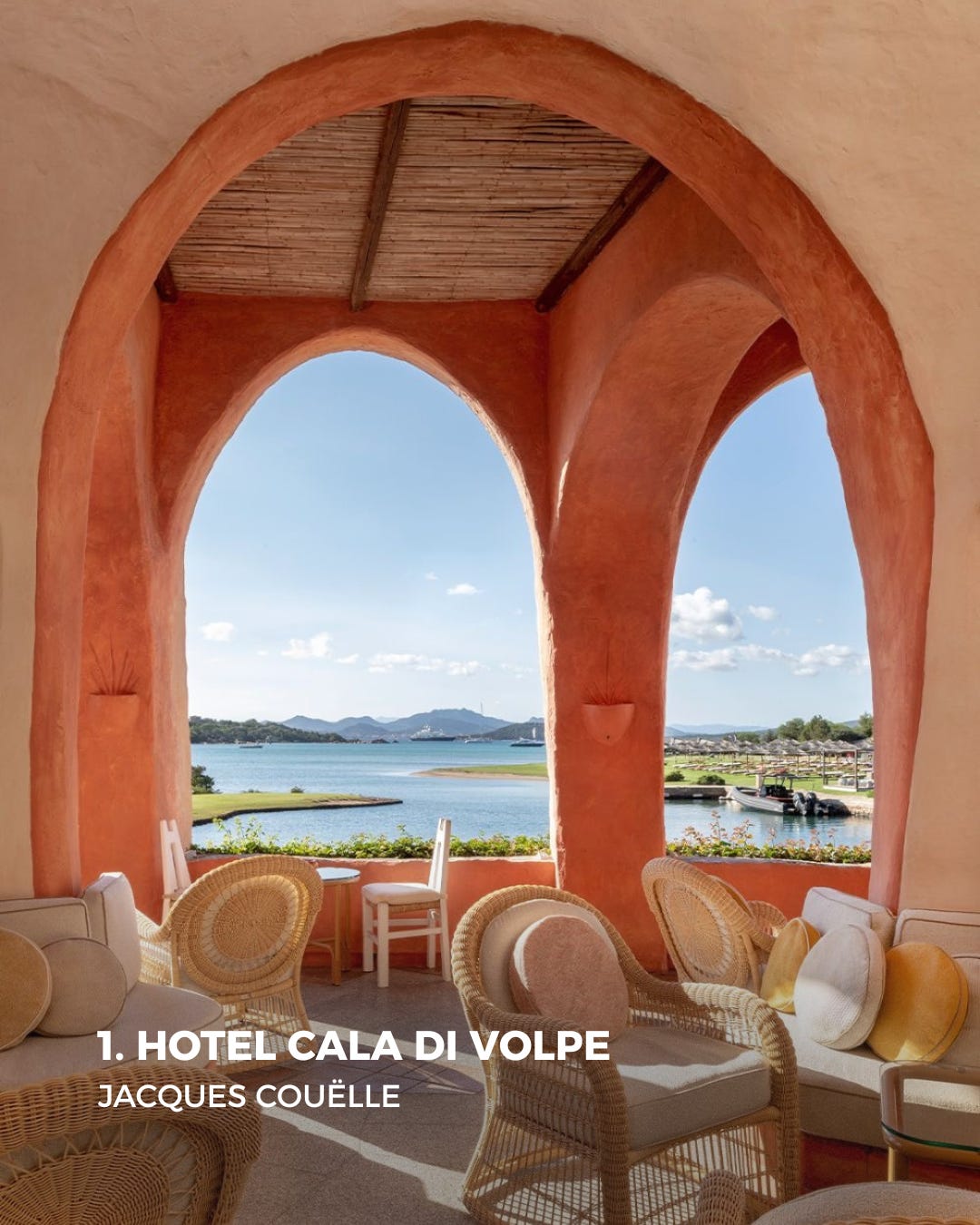
1. Hotel Cala di Volpe (Jacques Couëlle)
Everything starts here. Cala di Volpe was the first hotel built on the Costa Smeralda, opened in 1962. Designed by Jacques Couëlle, the hotel remains one of the purest expressions of the Costa Smeralda dream. Corridors twist unexpectedly, walls curve like waves and every corner seems designed to frame the sea. Nothing is rigid, symmetrical or predictable. The lobby remains one of the great interiors of the Mediterranean.
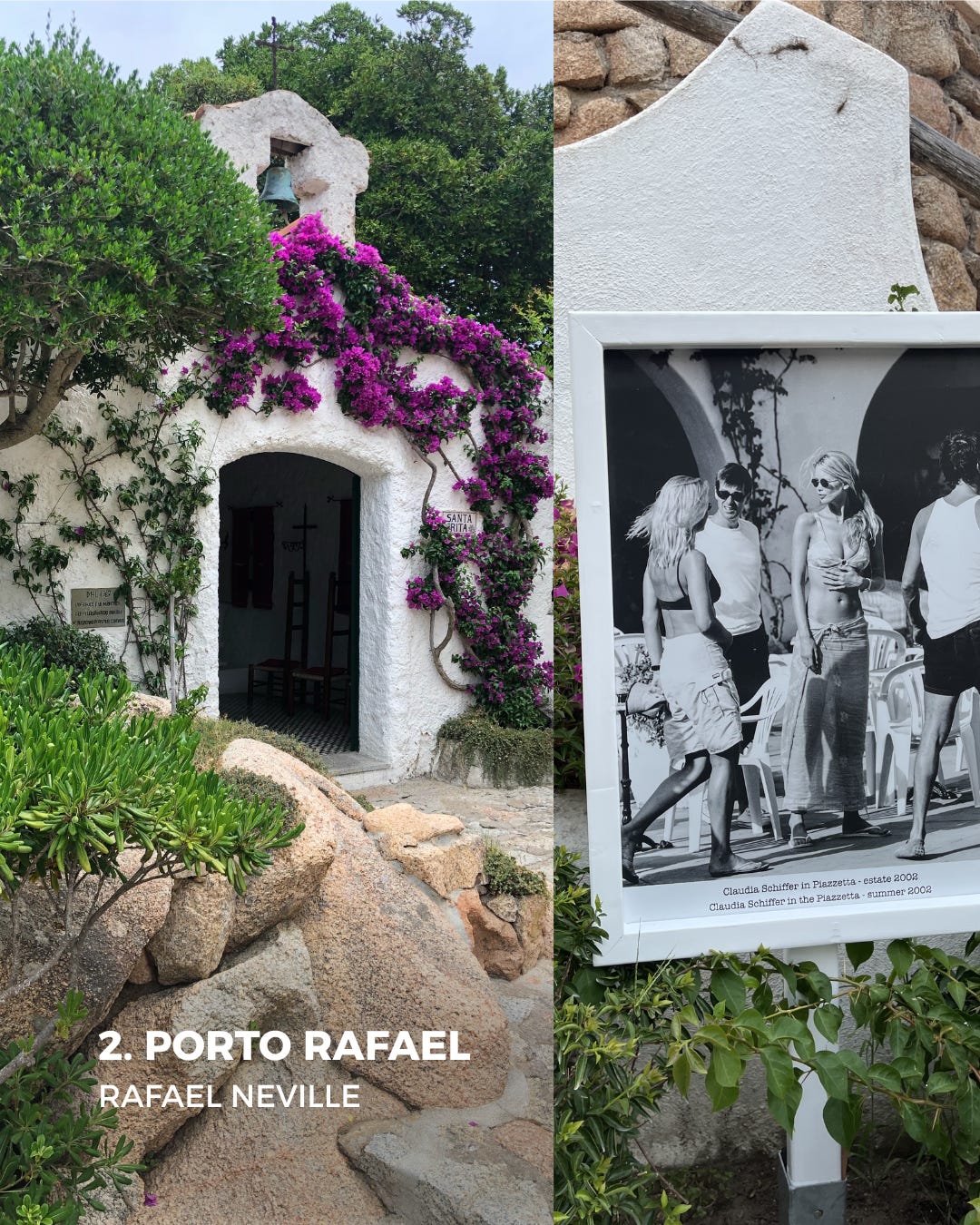
2. Porto Rafael (Rafael Neville)
Before there was an Aga Khan, there was a count who had a dream. Rafael Neville, Conte di Berlanga, son of a Spanish filmmaker friend of Picasso, claimed he saw the whole place in a vision: a bay, seven islands, a little piazzetta, a few white houses. He bought his first piece of land in 1960, two years before the Aga Khan’s consortium even existed, and built it stone by stone with the help of a local builder everyone called Dumè. His motto, painted on a plaque that still stands in the village, was sognare è vivere, to dream is to live. Michele Busiri Vici designed much of the architecture, including the tiny chapel of Santa Rita. Every August, for the Count's birthday, the village dressed in white and gathered in the piazzetta to celebrate.
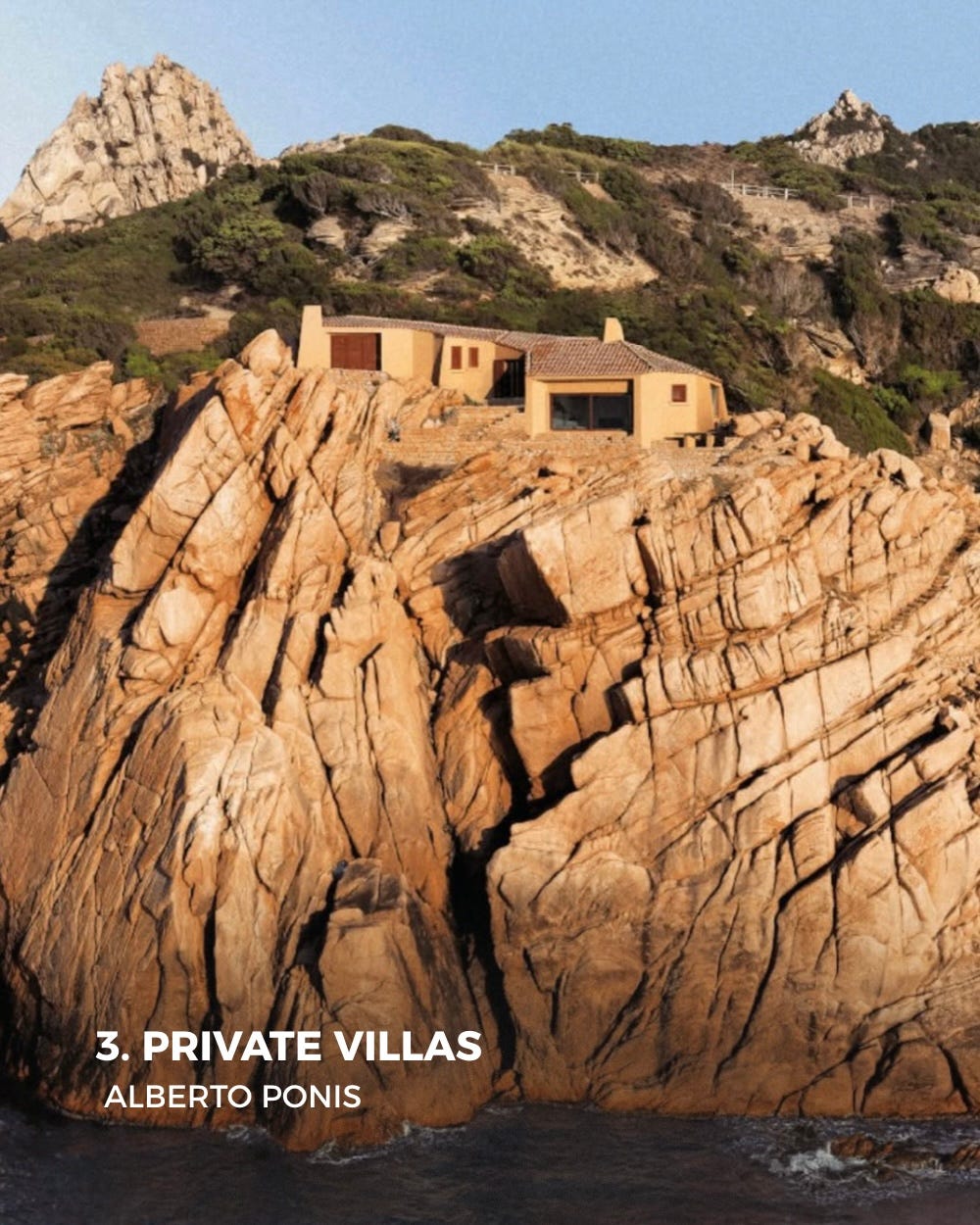
3. Private Villas (Alberto Ponis)
A young Genoese architect named Alberto Ponis moved to Sardinia in 1963, and over the following decades he designed more than two hundred houses around Punta Sardegna, Porto Rafael, and Costa Paradiso, each one sited with an almost obsessive attention to the exact contours of its rock. Many of his villas remain almost invisible from the road, absorbed into the landscape and deliberately difficult to access.
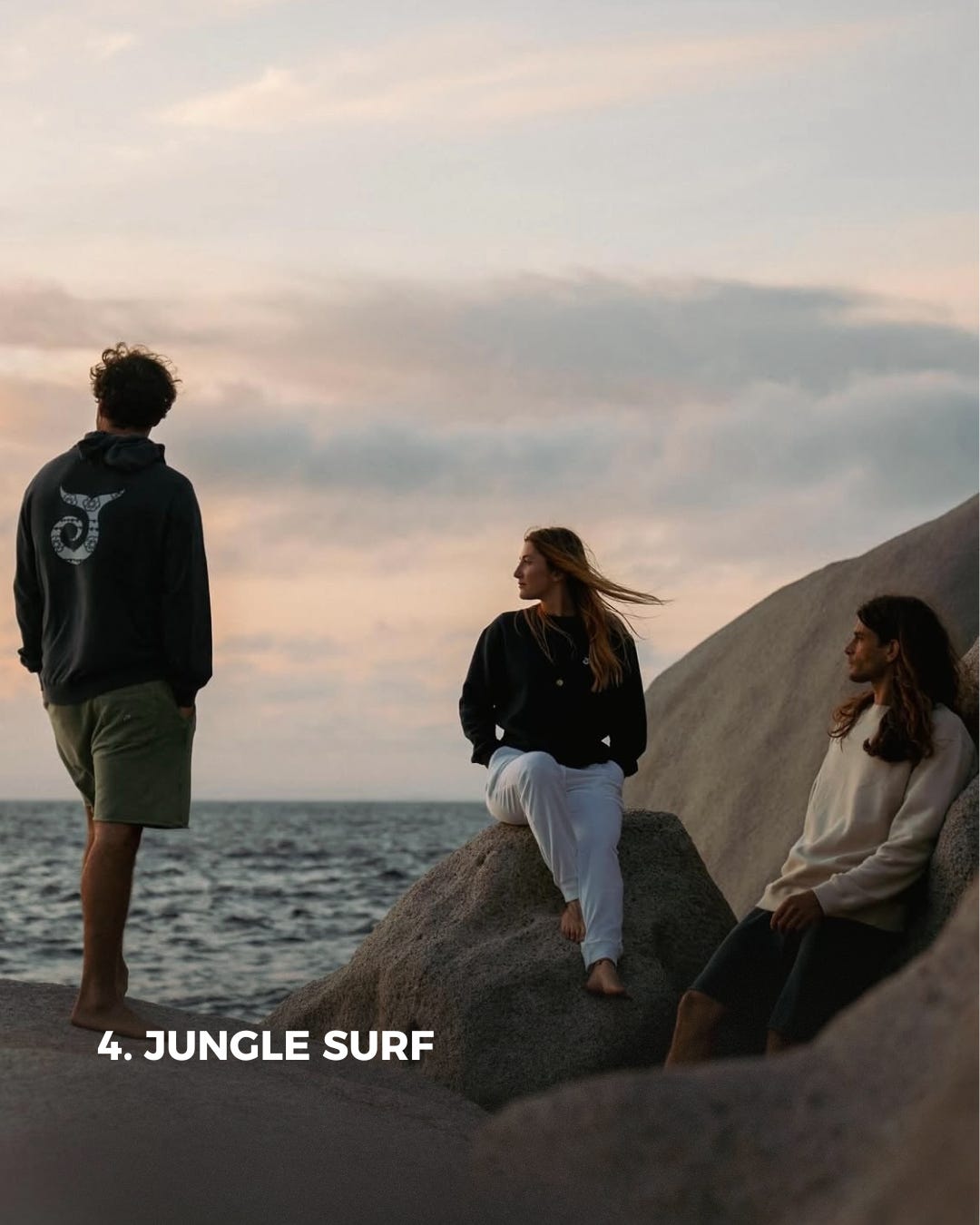
4. Jungle Surf
Jungle Surf is the cool kids surf shop of Palau and Porto Pollo, run by the same family for more than thirty years out of a small storefront in the area. Part surf community, part creative gathering point, Jungle Surf represents a different side of Sardinia. Far removed from the polished image typically associated with Costa Smeralda, it attracts photographers, designers, surfers and free spirits who gravitate toward a more understated lifestyle. Its symbol, a whale’s tail, comes from a story the family tells about togetherness: whales swimming close enough to touch their baby whales. It is a small, unglamorous, deeply loved institution built by people who simply loved the sea.
5. Ritual Club
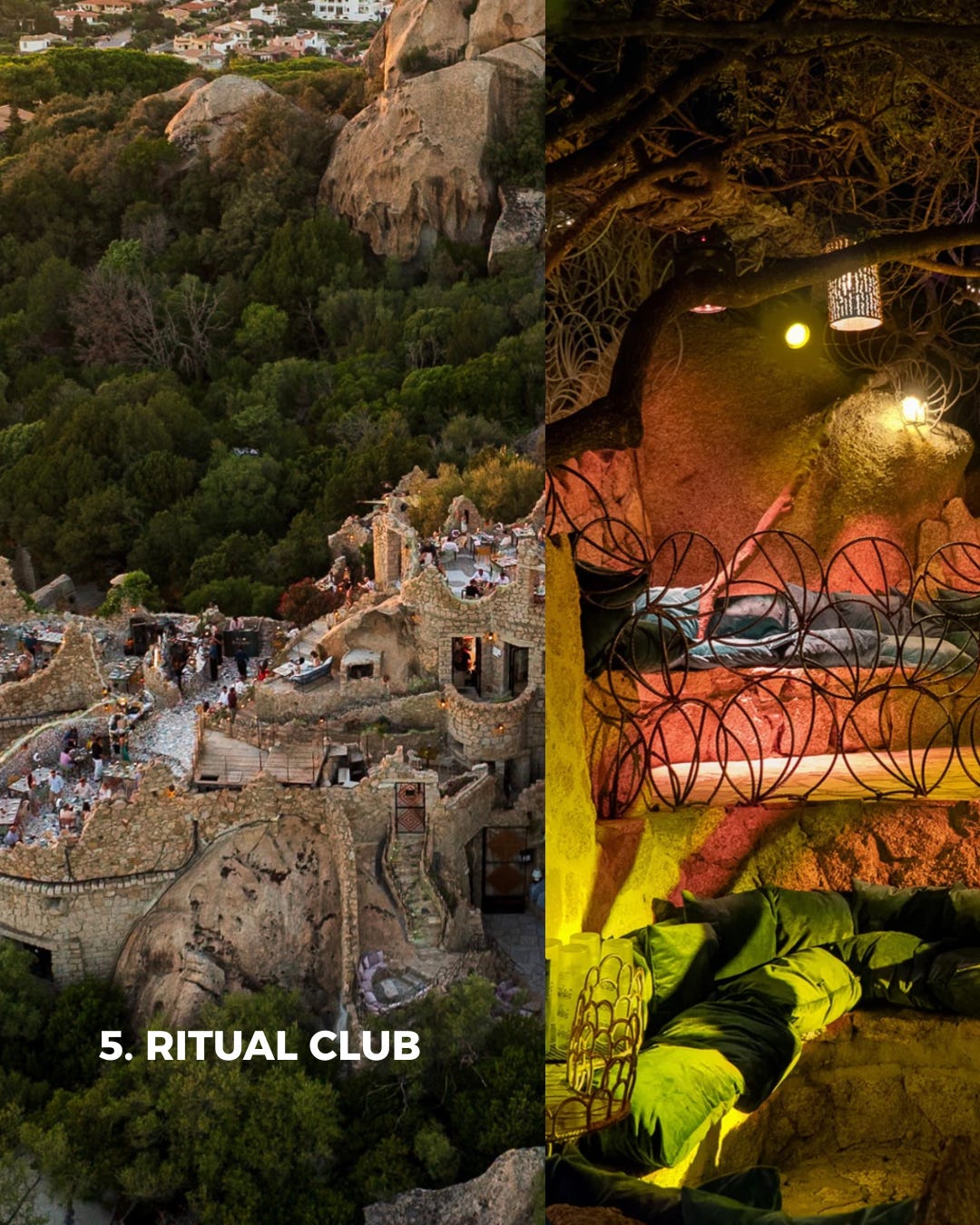
In 1968, a gem trader from Parma named Andres Fiore bought a granite hillside above Baja Sardinia sight unseen, drawn by rumors of a cave hidden within it. He camped there for a week, sleeping among the rocks, and decided it would become his life’s only architectural work. He never called it architecture, but a scenografia, a stage set. What he built is a spiral carved directly into the mountain, where niches and staircases seem aligned with the stars, and a DJ booth now sits at the center of the space.
6. Villa La Grotta (Jacques Couëlle)
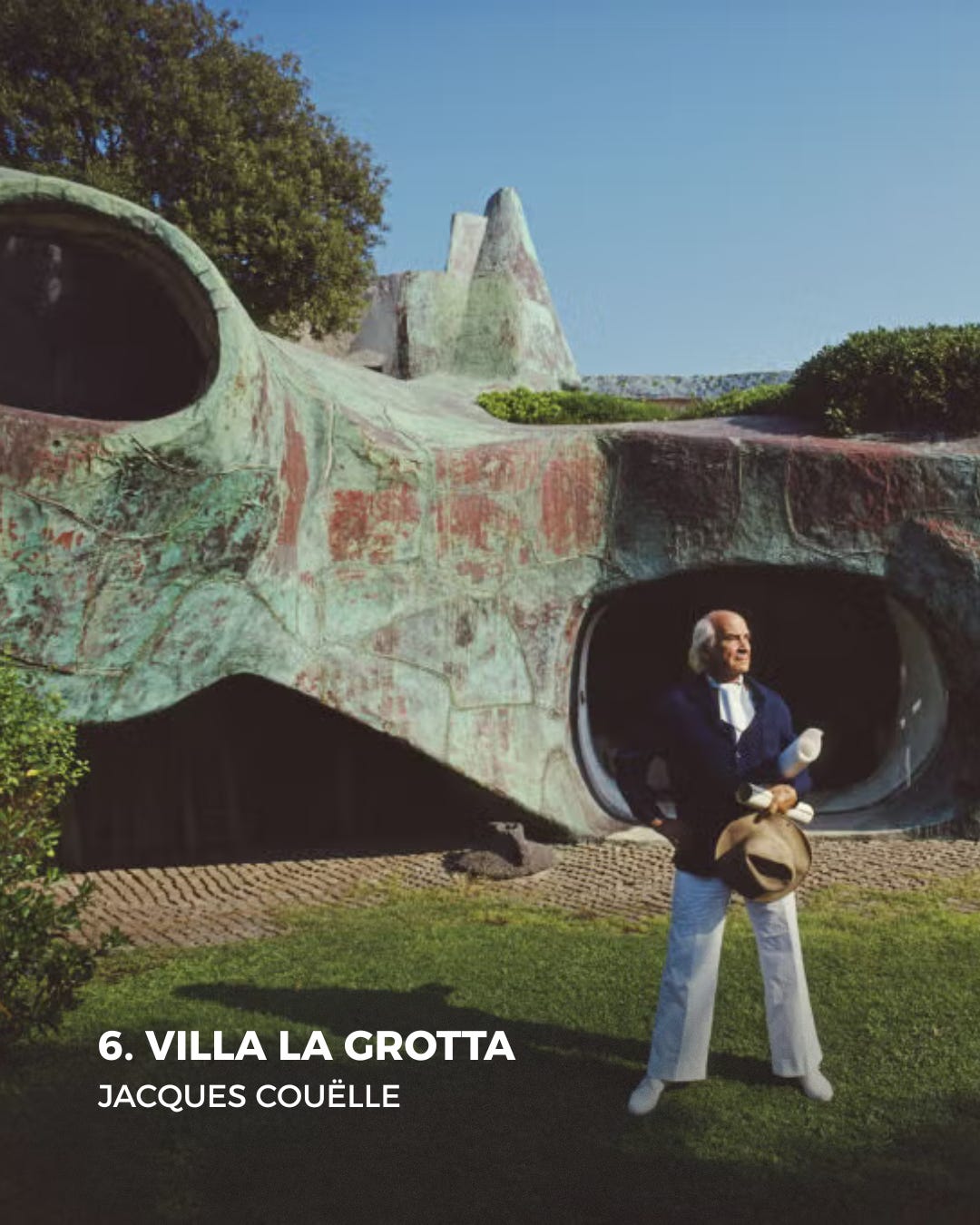
On the rocky spur of Monte Mannu, Jacques Couëlle carved out a house for himself and his wife, quite literally, into the granite itself. Curved doorways, asymmetric hand-glazed tiles, a bedroom window shaped to suggest a face if you look at it the right way. Couëlle was a friend of both Picasso and Dalí and was once described, fairly, as an architect-sculptor. His son Savin later inherited both the family eye and the family commissions, and much of Porto Cervo’s most distinctive private architecture carries the Couëlle name in one form or another.
7. Romazzino, A Belmond Hotel (Michele Busiri Vici)
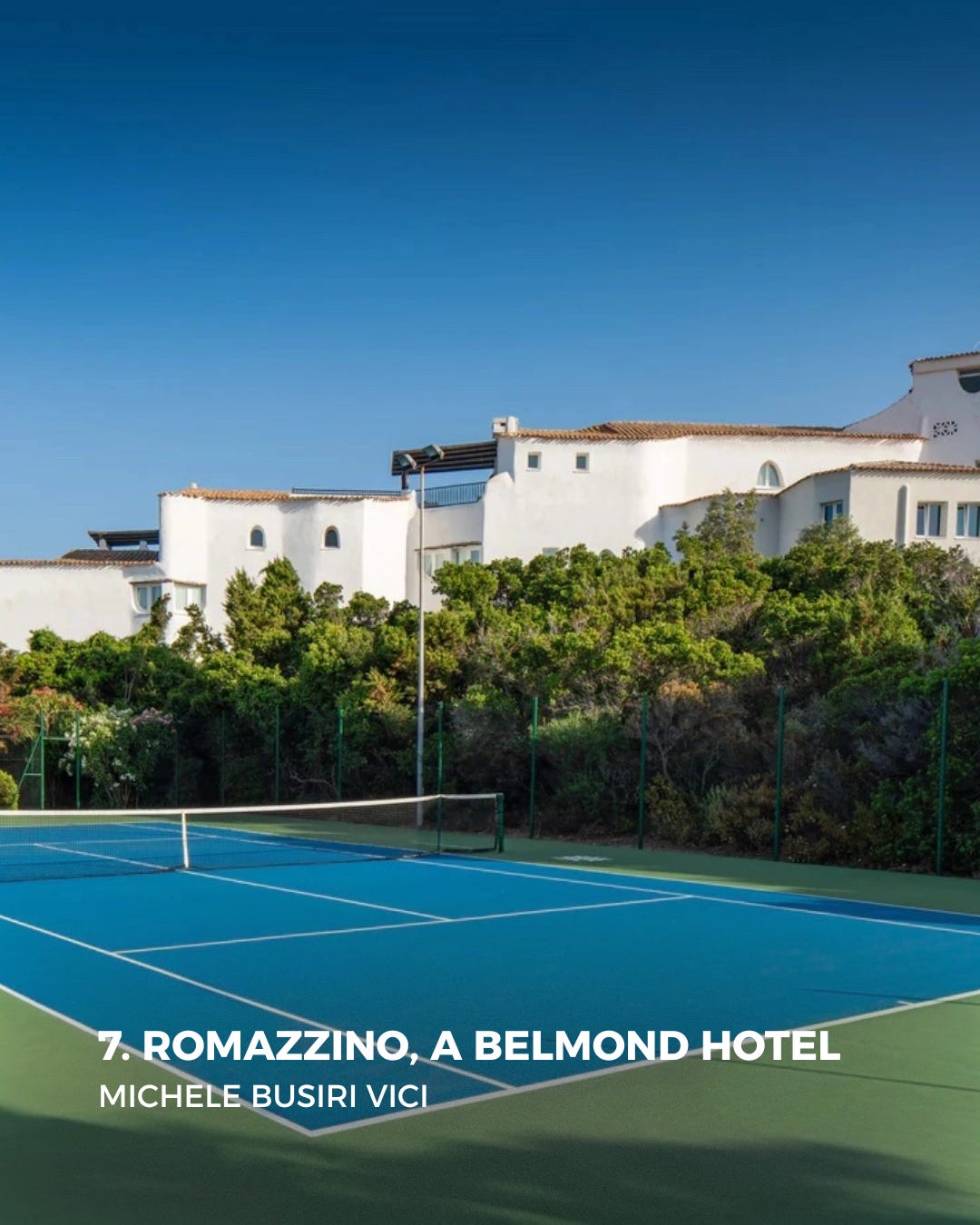
Romazzino opened in 1965, designed by Michele Busiri Vici with his son Giancarlo, white curves rising from the sand like something Gaudí might have done if Gaudí had built on a beach. Grace Kelly stayed here. So did Audrey Hepburn and Brigitte Bardot. Since 2024, the hotel has become part of the Belmond portfolio and retains much of its original charm.
8. Porto Rotondo (Cascella & Ceroli)
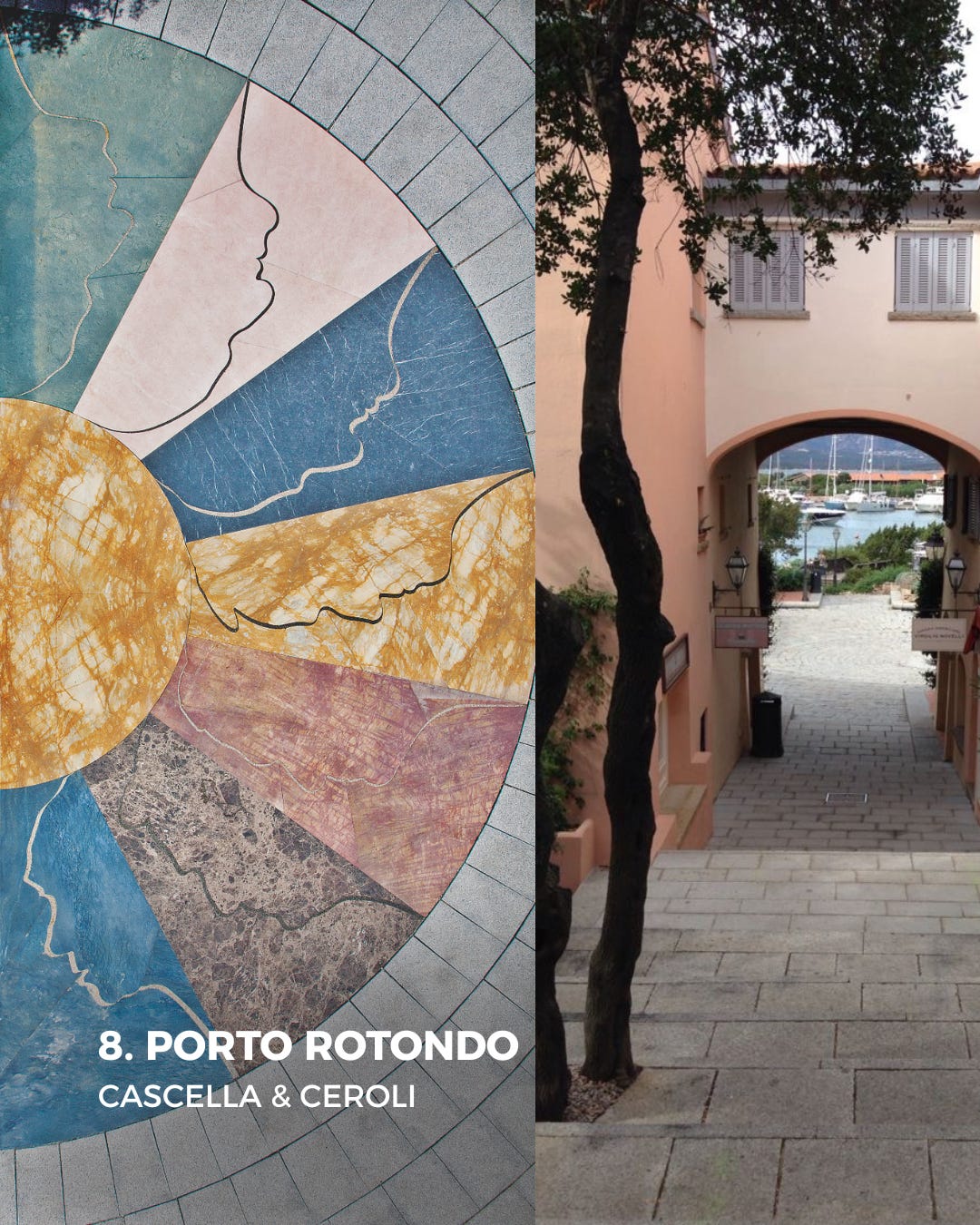
Porto Rotondo is what happens when two Venetian counts decide a holiday village should also be an open-air museum. Founded in 1964 by brothers Luigi and Nicolò Donà dalle Rose, the village still centres on a piazza named San Marco, a deliberate, slightly nostalgic nod to the family’s home city. Andrea Cascella and Mario Ceroli shaped much of Porto Rotondo’s identity, from the piazzetta to the Chiesa di San Lorenzo and a series of sculptural details woven into the village.
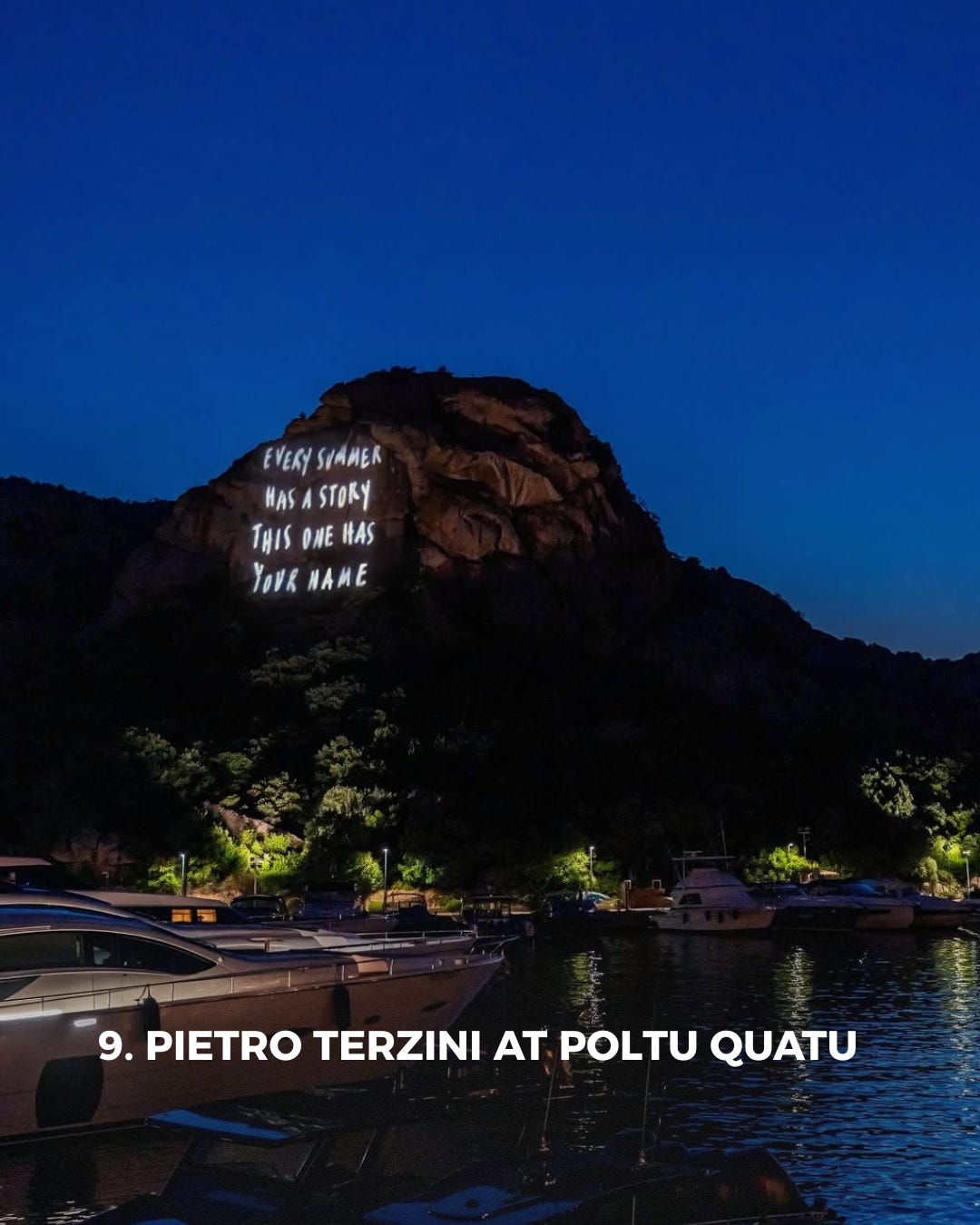
9. Pietro Terzini at Poltu Quatu
Costa Smeralda has always evolved by absorbing contemporary cultural references. Poltu Quatu means hidden port in Gallurese dialect, and for most of its life it lived up to the name. This year, artist Pietro Terzini has brought his signature text-based interventions, introducing a distinctly contemporary voice into one of the area’s most picturesque settings. His works create moments of irony and reflection within a landscape often associated with glamour. Terzini’s language feels digital and current, while the surrounding architecture remains rooted in the Mediterranean imagination of the 1960s.
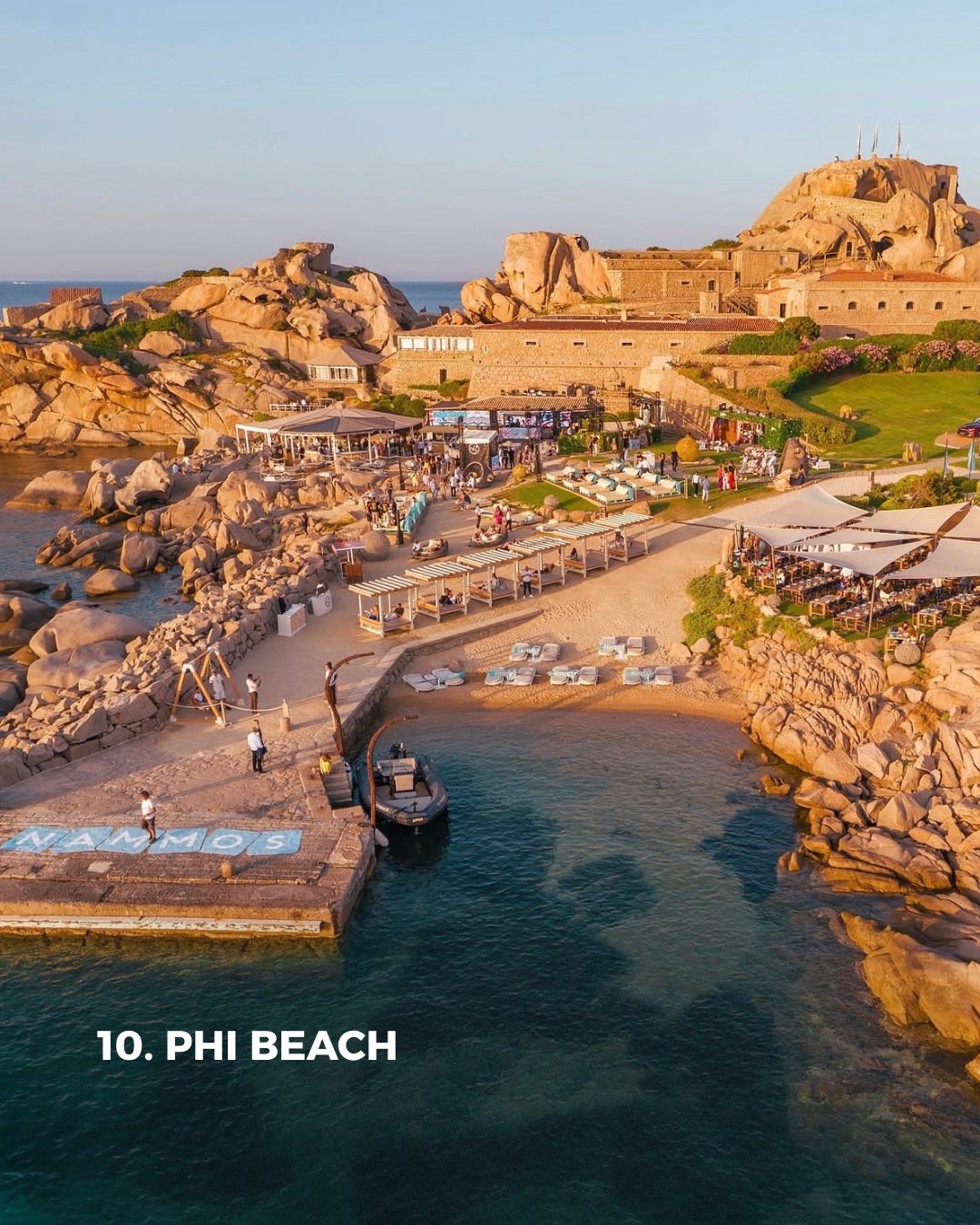
10. Phi Beach
Phi Beach sits on a cliff in front of a historic fortress in Baja Sardinia. Over the season, it hosts internationally acclaimed DJs, but the real draw is sunset hour, when the entire structure seems to dissolve into the light. Very few venues in Europe offer this kind of dialogue between architecture and atmosphere after dark.
Thanks for reading ! Subscribe to my newsletter for more and follow along on Instagram 💋