

Napoli reminds you that life is meant to be enjoyed fully: emotionally, aesthetically, spontaneously. It’s loud, tender, chaotic, generous. Everything feels alive and slightly exaggerated in the best possible way. And somehow, in all its intensity, it still feels lighthearted. It hits you first with emotion, not logic.
Capri is the extension of that energy, but sun-drenched, cinematic, slower, where everything becomes a frame.
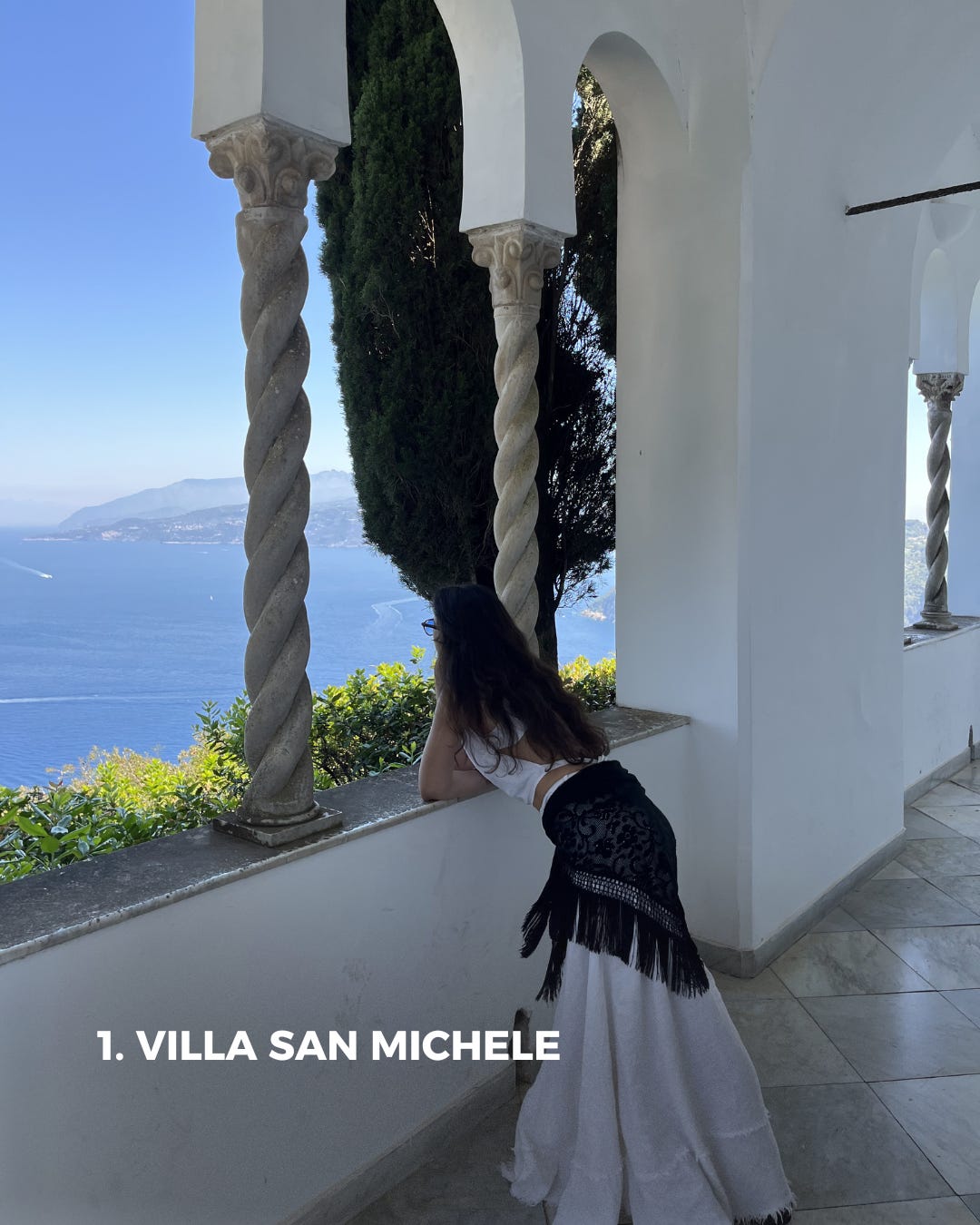
1. Villa San Michele
Built by Swedish physician Axel Munthe on the ruins of an ancient Roman villa, Villa San Michele feels like a dream translated into architecture. Perched high above Capri in Anacapri, everything there seems suspended between sky and sea. It is truly one of the most beautiful places I’ve ever seen.
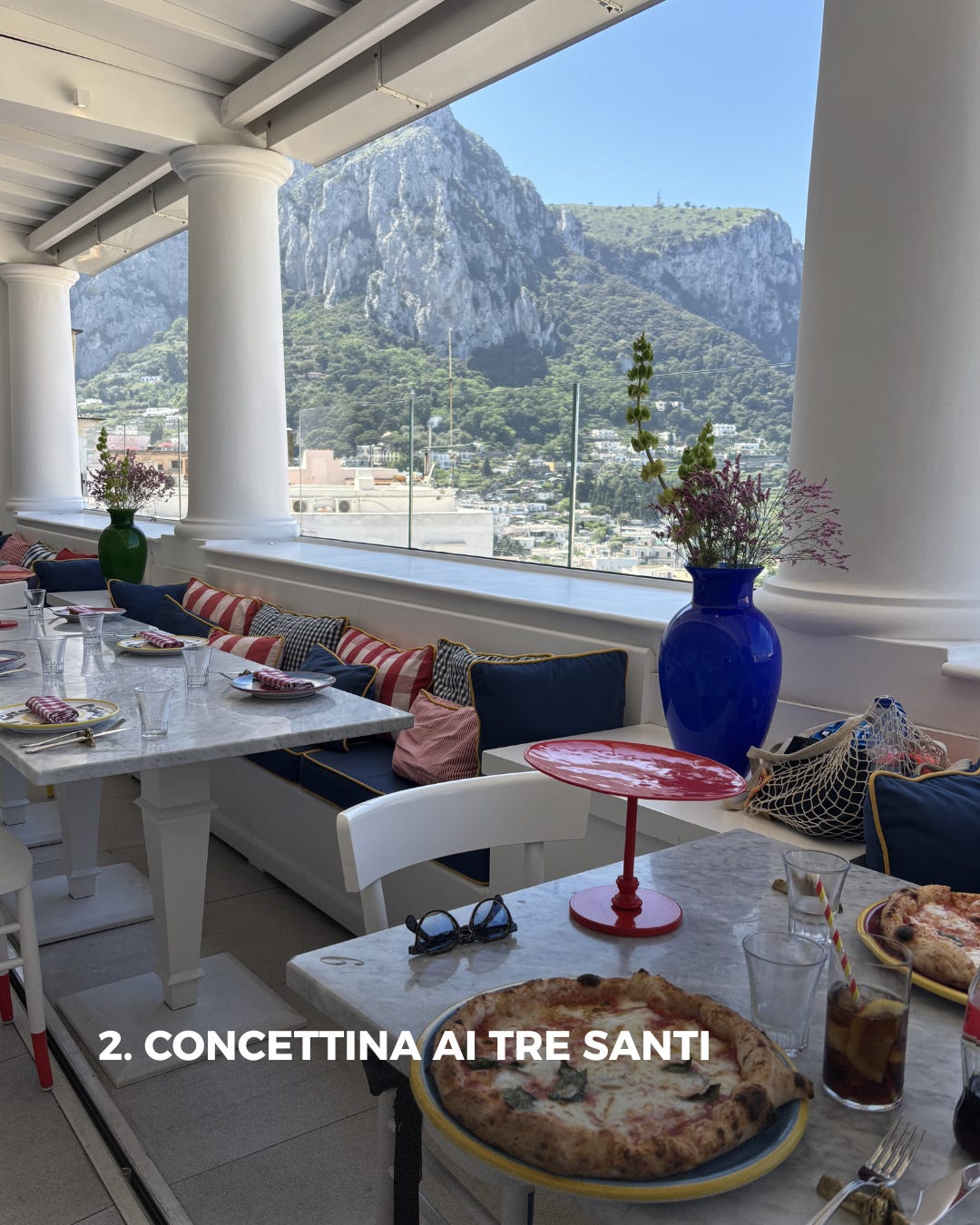
2. Concettina ai Tre Santi
Concettina ai Tre Santi carries the energy of a family institution while still attracting a younger crowd interested in food as culture.
The pizzas taste amazing, but the point is really the atmosphere. There’s warmth everywhere, no stiffness, no performance. Just people fully enjoying life around a table, which is perhaps the most Neapolitan thing possible.
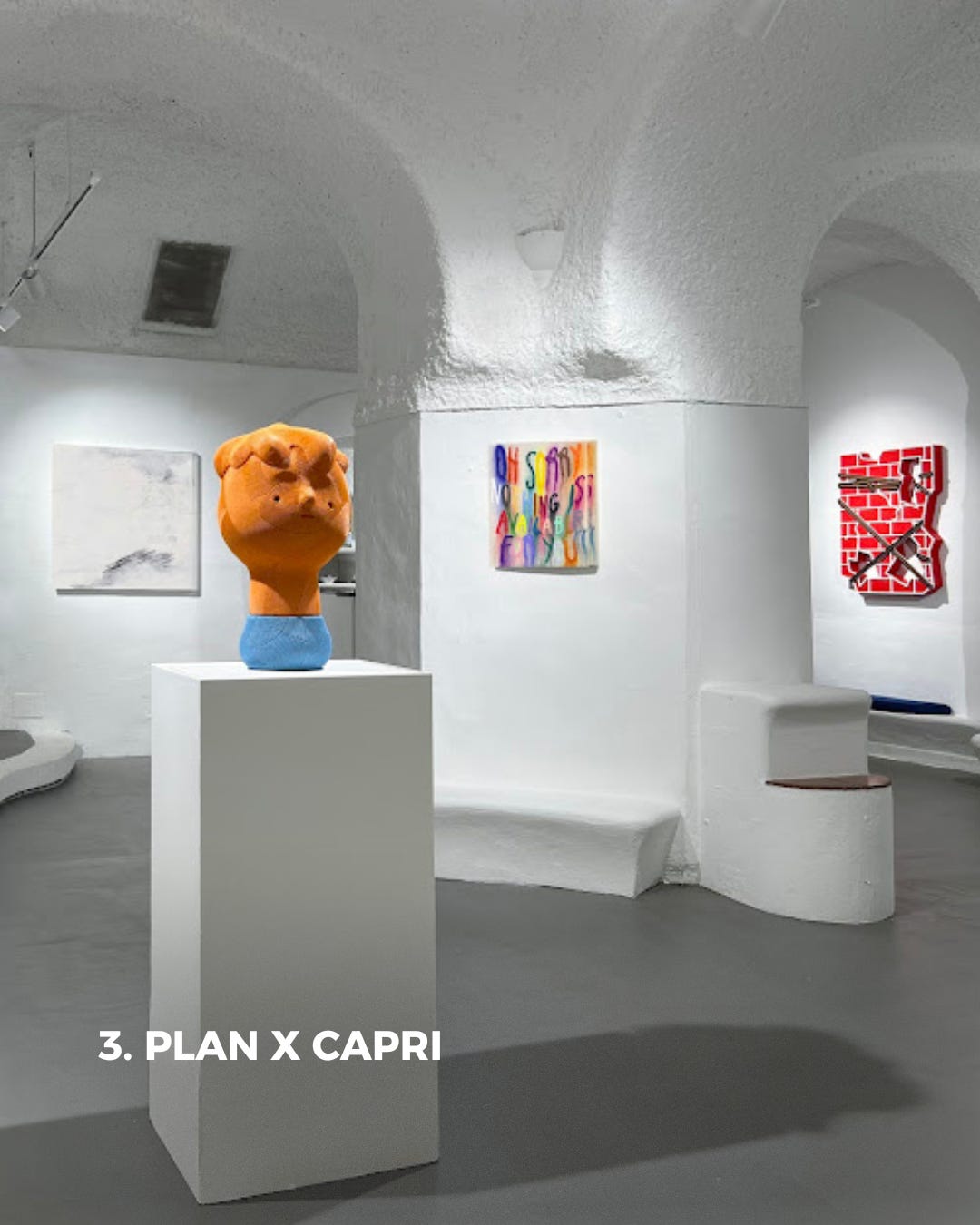
3. Plan X Capri
Capri has always attracted artists, collectors and beautiful people orbiting somewhere between leisure and culture, and Plan X feels like a contemporary continuation of that tradition.
The space brings a younger, international energy to the island’s cultural scene, balancing the polished glamour Capri is known for with something more experimental and current. During summer especially, exhibitions, conversations and openings blur naturally into aperitivos and dinners nearby.
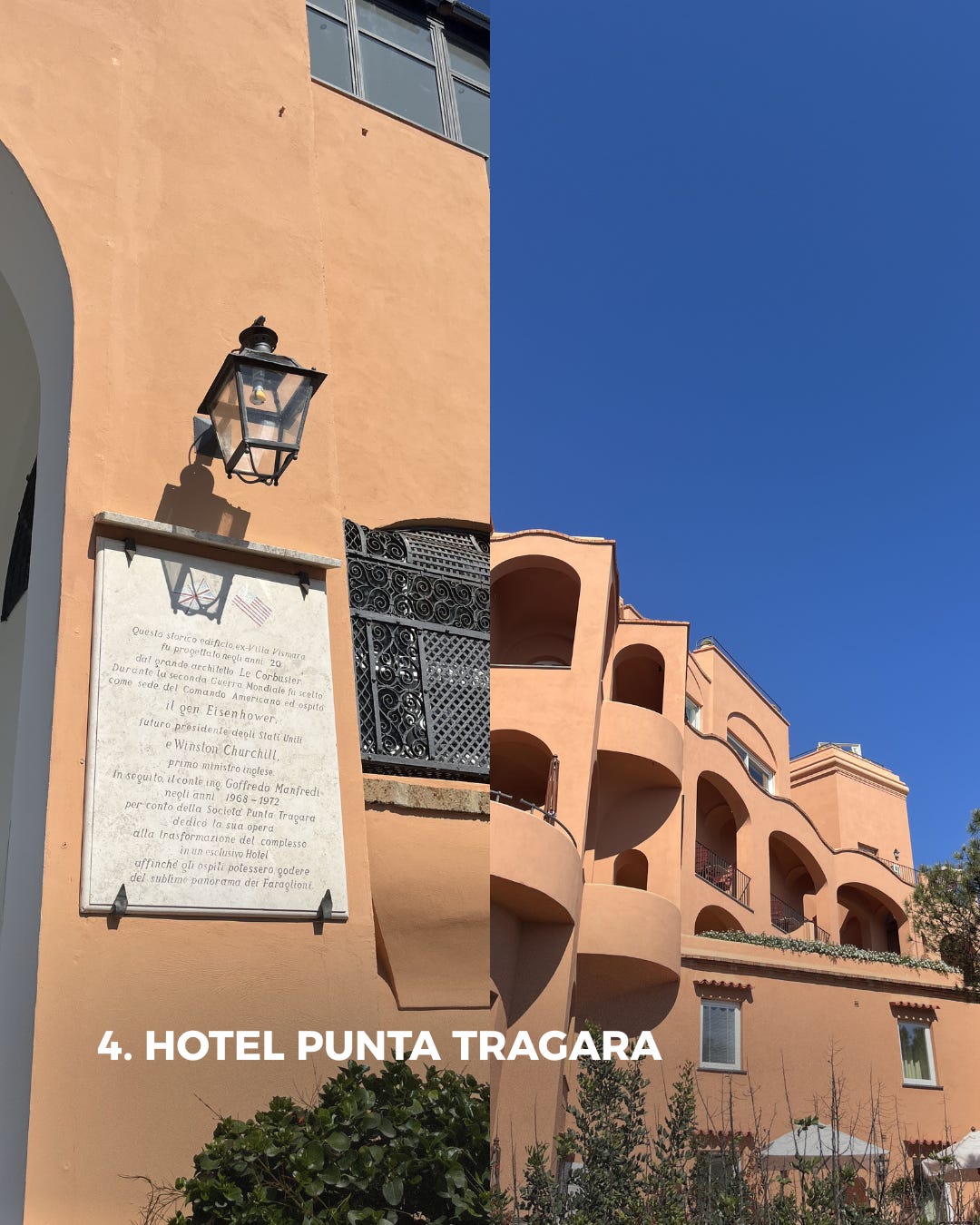
4. Punta Tragara
The walk toward Punta Tragara is part of the experience itself. Quiet villas hidden behind gates, white walls reflecting sunlight, bursts of bougainvillea everywhere. Then suddenly the view opens completely onto the Faraglioni.
At the end of the path sits the iconic hotel originally designed by Le Corbusier in the 1920s. Go close to sunset, when the entire landscape softens into red tones.
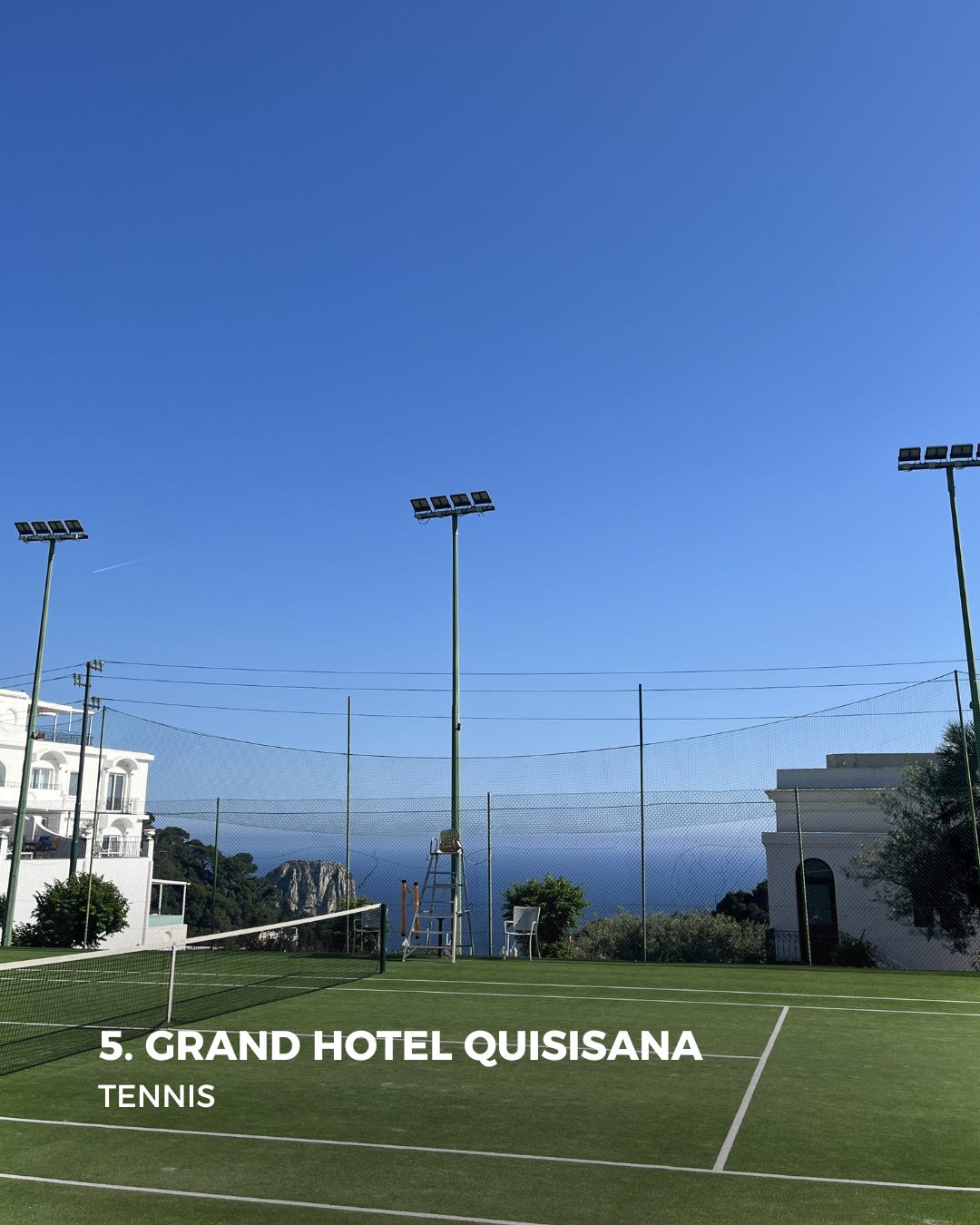
5. Grand Hotel Quisisana
The Quisisana is a social institution of Capri. Since the nineteenth century it has attracted aristocrats, artists, actors and people who prefer their luxury slightly understated. The tennis courts hold onto that atmosphere, framed by some of the most beautiful views on the island. A very specific kind of European elegance still survives here.
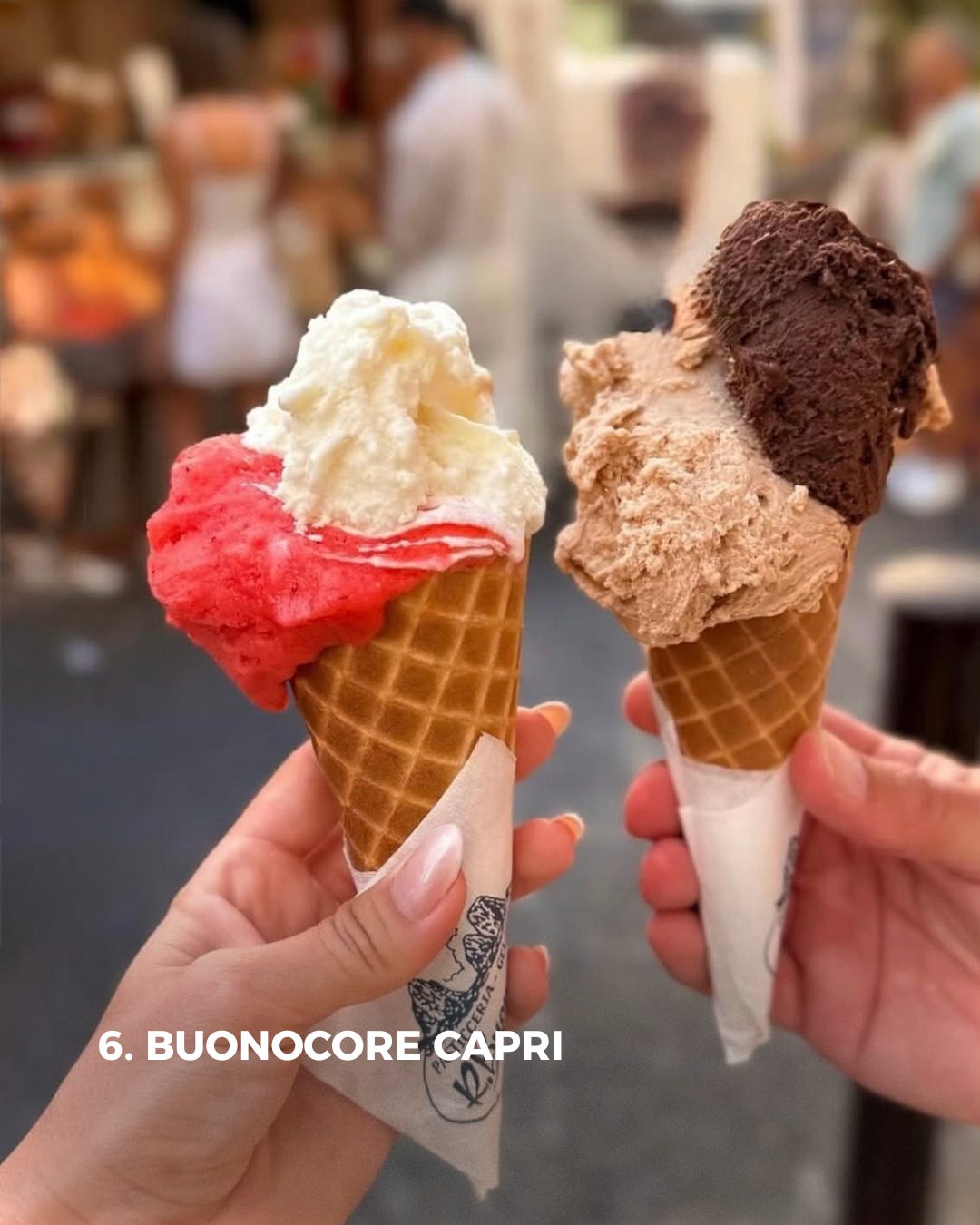
6. Buonocore
Every island has its ritual stop, and in Capri it’s Buonocore. The icecream cones are still handmade on the spot throughout the day.
There’s usually a queue, but nobody seems impatient about it. The experience is simple in theory: gelato, warm cone, walking through Capri. Despite all its glamour, the island is ultimately best enjoyed through small pleasures done extremely well.
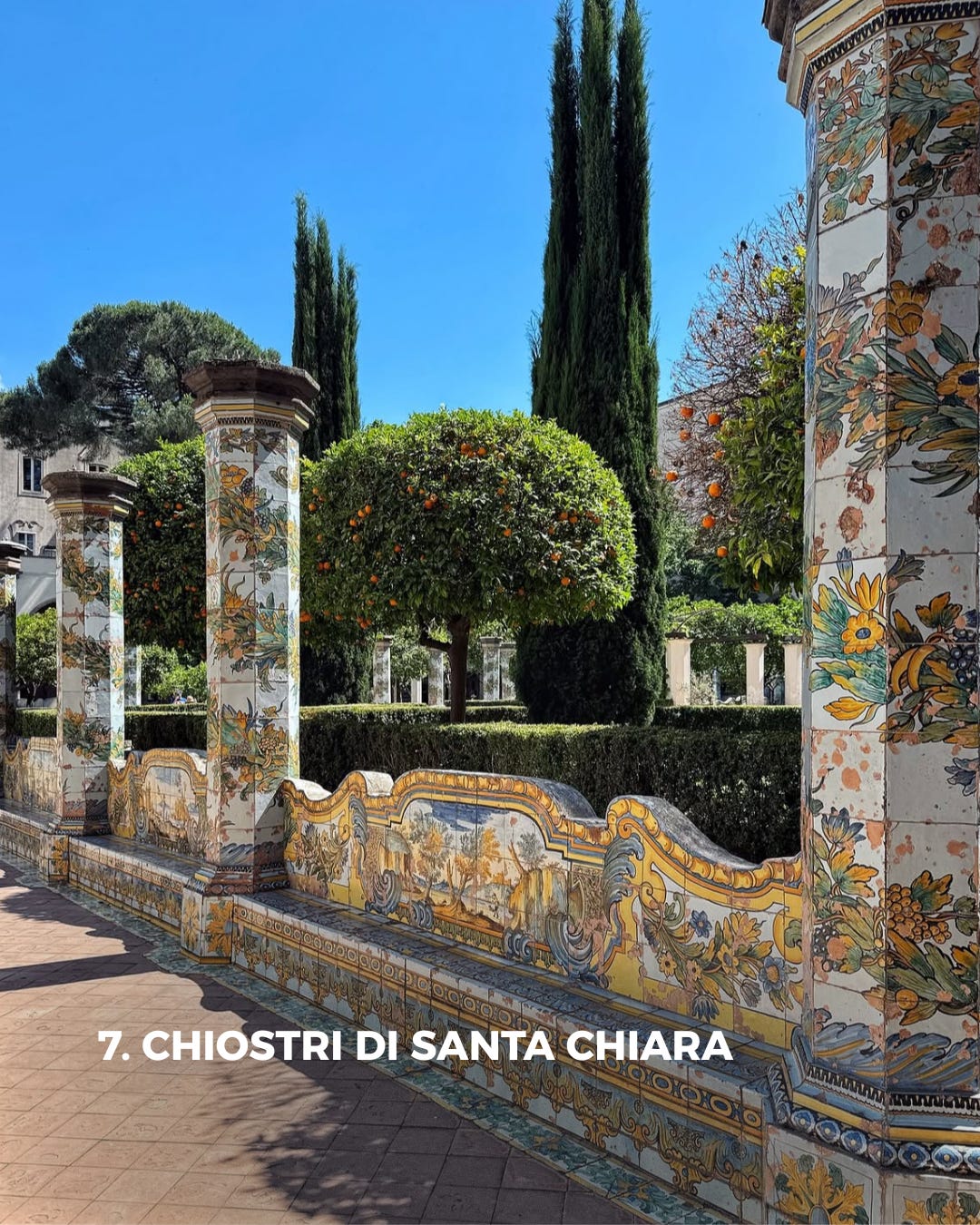
7. Chiostri di Santa Chiara
Few places capture the emotional contrast of Naples quite like the Chiostri di Santa Chiara. The cloister was rebuilt after World War II and remains one of the most beautiful examples of Neapolitan decorative art. The painted ceramic benches and columns depict pastoral scenes that feel almost dreamlike compared to the intensity outside the monastery walls.
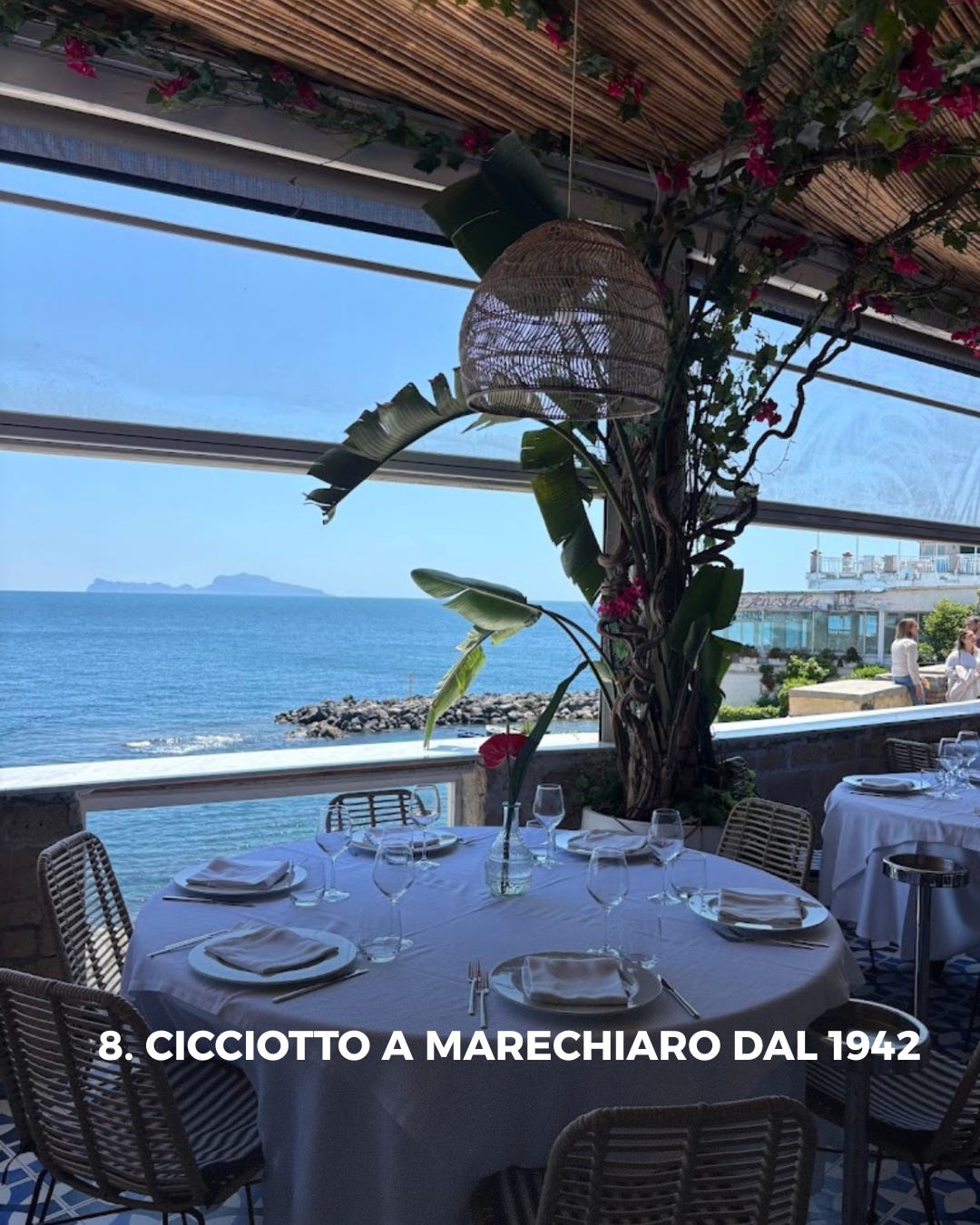
8. Cicciotto a Marechiaro
Marechiaro has long represented the more poetic side of Naples, close to Posillipo, and Cicciotto captures that atmosphere perfectly. Tables sit directly above the water, fishing boats drift nearby, and lunch stretches naturally into late afternoon.
The seafood, the pasta, the view: everything about the experience suggests that Naples has been perfecting this particular combination for a very long time.
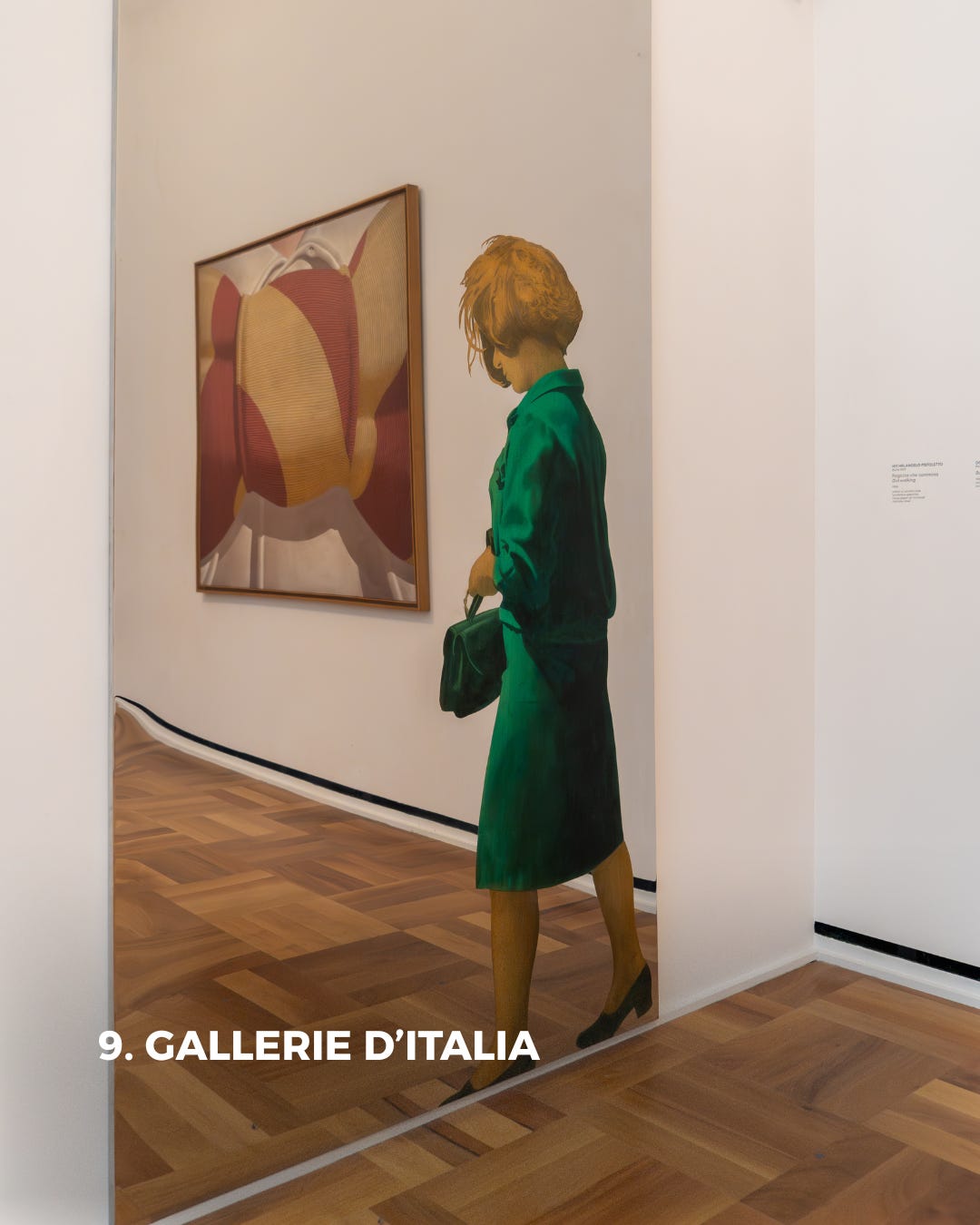
9. Gallerie d’Italia
Located inside Palazzo Piacentini on Via Toledo, Gallerie d’Italia hosts part of Intesa Sanpaolo’s corporate collection, one of Italy’s most significant examples of corporate patronage and cultural investment.
The Naples location balances historical collections with ambitious contemporary programming, creating an interesting tension between classical Italian grandeur and present-day cultural discourse. Marble staircases, monumental proportions and restrained design choices give the space a sense of intellectual and artistic refinement.
10. Teatro di San Carlo
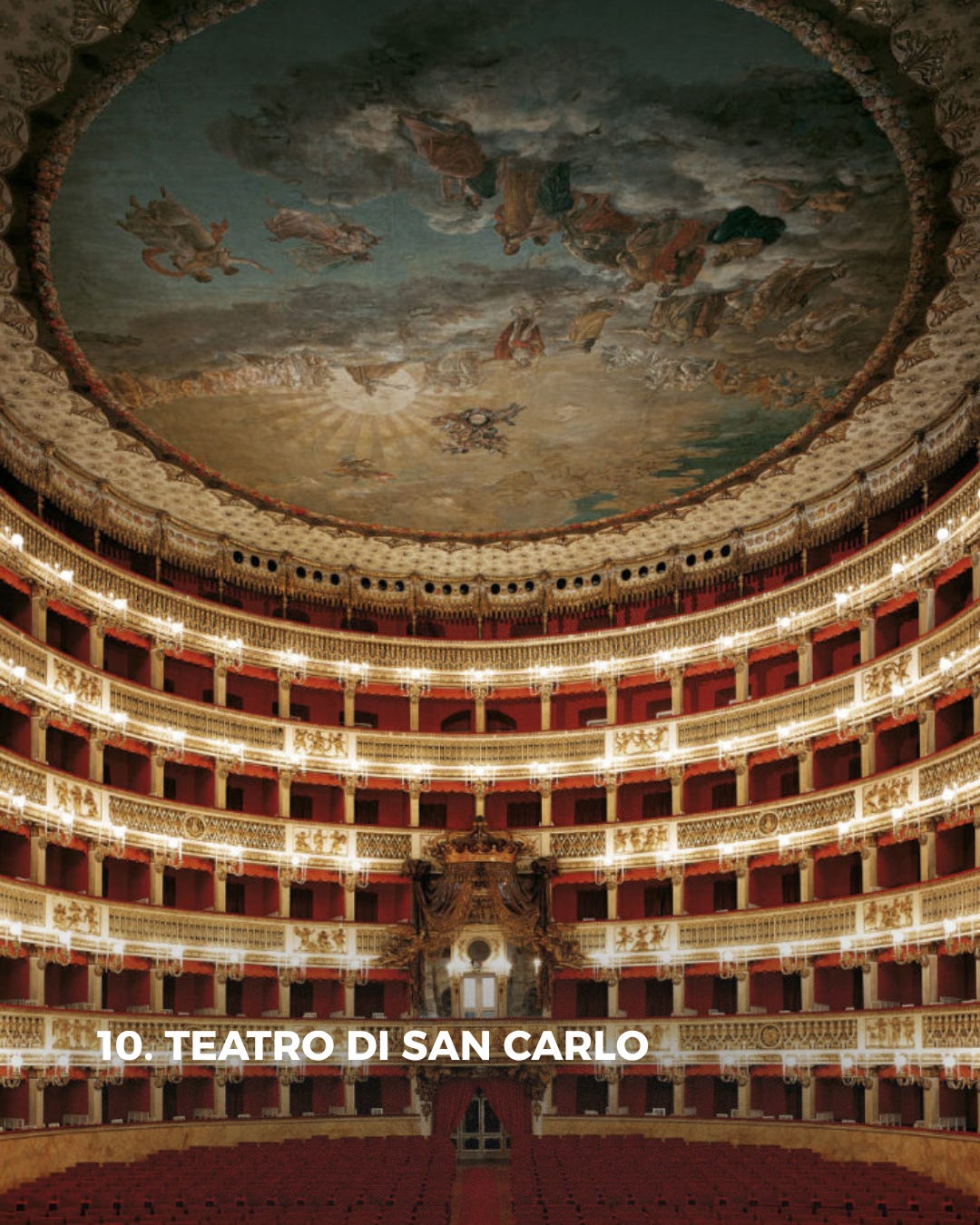
Teatro di San Carlo is the oldest continuously operating opera house in the world, opened in 1737, and somehow it still feels emotionally overwhelming when you enter.
Opera matters in Naples in a very real way. Even if you don’t attend a performance, the building itself embodies the city’s relationship to emotion, spectacle and beauty: just unapologetic magnificence.
Thanks for reading ! Subscribe to my newsletter for more and follow along on Instagram 💋