

One of my absolute favourite cities in the world, so charming, so rich with history and beauty with an urban structure like no other. It just feels unreal.
It pains me to see soulless white-light souvenir shops dotting the main streets in a city that was once the most elegant crossroads of the silk trade and a global hub for the finest exchanges between East and West.
Nevertheless, if you know where to go, Venice can still be experienced as the dreamlike, curated encounter it was always meant to be. A blend of major art institutions, hidden gems, and new openings to save for your next trip, especially with Biennale Arte 2026 in the frame.
Here’s how I like to experience Venice: slow, cherry-picked, and always with an eye for beauty.
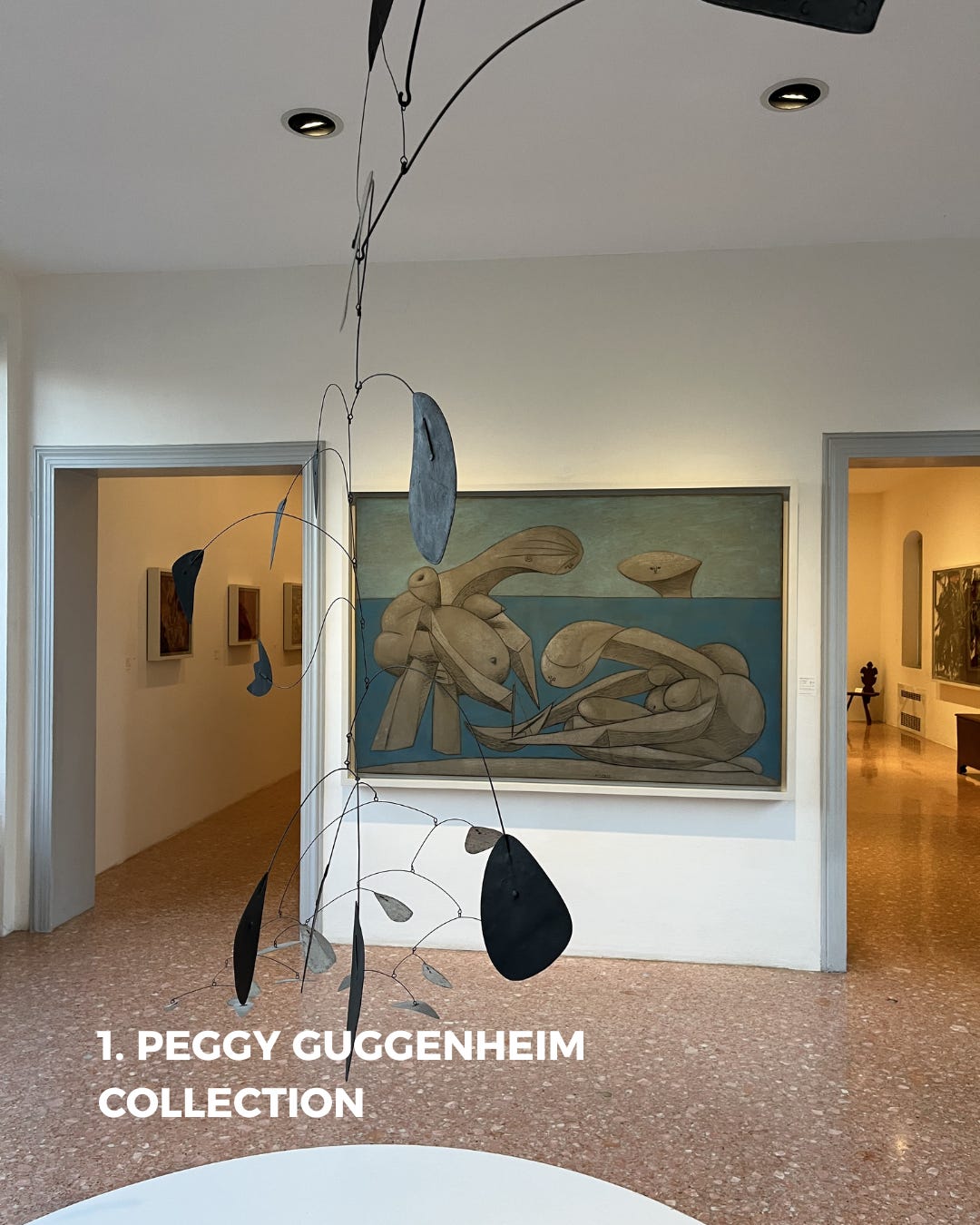
1. Peggy Guggenheim Collection
No conversation about art in Venice begins anywhere else.
Peggy Guggenheim (1898–1979) was arguably one of the most important private patron of the 20th-century avant-garde. She befriended, supported, and collected works by Picasso, Dalí, Duchamp, Kandinsky, Pollock, and Ernst (whom she also married), often acquiring pieces for extraordinary sums that would become priceless.
After living in Paris and London and running her legendary gallery, she settled permanently in Venice in 1949, at Palazzo Venier dei Leoni, filled with an intimate, personal, and unique collection.
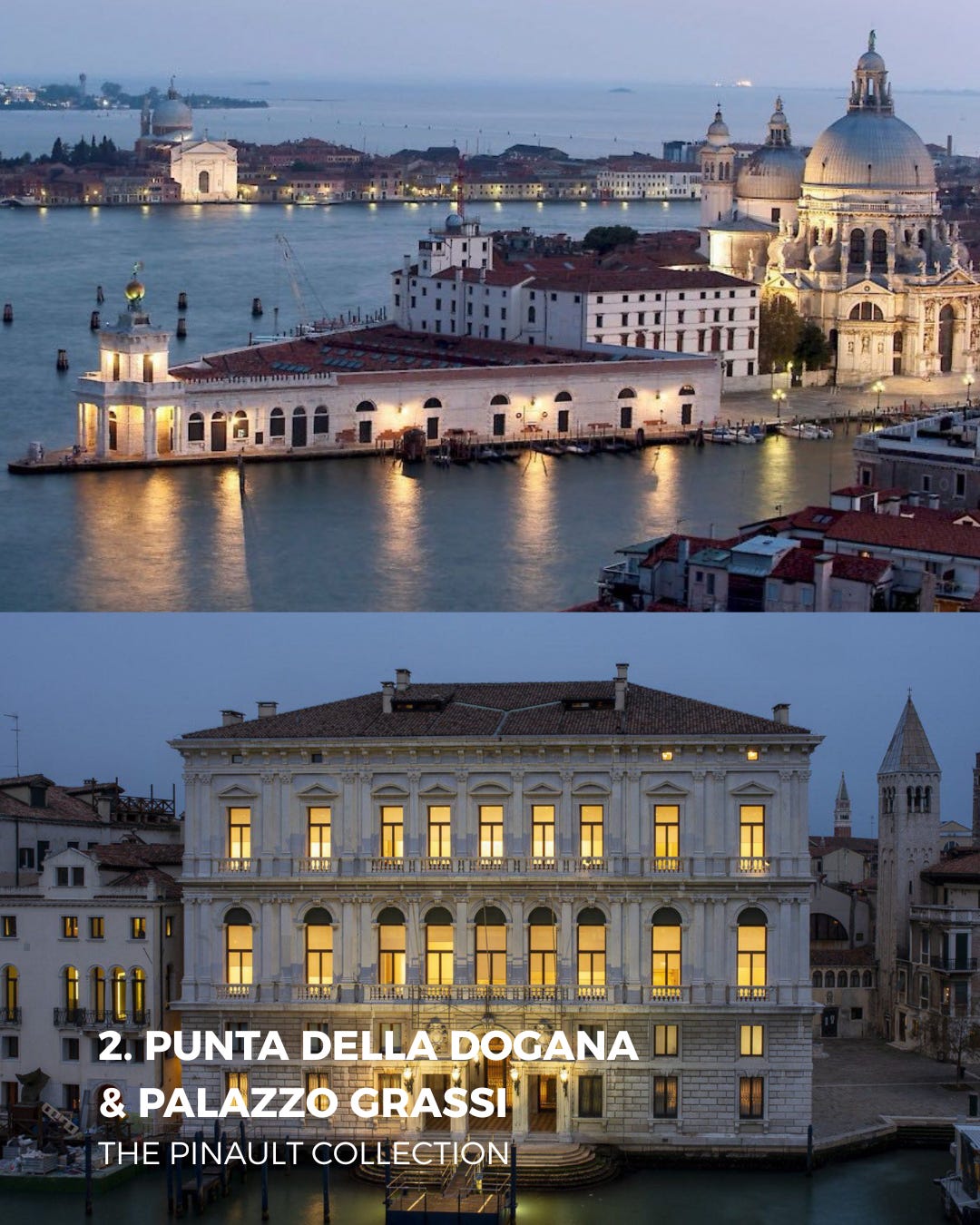
2. Punta della Dogana & Palazzo Grassi
The Pinault Collection
François Pinault, the French billionaire and founder of Kering, acquired Palazzo Grassi in 2005. Designed by Giorgio Massari in the 18th century, the palazzo was followed by a second acquisition: Punta della Dogana, the former customs house at the tip of Dorsoduro where the Grand Canal meets the Giudecca, in 2009. Together they form one of the world’s most significant private contemporary art platforms.
Both spaces were redesigned by one of my favourite architects, Tadao Ando, with his characteristic blend of concrete, light, and space brought into conversation with historic Venetian architecture.
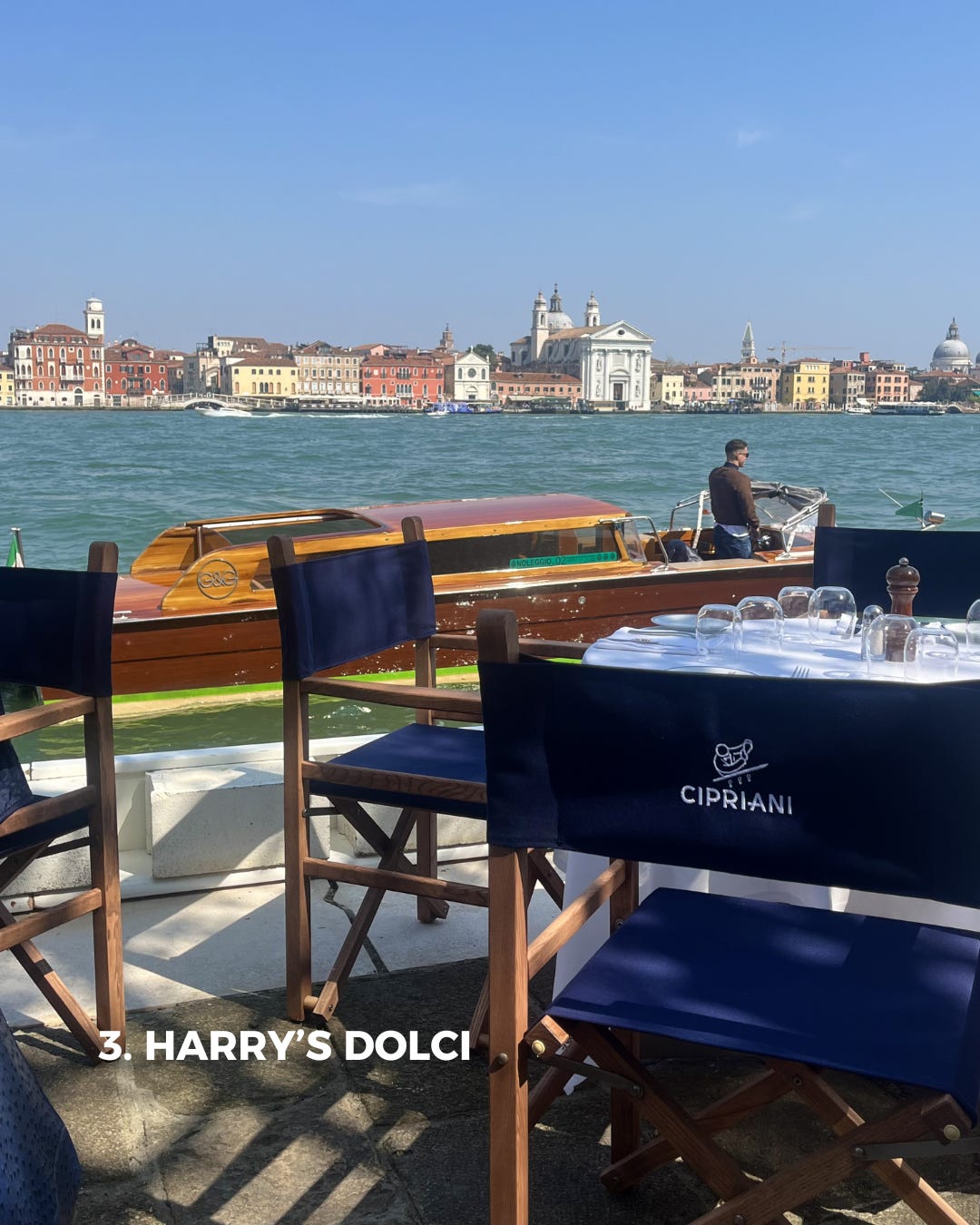
3. Harry’s Dolci
Harry’s Bar is an institution. The birthplace of the Bellini, beloved by Hemingway, Orson Welles, and royalty too numerous to name. Harry’s Dolci, its quieter sibling on the Giudecca island, is a more discreet choice.
Take a boat across, which is part of the experience, and the arrival at the Giudecca waterfront immediately changes the atmosphere, away from the tourist press of San Marco. Harry’s Dolci shares the same Cipriani philosophy instilled by Giuseppe Cipriani, but the pace is gentler, the tables more generous, and the views are incomparably dreamy on a fine afternoon.
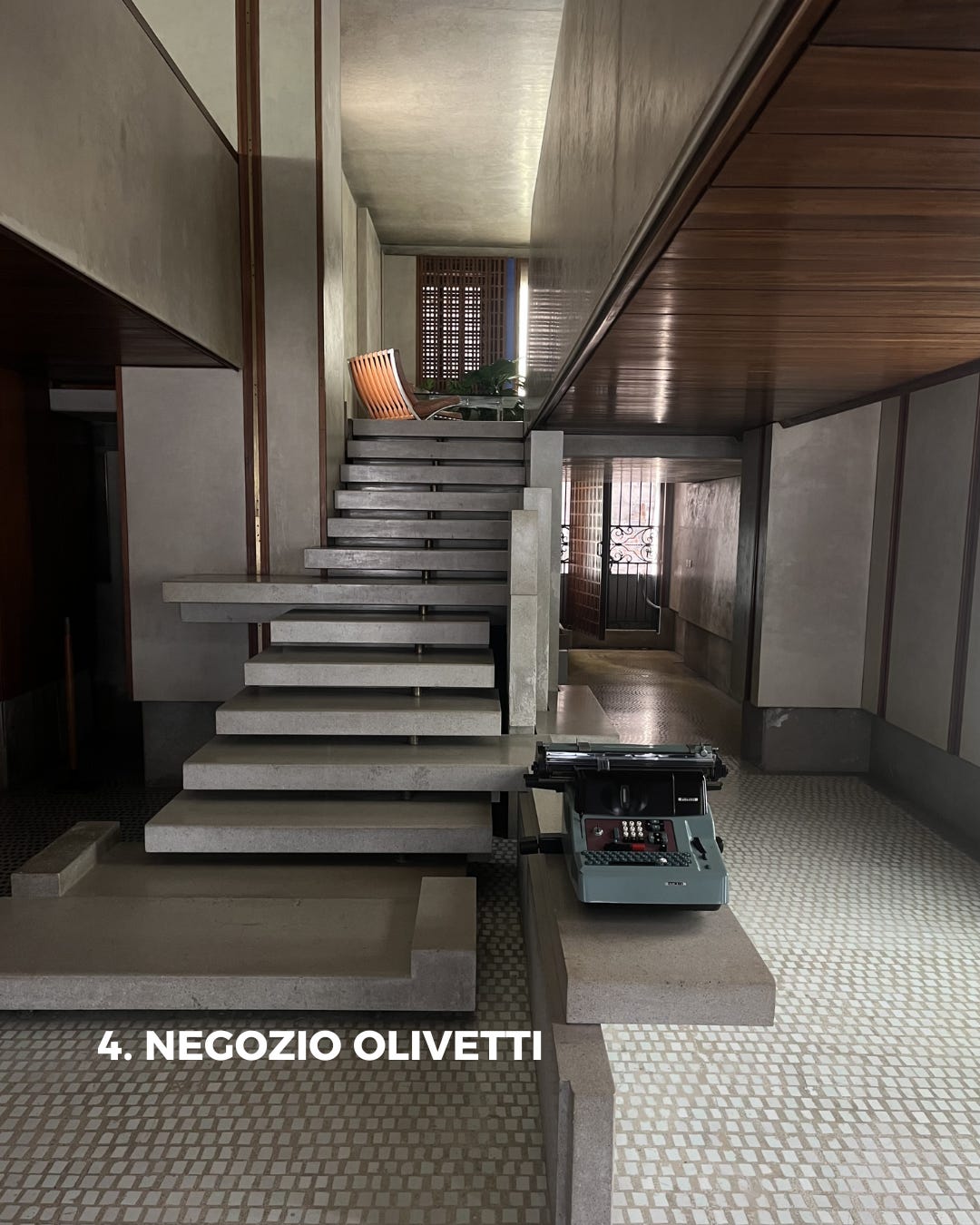
4. Negozio Olivetti
Right in Piazza San Marco sits one of the great jewels of 20th-century Italian design, and almost everyone walks past it without knowing.
Carlo Scarpa designed this showroom for the Olivetti typewriter company in 1958, and it remains one of the finest examples of his extraordinary craft: the way he handles stone, the floating staircase, the interplay between levels, the relationship with light and water. Scarpa was a Venetian architect who understood the city’s layered materiality better than almost anyone.
5. Aman Venice
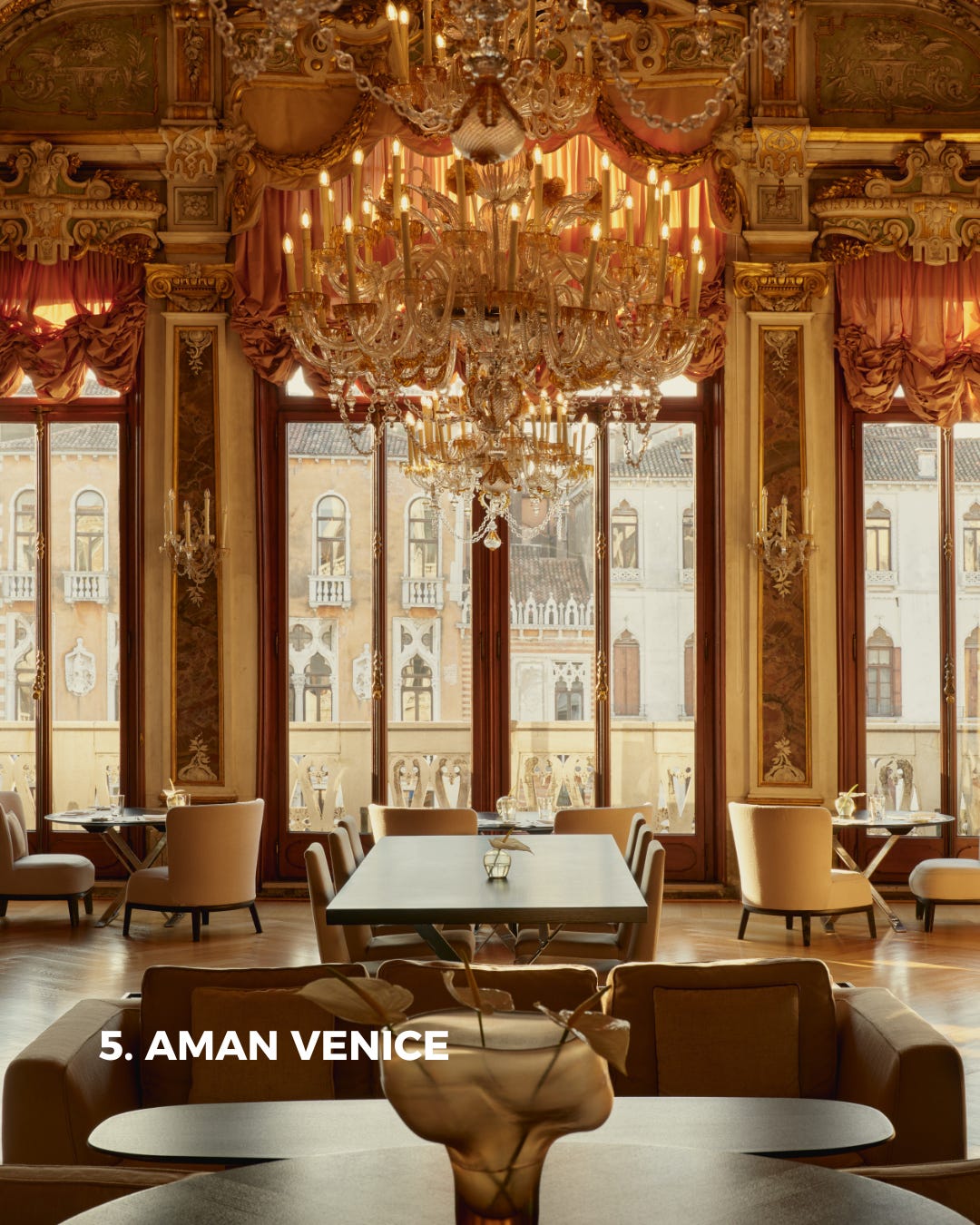
Housed in the 16th-century Palazzo Papadopoli, Aman Venice may be one of the most beautiful hotels in the world. The ballroom with frescoes by Giambattista Tiepolo, the private garden (one of the very few in the city), the Murano glass chandeliers, the suites with their painted ceilings: it is a property that makes you understand why Venice was once the most powerful and most beautiful city on earth.
Even if you are not staying, the bar and the terrace are accessible, making it a discreet hub for the quieter conversations.
6. Palazzo Soranzo Van Axel
Palazzo Bottega Veneta
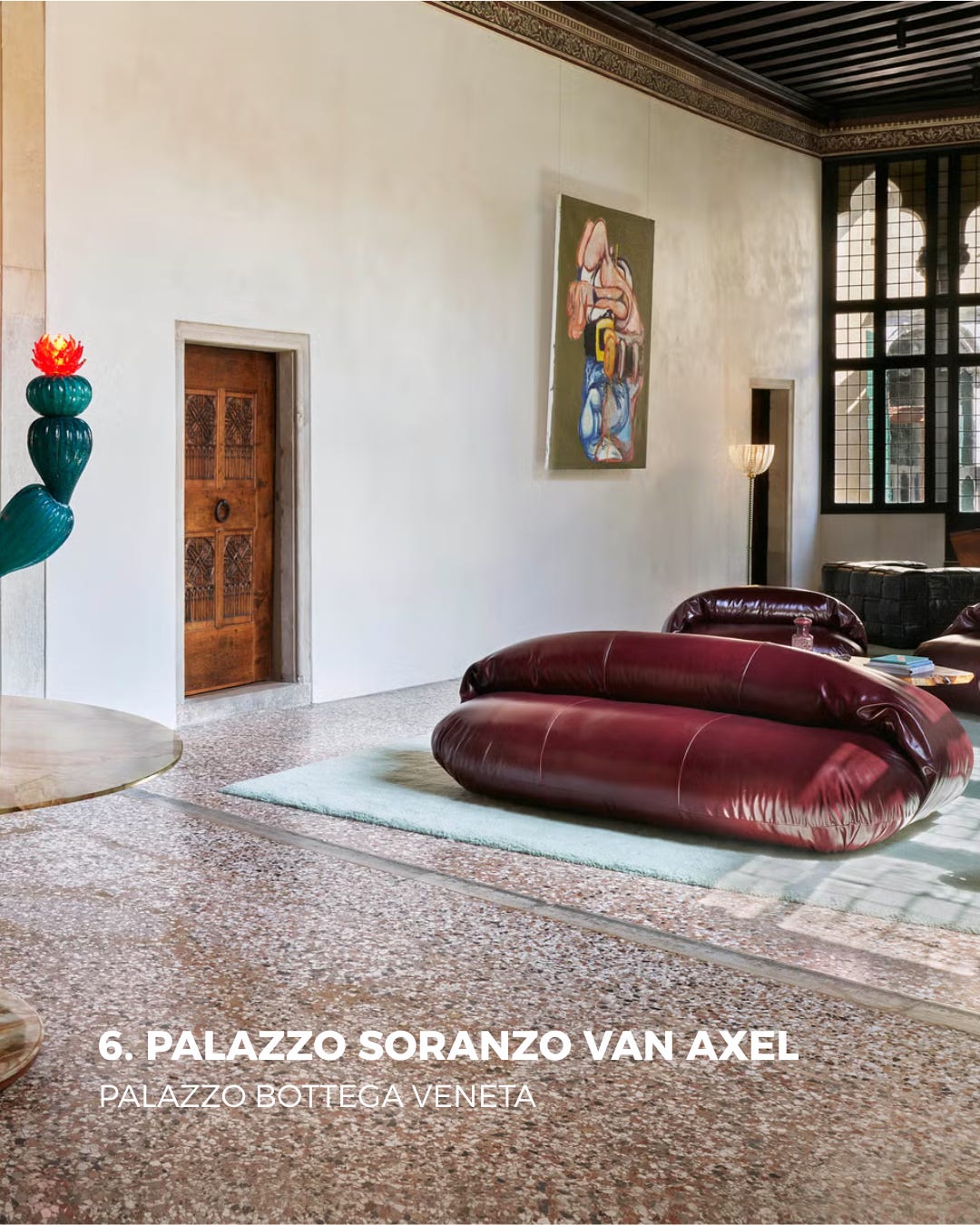
Bottega Veneta, a house whose very name means “Venetian artisanal shop” took on the guardianship of a 15th-century Gothic palazzo in Cannaregio, built between 1473 and 1479 for the Soranzo family using materials recovered from an even older Byzantine palace.
Ex-creative director Matthieu Blazy created a living cultural space for private appointments and curated experiences for the house’s most valued clients and guests.
7. Palazzo Manfrin
Anish Kapoor Foundation
Anish Kapoor’s relationship with Venice runs deep.
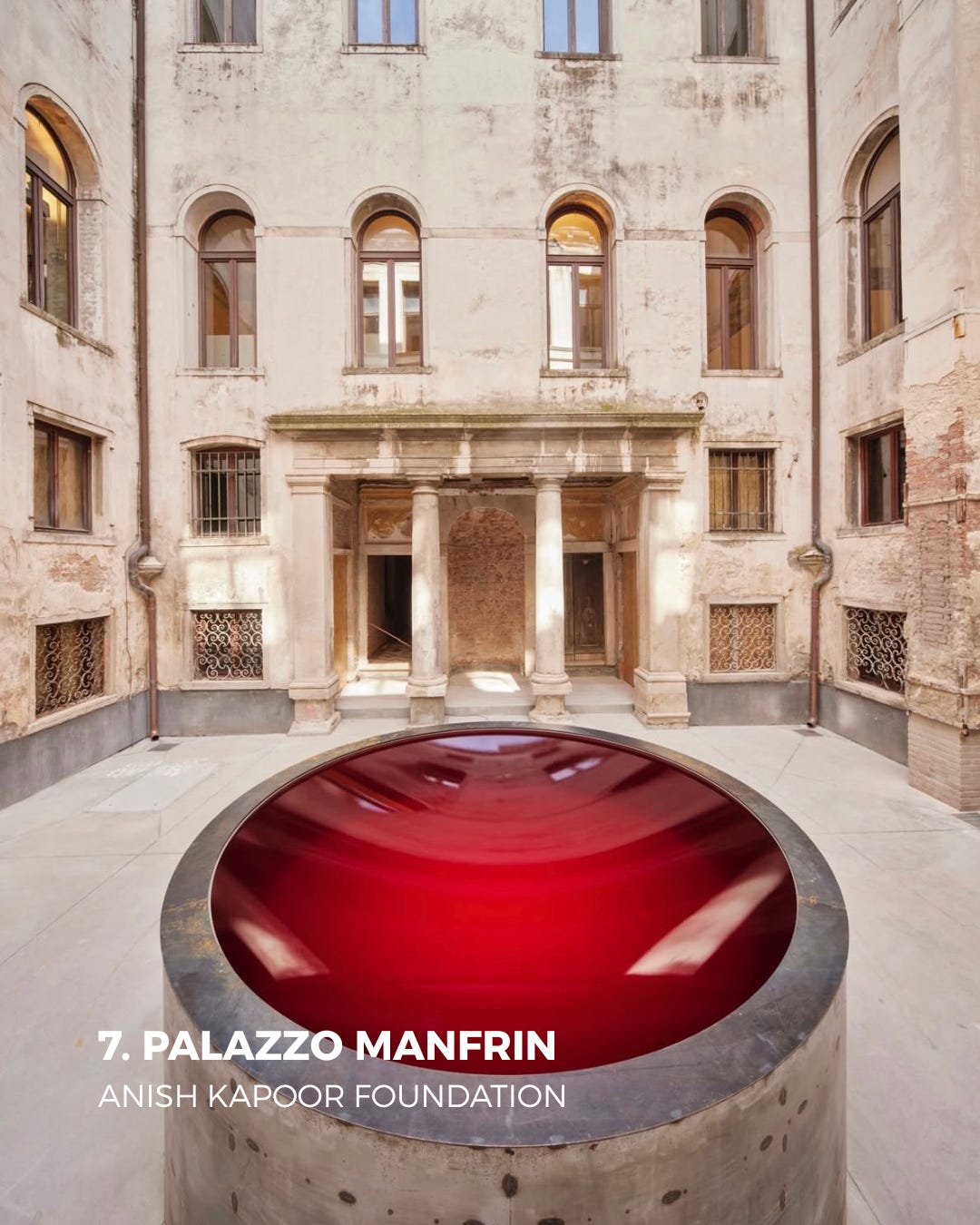
In 2022, the British-Indian sculptor acquired the historic Palazzo Manfrin in Cannaregio, one of the largest privately owned palazzi in Venice, with the intention of establishing a permanent foundation and exhibition space dedicated to his work. It will be accessible to the public in May during Biennale after four years of restoration.
8. The Venice Venice Hotel
Golden Goose
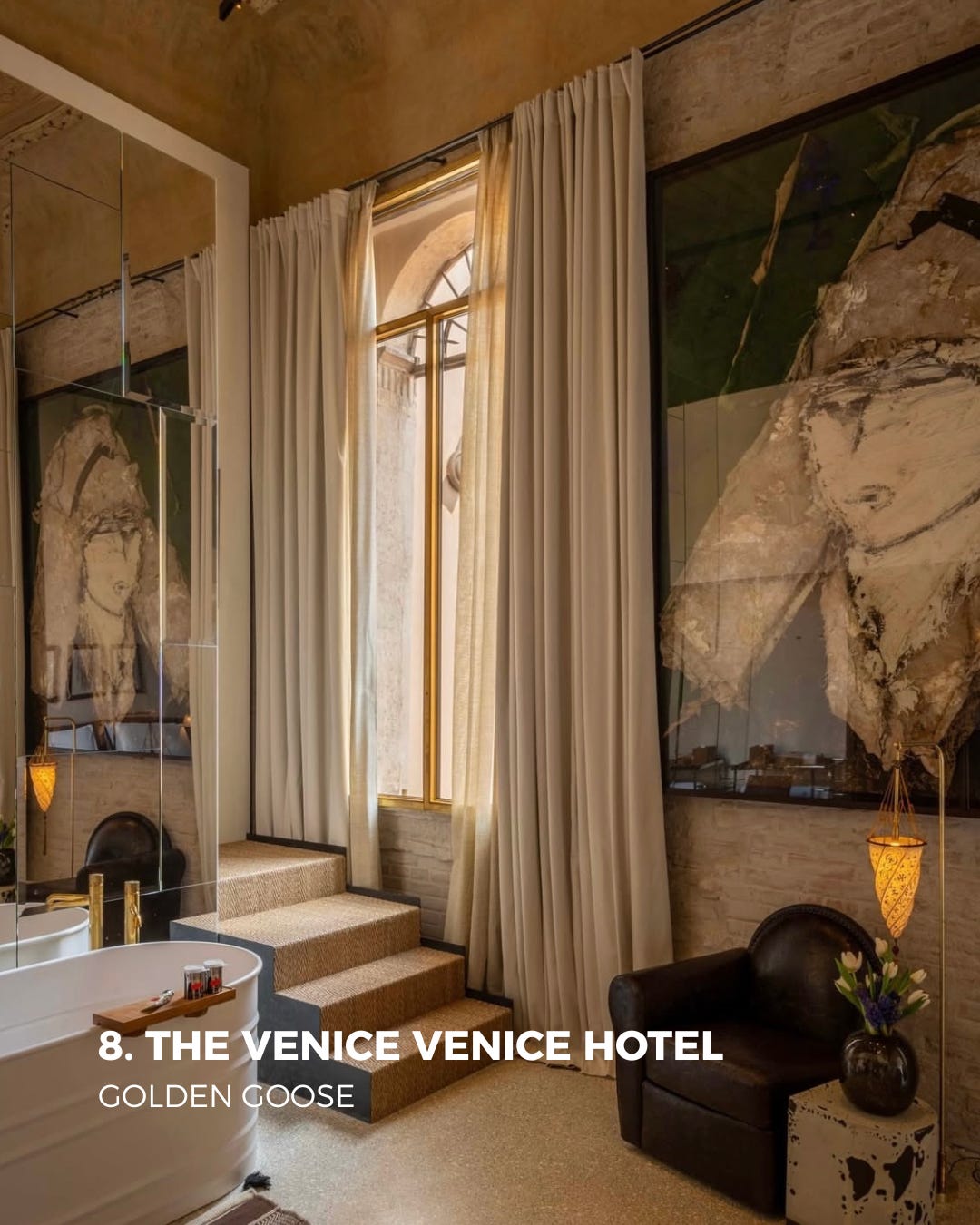
Alessandro Gallo and Francesca Rinaldo, the Venetian couple who founded Golden Goose, turned their creative energy toward the city. The Venice Venice Hotel is one of several bold moves that show just how far their creative vision extends beyond fashion. The hotel occupies Palazzo Ca’ da Mosto, widely considered the oldest on the Grand Canal, a Byzantine structure dating to the 13th century that had spent decades in abandonment before their restoration.
Their guiding concept is POSTVENEZIANITÀ – a cultural movement they coined to describe a Venice capable of genuine dialogue with contemporary life without sacrificing its roots. Each room has been conceived as a distinct piece, with collaborations spanning Arte Povera, conceptual art, radical architecture, and Fluxus.
9. AMA Venezia
Venice has a long tradition of collectors who arrive and never quite leave.
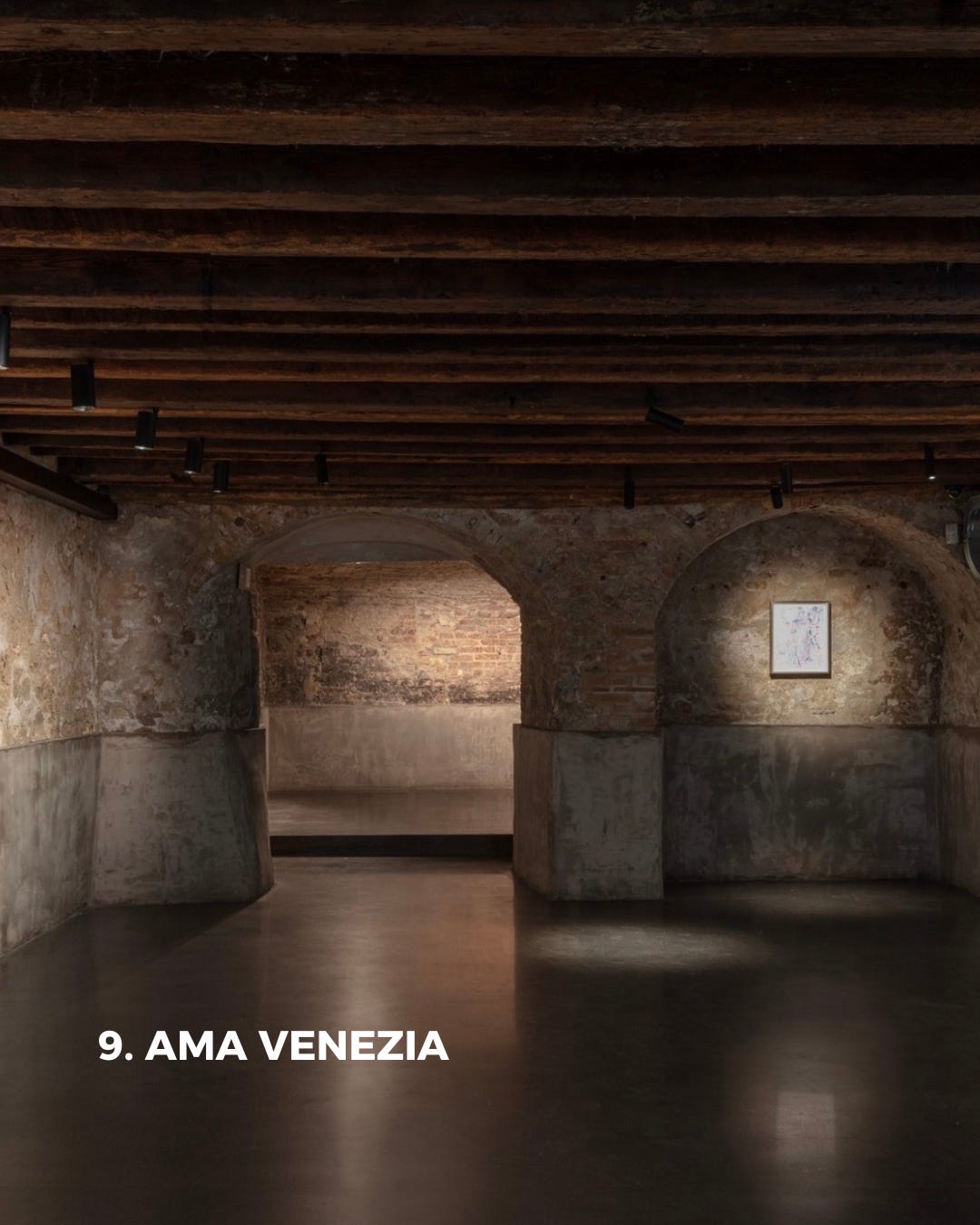
Laurent Asscher is a Belgian collector and philanthropist and one of the most compelling to have chosen La Serenissima as his home for art. AMA Venezia, named after the initials of his three children, opened in April 2025 in a meticulously retrofitted former soap factory on Fondamenta de Ca’ Vendramin. The collection has a particular focus on American artists from the 1960s to the present.
10. Fondazione Dries Van Noten
One of 2026’s most anticipated cultural openings.
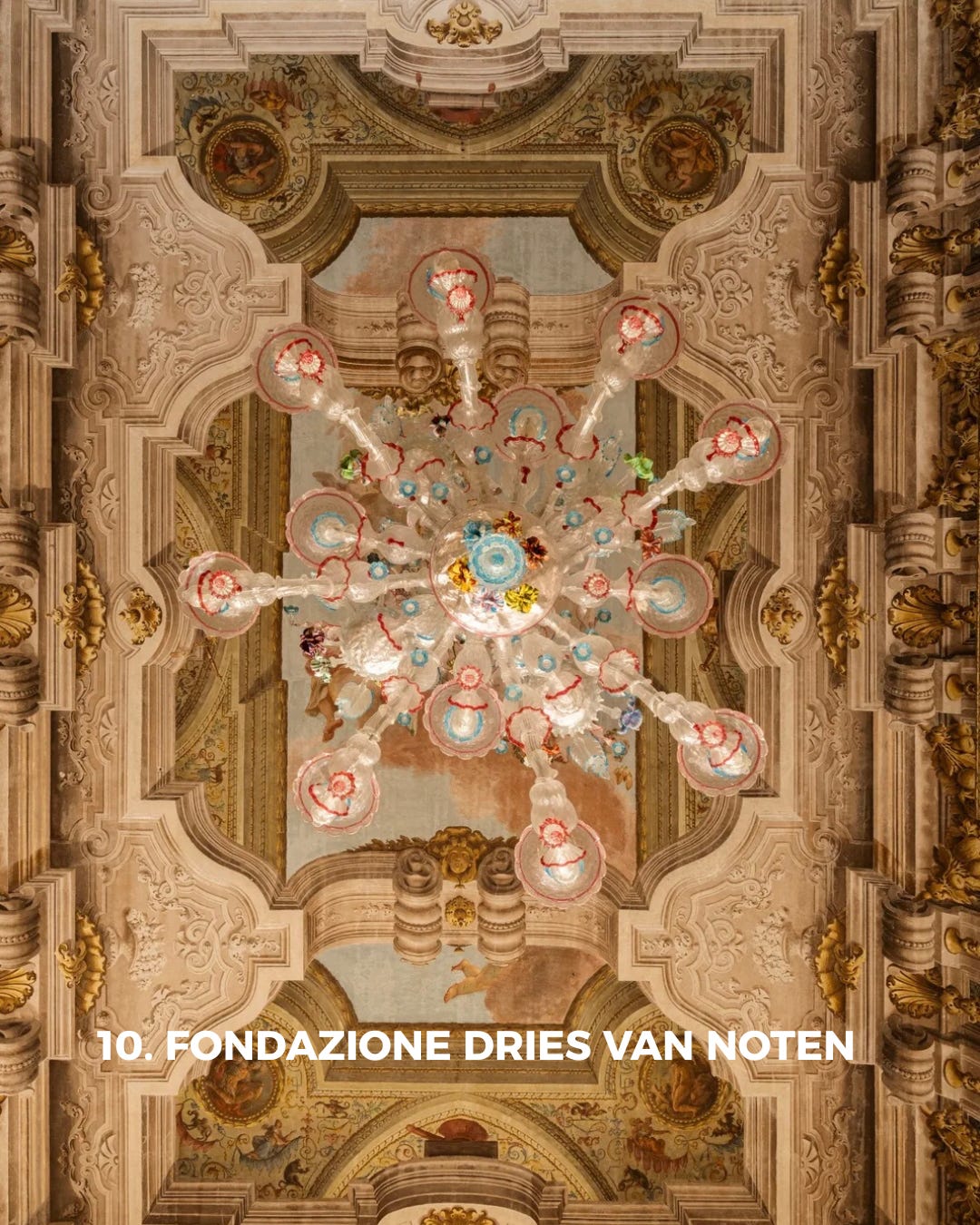
Dries Van Noten, who stepped back from his label in 2024 after nearly four decades, and his partner, the chef Patrick Vangheluwe, acquired the magnificent Palazzo Pisani Moretta. Built in the late 15th century in Venetian Gothic Fiorito style and redecorated between 1735 and 1750 by Chiara Pisani in an immaculate Rococo idiom with frescoes by Tiepolo, Guarana, Diziani, and Angeli, the palazzo has hosted an annual Carnival masquerade for centuries and appeared in films from Casino Royale to The Tourist.
The Fondazione is dedicated entirely to craftsmanship. As Van Noten has put it: “Craftsmanship is things that you do with your hands, yes, but also with your soul.”
Thanks for reading ! Subscribe to my newsletter for more and follow along on Instagram 💋
Thanks for this city guide! Also LOVE the title. Cool kids are definitely into art ;)