

Rome is flawless, but it refuses to be consumed in a reasonable amount of time. You could spend three days doing nothing but churches and still miss half of what matters. You could dedicate an entire afternoon to a single palazzo and leave feeling like you’ve only scratched the surface of a surface. History is everywhere, woven into the streets, hung on ceilings you’d walk right under if no one told you to look up. What follows is not a comprehensive guide. It couldn’t be. It’s a selection, curated for those who appreciate art with a side of atmosphere and aren’t afraid of a queue when it’s worth it.
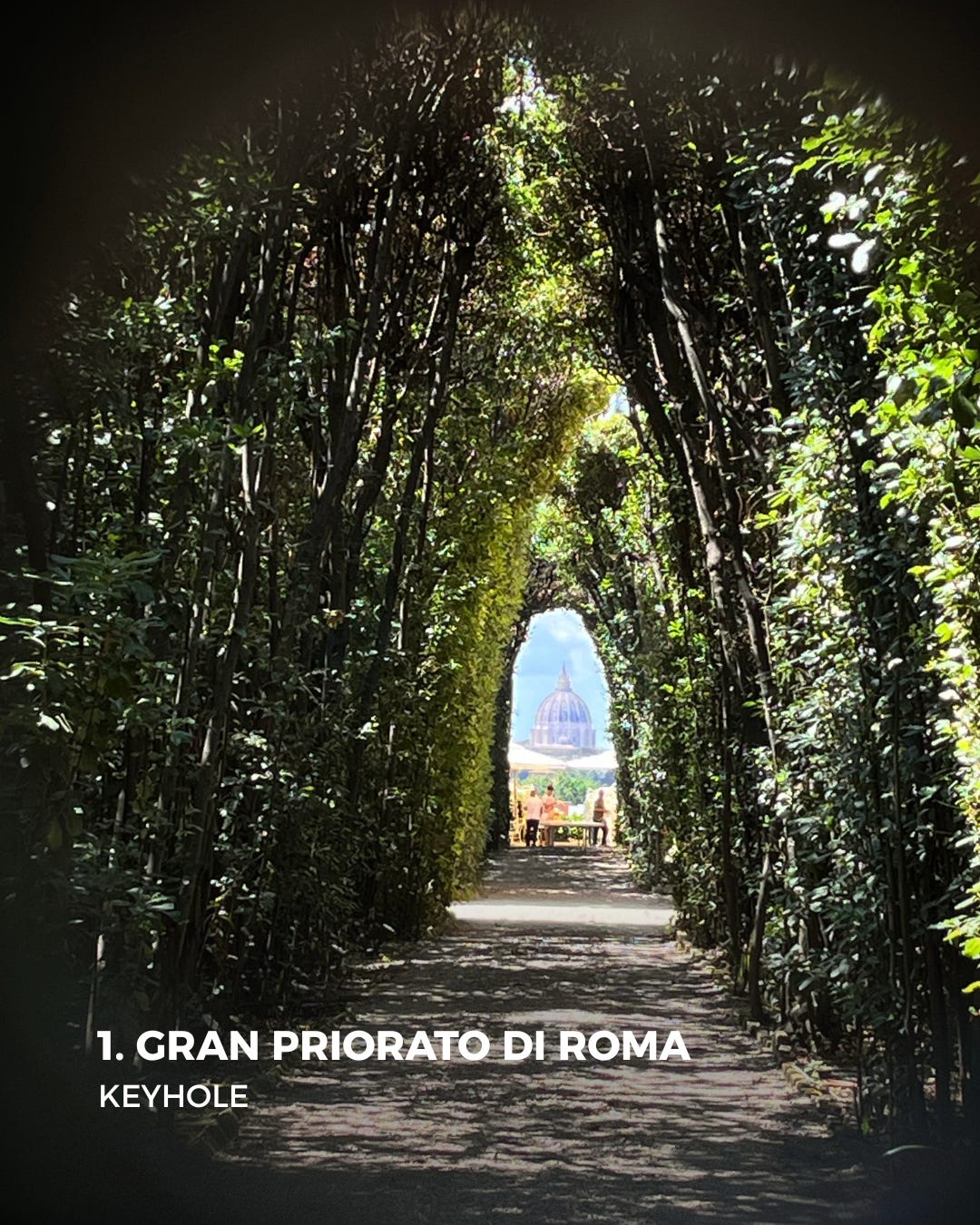
1. Gran Priorato di Roma — keyhole
A tiny keyhole with one of the most perfectly framed views in the world. Peek through and you’ll see the dome of St. Peter’s Basilica aligned between sculpted hedges, a composition so intentional it feels almost too good to be true. Located on the Aventine Hill, one of the dreamiest corners of Rome, the atmosphere feels almost suspended in time. Go early or during lunch break, the line forms quickly.
Nearby bonus: stroll around the entire Aventine area which is full of quiet elegance, umbrella pines and hidden villas.
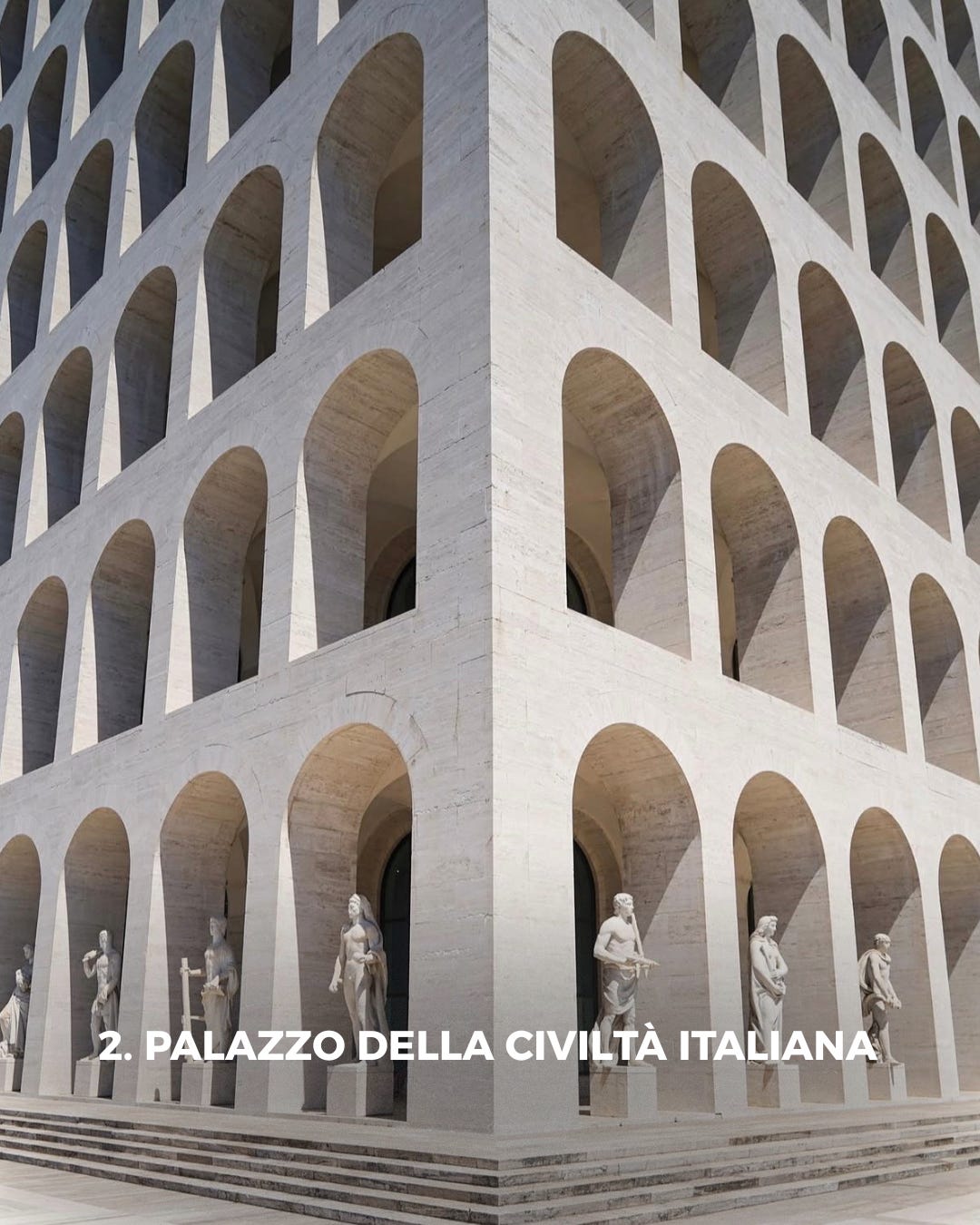
2. Palazzo della Civiltà Italiana
The Palazzo della Civiltà Italiana, known colloquially as the Colosseo Quadrato, is one of the most stunning pieces of rationalist architecture in existence. Built during the Fascist era, it was intended to celebrate Italian civilisation for the 1942 World’s Fair that never happened. Fendi chose it as their global headquarters in 2015, which does something interesting to the building’s already layered symbolism.
Worth making the trip to EUR around sunset for the aesthetics alone.
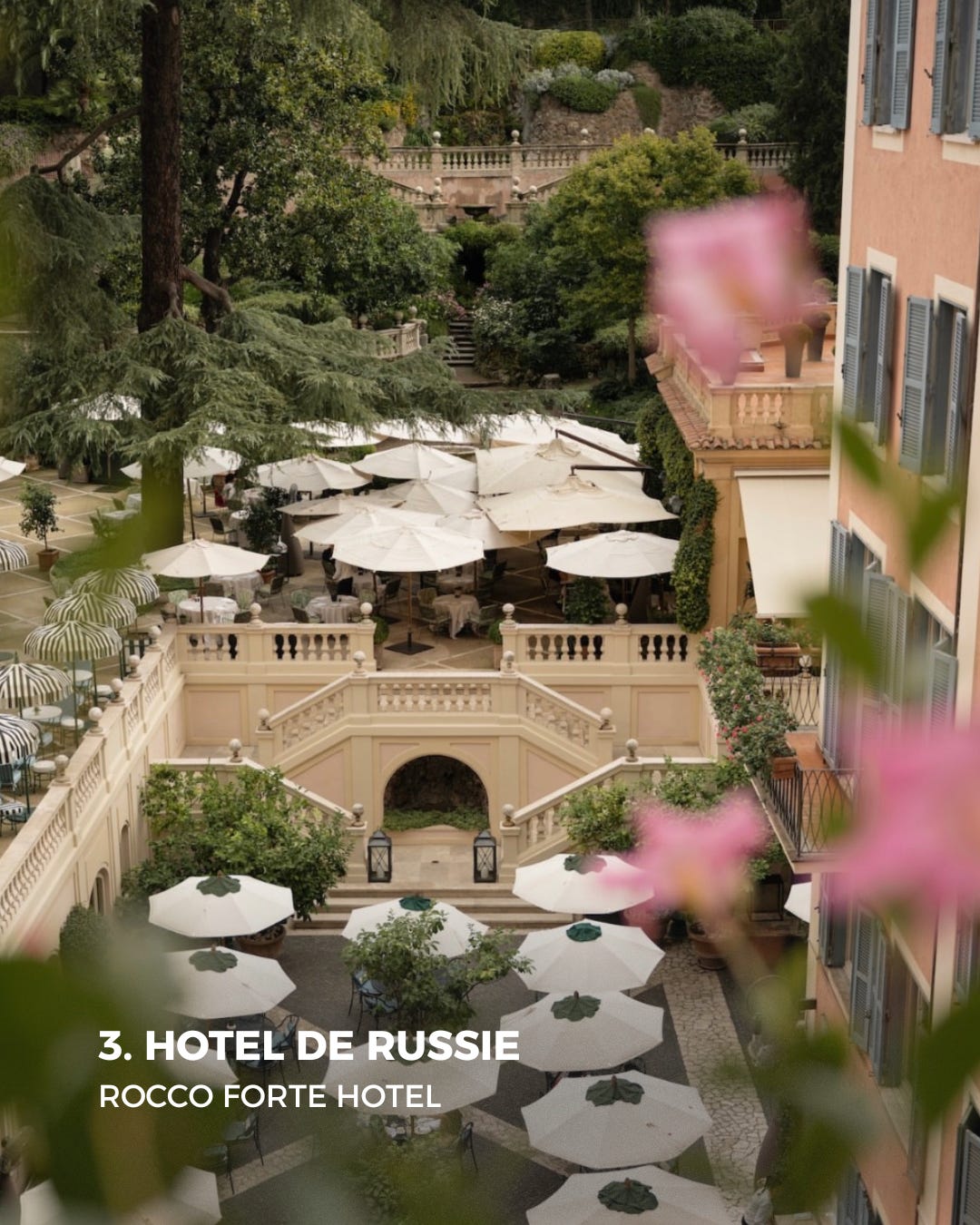
3. Hotel de Russie — Rocco Forte Hotel
The unofficial headquarters of chic Rome. The Rocco Forte property sits just off Piazza del Popolo and has been the preferred address for people of a certain sensibility. Pablo Picasso and Jean Cocteau (who called the place “paradise on earth”) were regular guests there, alongside dancers and composers such as Vaslav Nijinsky and Igor Stravinsky, who now have suites named after them. The terraced garden at Le Jardin de Russie, layered, lush, slightly hidden, is designed by Olga Polizzi. The art collection throughout the property is understated and genuinely considered.
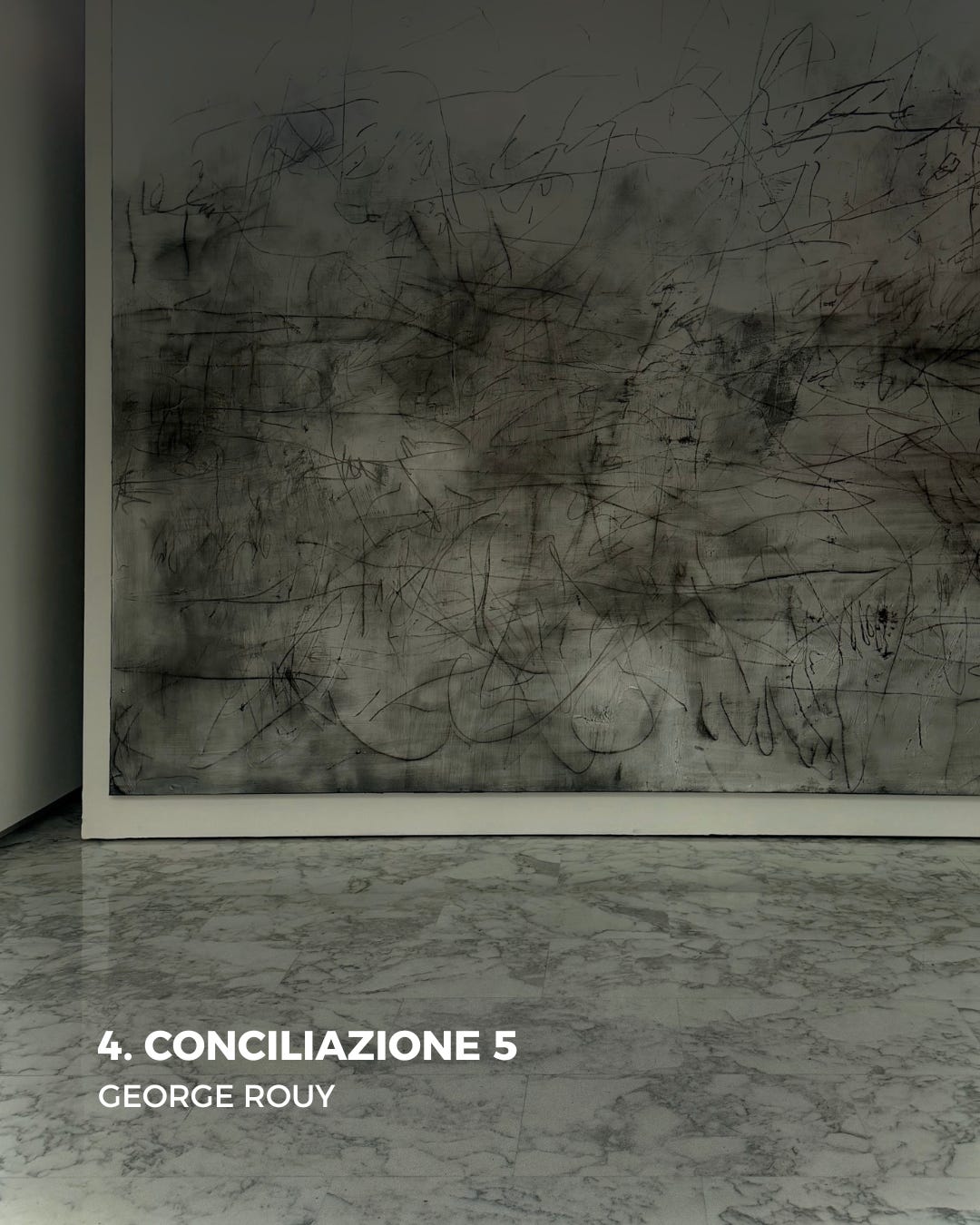
4. Conciliazione 5 — George Rouy
One of the most interesting contemporary activations in Rome right now. Located in Via della Conciliazione 5, steps from St. Peter’s, the work is visible from the street twenty-four hours a day. Opened in 2025 for the Jubilee and run by the Dicastery for Culture and Education of the Holy See, its 2026 programme takes reading as its subject. Currently on view one of the hottest British contemporary artists: Presence in Form by George Rouy is a large-scale painting whose distorted figures feel both sensual and slightly unsettling.
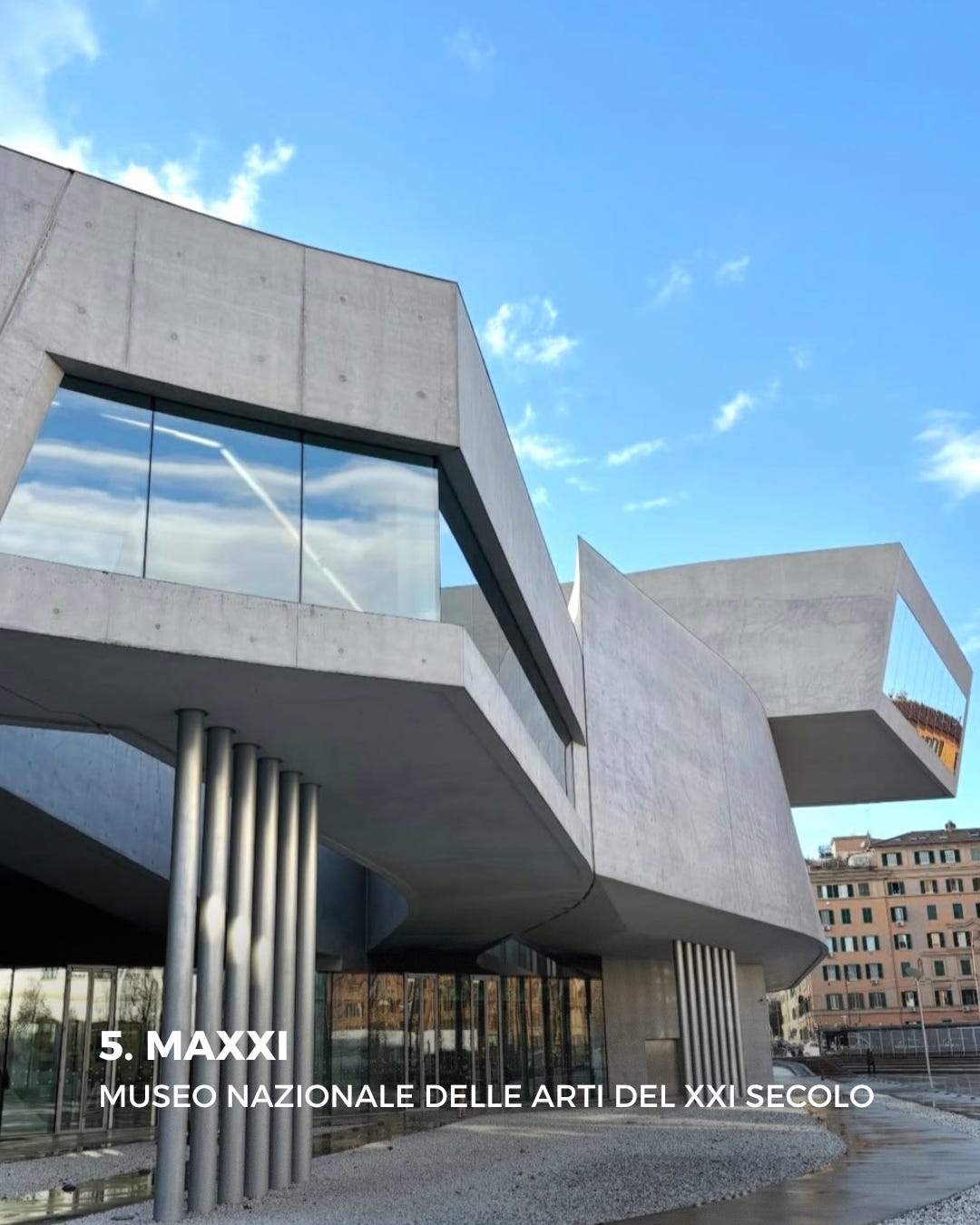
5. MAXXI — Museo Nazionale delle Arti del XXI Secolo
Designed by Zaha Hadid, MAXXI is worth visiting for the building alone. Fluid concrete lines, dramatic staircases and light cutting through the interiors make it feel almost like moving through a sculpture. The museum focuses on contemporary art and architecture and attracts a younger, more international creative crowd.
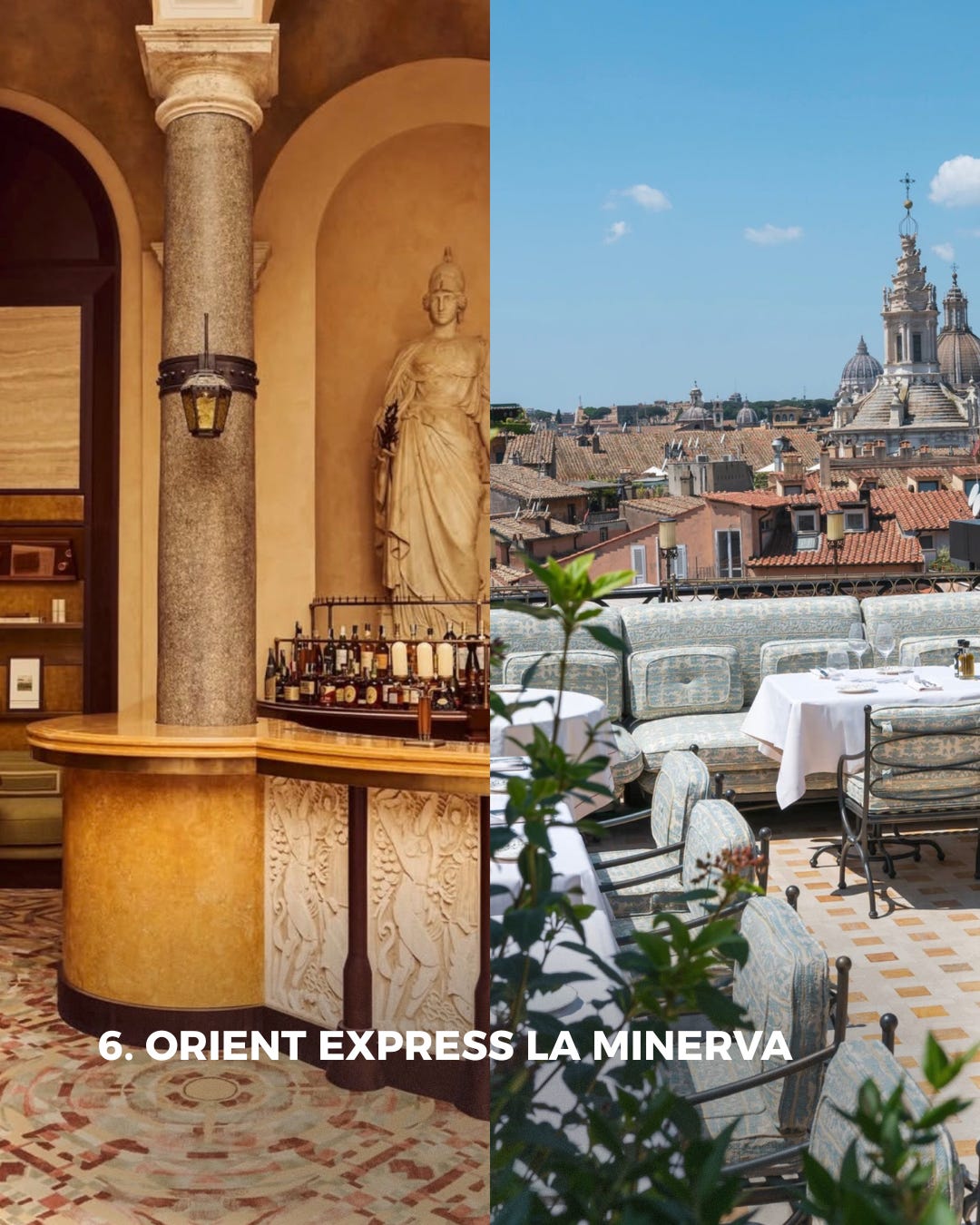
6. Orient Express La Minerva
Orient Express La Minerva is the first hotel the brand has ever opened which, given that the train has existed since 1883, makes it an event worth noting. The interiors reference Italian craftsmanship at every turn, and the rooftop offers one of the more surreal views in the city, including the dome of the Pantheon.
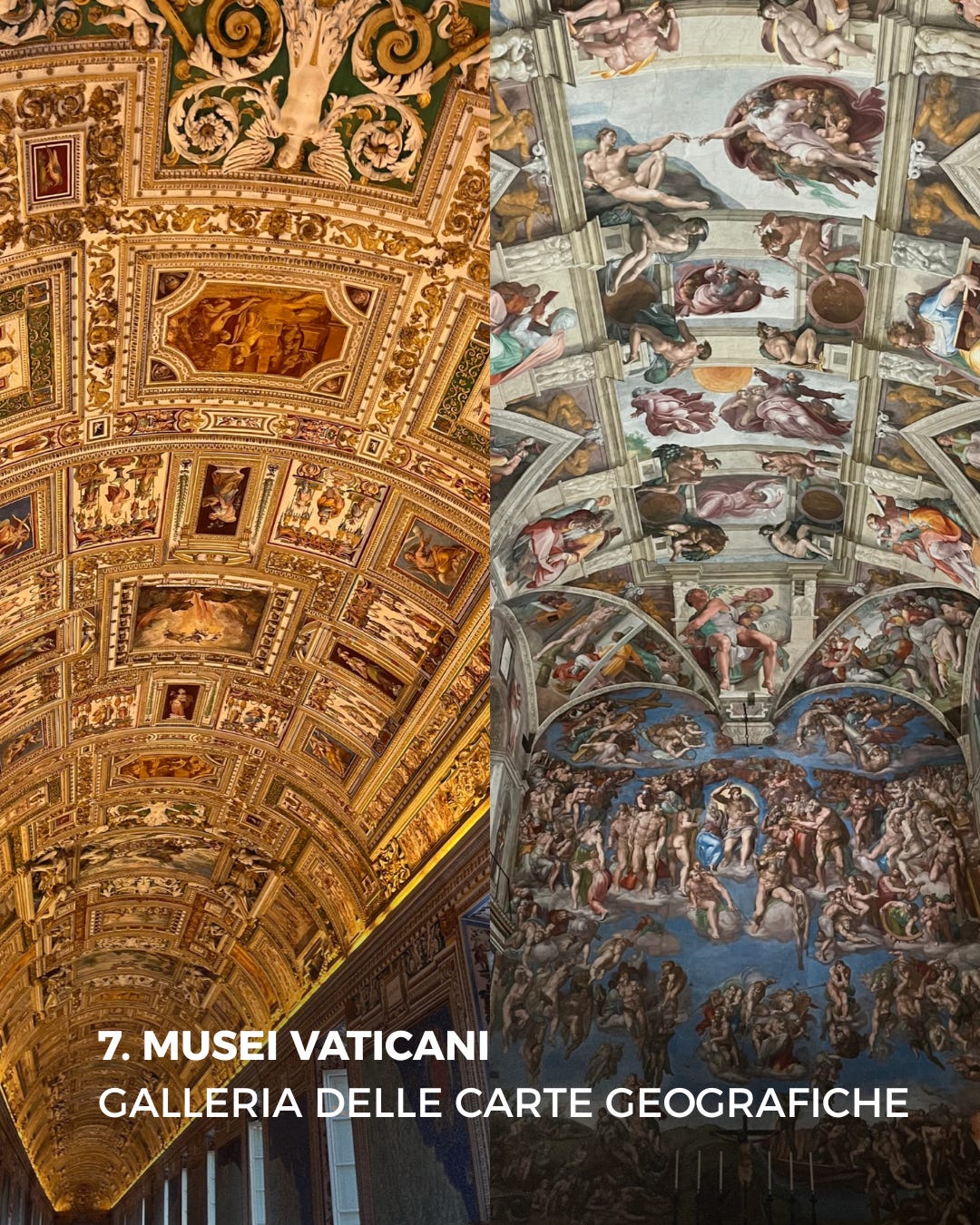
7. Musei Vaticani — Galleria delle Carte Geografiche
On the way to the Sistine Chapel there is one of the most extraordinary rooms in the world (and my fav): the Galleria delle Carte Geografiche. A long corridor covered in luminous topographical frescoes of Italy with an absurdly beautiful green-and-gold ceiling. It feels almost unreal in person.
The Sistine Chapel is, obviously, the Sistine Chapel. Michelangelo painted the ceiling and the famous The Last Judgment between 1508 and 1512, commissioned by Pope Julius II. The chapel is also the site of the papal conclave, where the pope gets chosen.
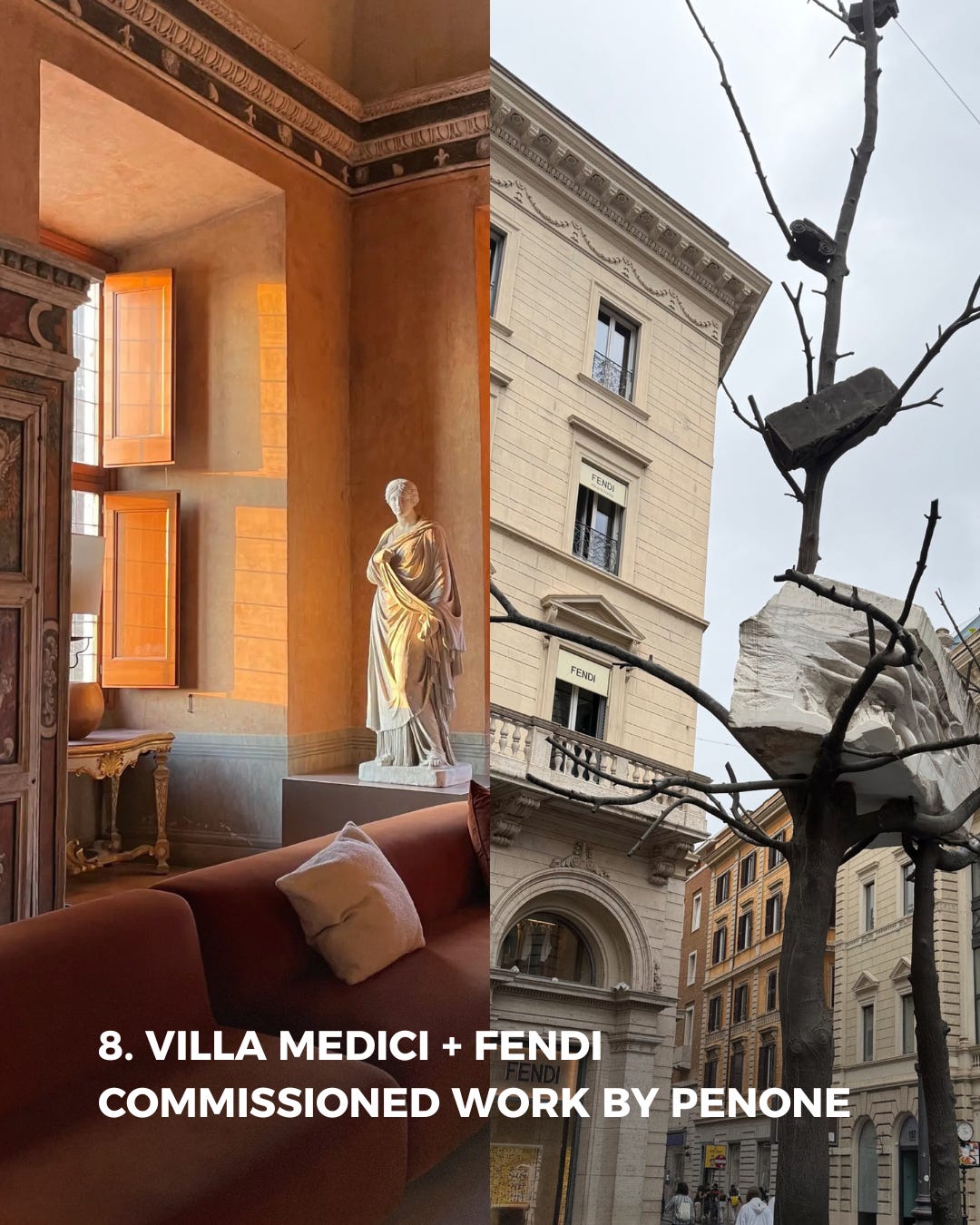
8. Villa Medici + Giuseppe Penone, Foglie di pietra
Villa Medici is the Accademia di Francia a Roma, perched on the Pincian Hill above the Spanish Steps, whose gardens alone justify the visit with views over the city that make everything else feel very small. Fendi has long been among the institution’s closest supporters, a patronage relationship that has produced some of the most interesting programming in Rome’s cultural calendar.
On the way there, a piece that often goes unnoticed is Foglie di pietra by Giuseppe Penone, one of the defining voices of Arte Povera: two towering bronze tree forms holding enormous marble boulders suspended, seemingly impossibly, within their branches. Installed near Palazzo Fendi in Largo Goldoni, the work was commissioned by the maison that has long supported contemporary art in Rome.
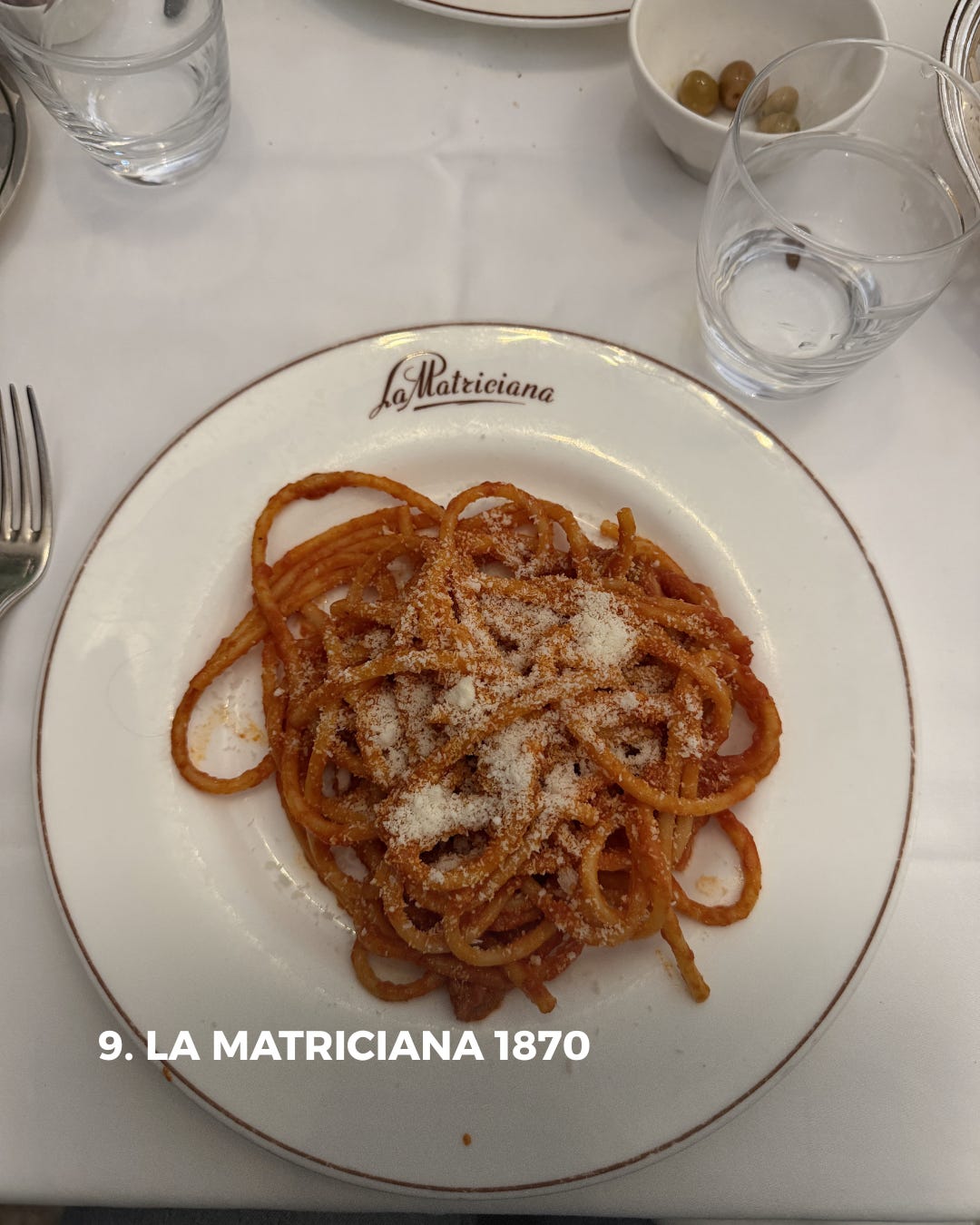
9. La Matriciana 1870
Because cool kids into art also need pasta. La Matriciana is one of Rome’s classic institutions for proper cucina romana, opened in 1870 and still doing exactly what it set out to do. The bucatini all’amatriciana is the point, and so is their millefoglie, available only on Tuesdays, Thursdays, and Sundays. The old-school interiors match the vibe perfectly.
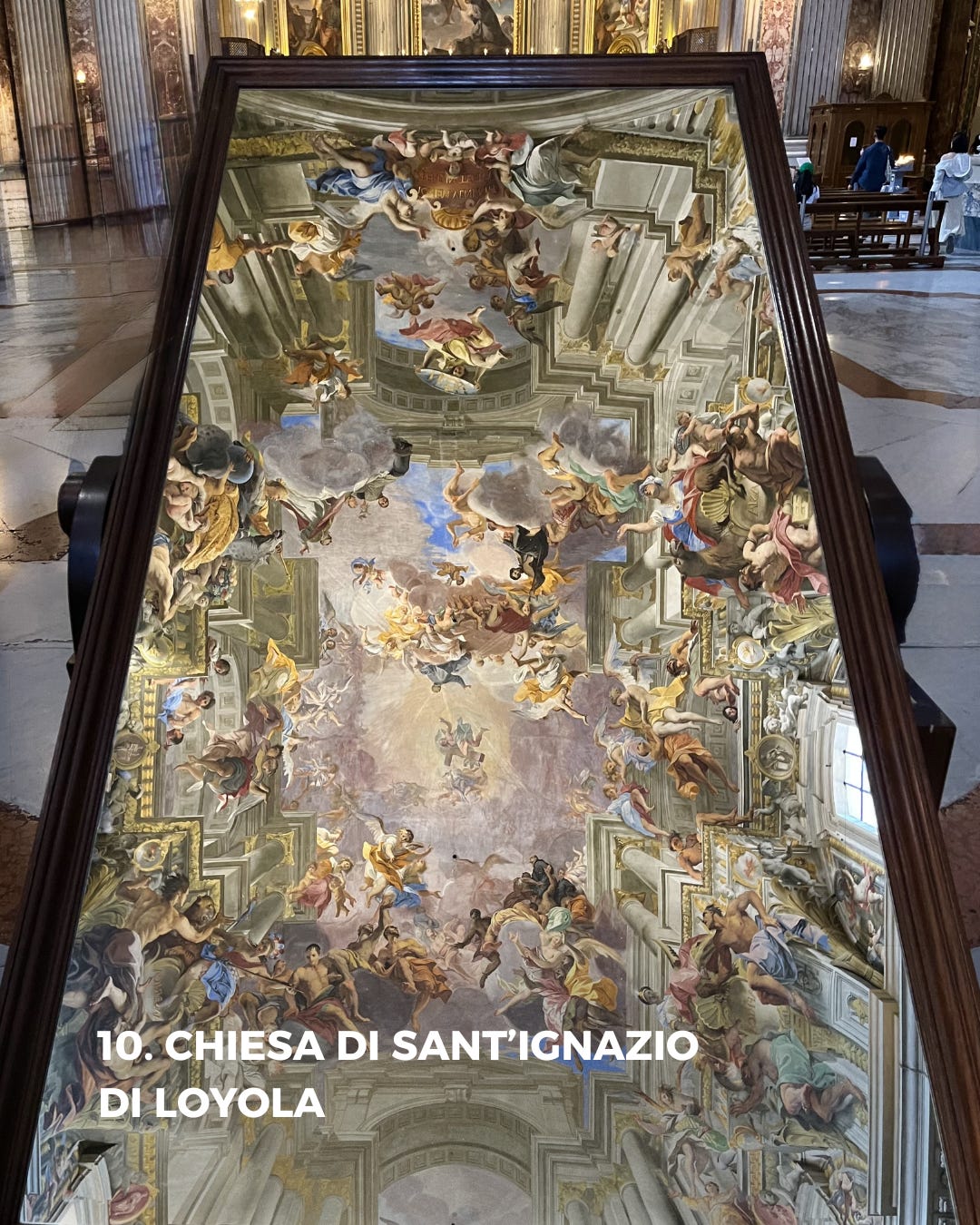
10. Chiesa di Sant’Ignazio di Loyola
Baroque maximalism at its peak. The church is famous for its illusionistic ceiling frescoes by Andrea Pozzo, but lately it’s also become known for the mirror installation that lets visitors photograph the ceiling perfectly reflected above them. Expect a queue, it’s visually worth it.
Thanks for reading ! Subscribe to my newsletter for more and follow along on Instagram 💋