

Milan reveals itself slowly. Beyond the obvious landmarks, the city has hidden art spaces that most people miss entirely. These are some of my favorite art spots moving between private house museums, unexpected sacred spaces, contemporary foundations, and a few lifestyle places where art blends in seamlessly. You have to seek it out, move beyond the surface. But that’s exactly what makes it worthwhile.
1. Casa Museo Boschi di Stefano
A very Milanese way to begin.
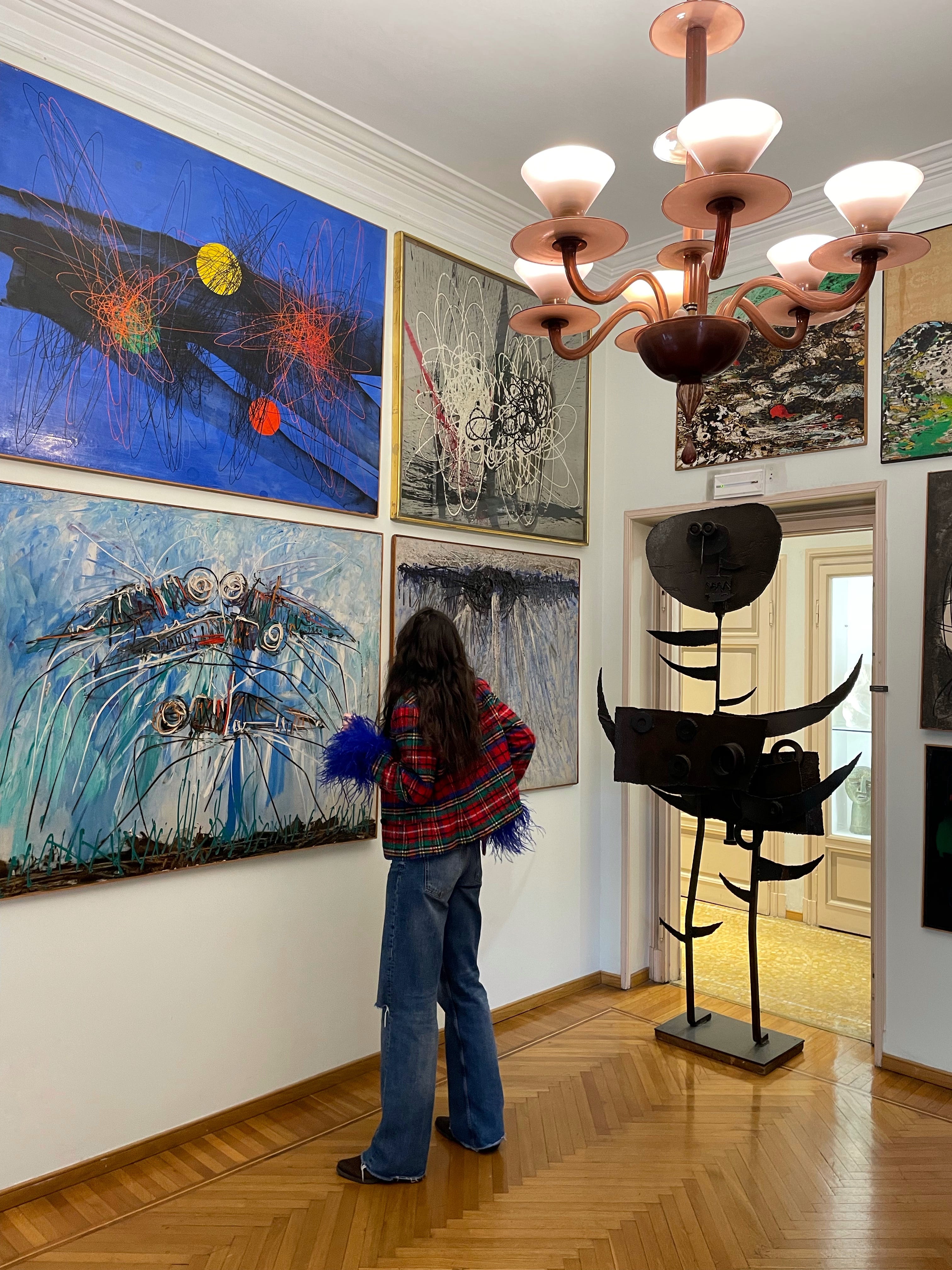
Hidden in a residential building, this apartment museum was the private collection of Antonio Boschi and Marieda di Stefano, two of the most important private patrons of twentieth-century Italian art. The space itself is unchanged from how they lived: de Chirico, Fontana, Morandi, and Sironi hang in rooms that still feel like a home. What makes it special is the intimacy. You’re not looking at art in a white cube, you’re experiencing major artists in corridors and living rooms.
Entry is free, which somehow adds to its charm. It feels like Milan’s best-kept secret.
2. Chiesa Rossa — Dan Flavin
One of Milan’s most understated contemporary installations.
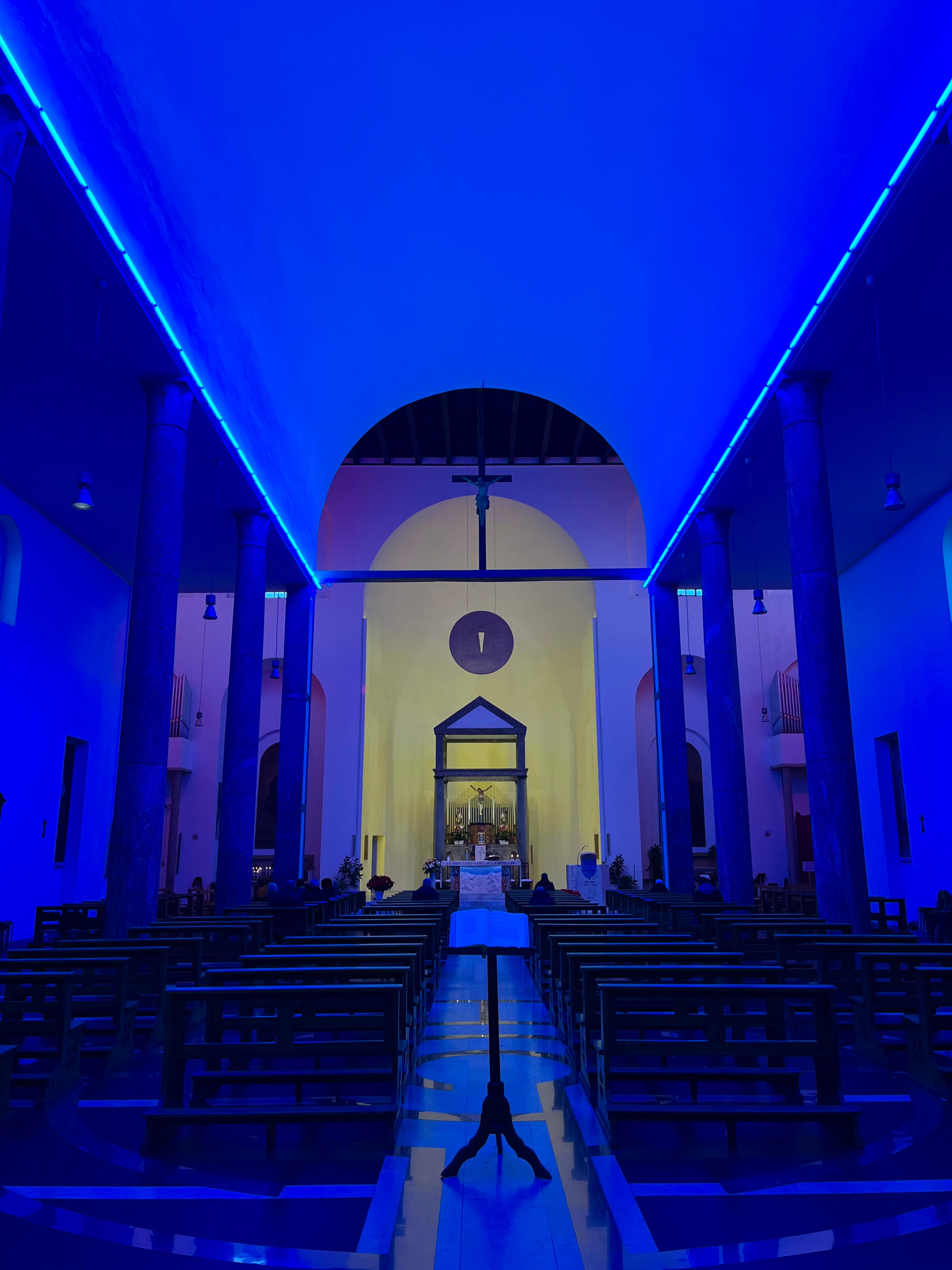
The church sits in a less central part of the city, but it hosts one of Dan Flavin’s most important permanent European works. The American minimalist master installed colored fluorescent lights throughout this 1930s church, transforming the interior into a glowing, ethereal space where art, architecture, and spirituality merge. The light shifts depending on where you stand, what time of day you visit, how the natural light interacts with Flavin’s neons.
“It is what it is and it ain’t nothing else” — Flavin once said of his work. Flavin’s light structures neither affirm nor deny the divine; they simply exist, proving nothing beyond their own presence and allowing neither to prevail.
My tip is to visit after sunset when the colors can really pop out and the space becomes almost otherworldly.
3. Villa Panza — Varese
Villa Panza is about an hour’s drive from Milan, but it’s absolutely worth the trip.
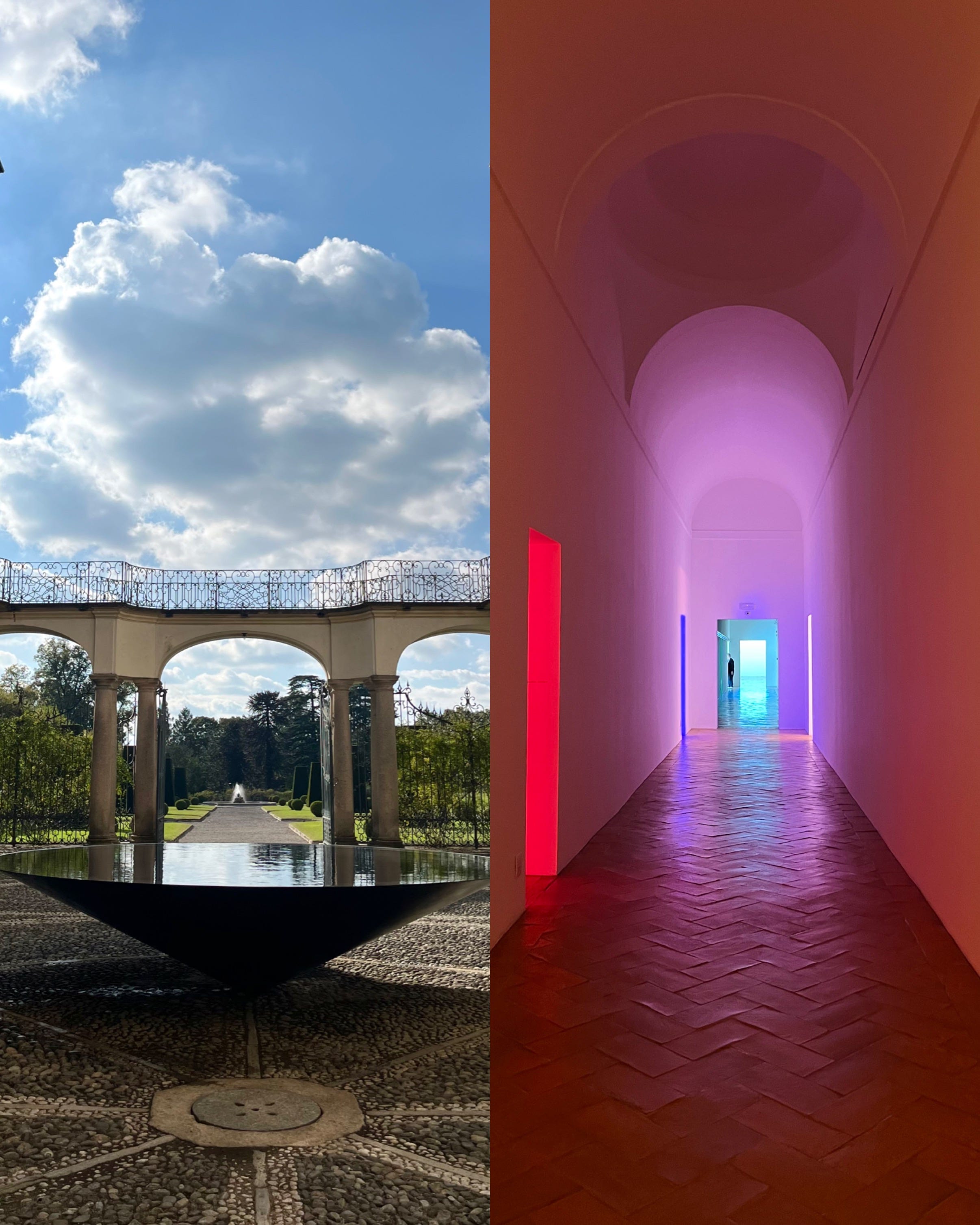
The villa was owned by Count Giuseppe Panza di Biumo and his wife Giovanna, one of the most influential patrons of American minimal and conceptual art in Europe. The collection includes site-specific installations by James Turrell, Robert Irwin, and Dan Flavin among others, works that were created for these exact rooms, responding to the architecture, light, and atmosphere of the villa itself.
At the time, Italian museums did not yet have the sensitivity to receive contemporary works of this kind, so he donated the villa with its collection to FAI for public fruition.
The collection is recognized worldwide as a prime destination for contemporary art enthusiasts.
4. Santuario di San Bernardino alle Ossa
Not for the faint of heart, but its unexpected uniqueness makes it unforgettable.
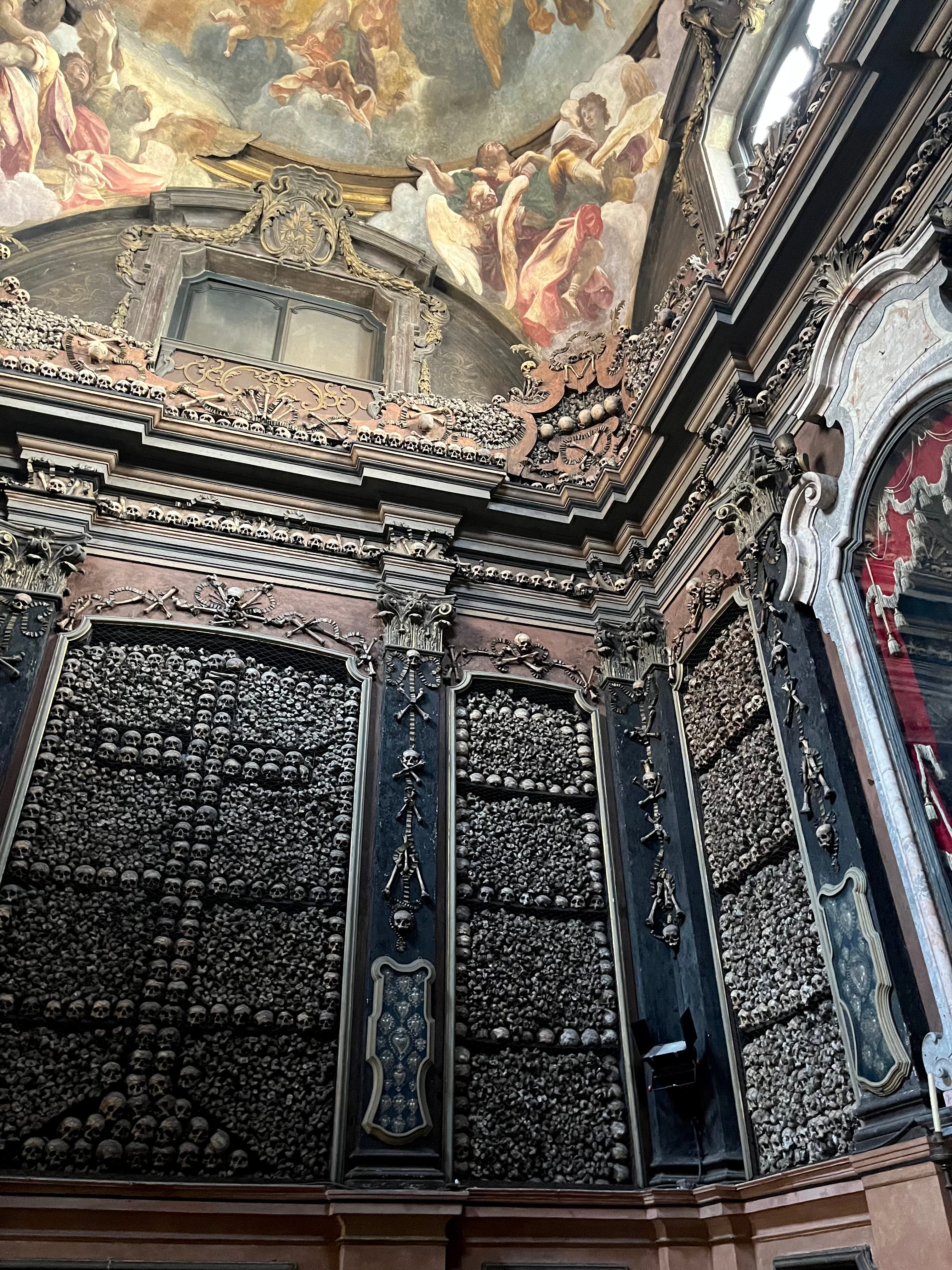
The ossuary is a small Baroque space entirely decorated with human bones arranged in ornamental patterns. It’s macabre, yes, but there’s something mesmerizing about it: a reminder of mortality that’s both confronting and strangely peaceful. The space dates back centuries and represents a tradition of memento mori.
I’ve never seen anything quite like it.
5. Villa Necchi Campiglio & Galleria Massimo De Carlo
A beautiful intersection of architecture, design, art and a pool that feels impossibly chic even by today’s standards.
Villa Necchi is a masterpiece of Italian rationalism by architect Piero Portaluppi. The house preserves an extraordinary collection spanning from works contemporary to its construction, like pieces by Fausto Pirandello (Luigi’s son), to major names including Modigliani, Matisse, Picasso, and Fontana hung throughout the upper floors.
Another Portaluppi masterpiece hosts Massimo De Carlo, one of Italy’s most internationally recognized contemporary galleries. The historic rationalist elegance meets cutting-edge contemporary art, both essential to understanding Milan’s cultural identity.
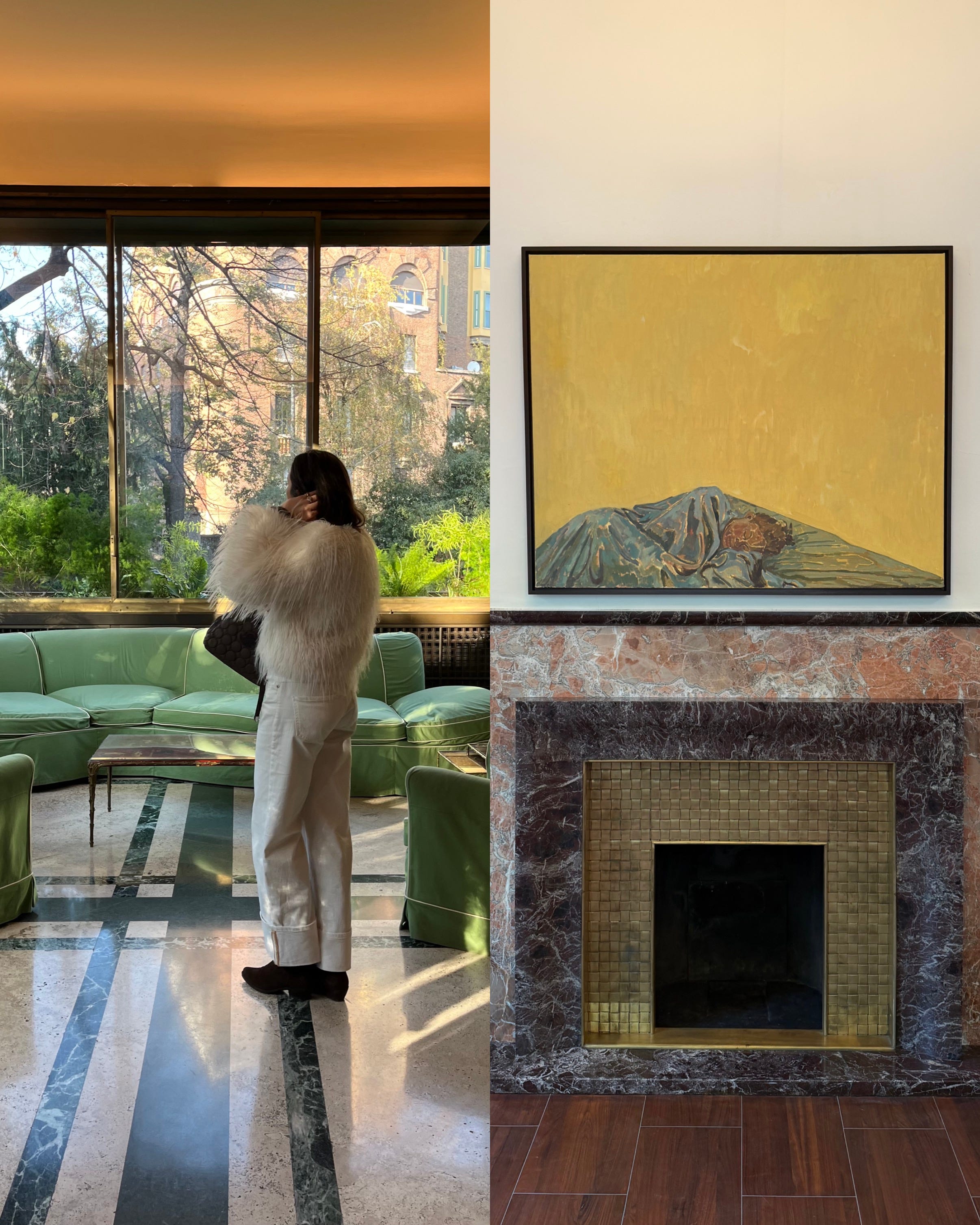
6. Gucci Boutique
Not just a fashion stop.
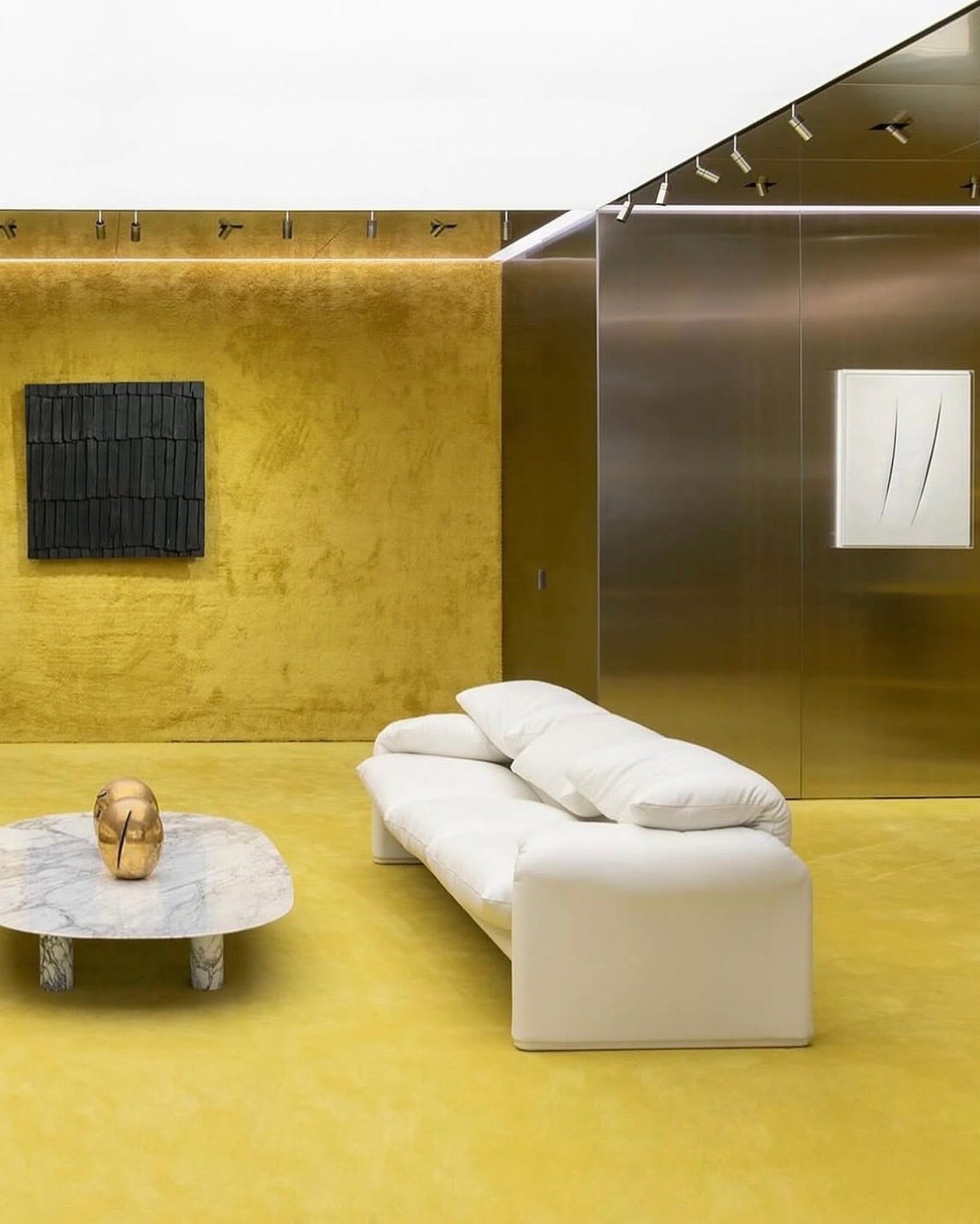
The historic Gucci boutique on Via Montenapoleone, first opened in 1951, was recently reimagined under former creative director Sabato De Sarno with interiors that balance Seventies references and industrial undertones. But what elevated the space was the art collection curated by independent curator Truls Blaasmo. Works by masters like Lucio Fontana and Getulio Alviani appear alongside contemporary pieces by Franco Mazzucchelli, Getulio Alviani and Augustas Serapinas integrated throughout the boutique rather than hung as decoration.
It’s a sharp example of how art can inhabit commercial environments without compromising conceptual depth. The best retail spaces understand that art and design pieces are part of the experience, part of what makes a space worth remembering.
7. Casa Cipriani
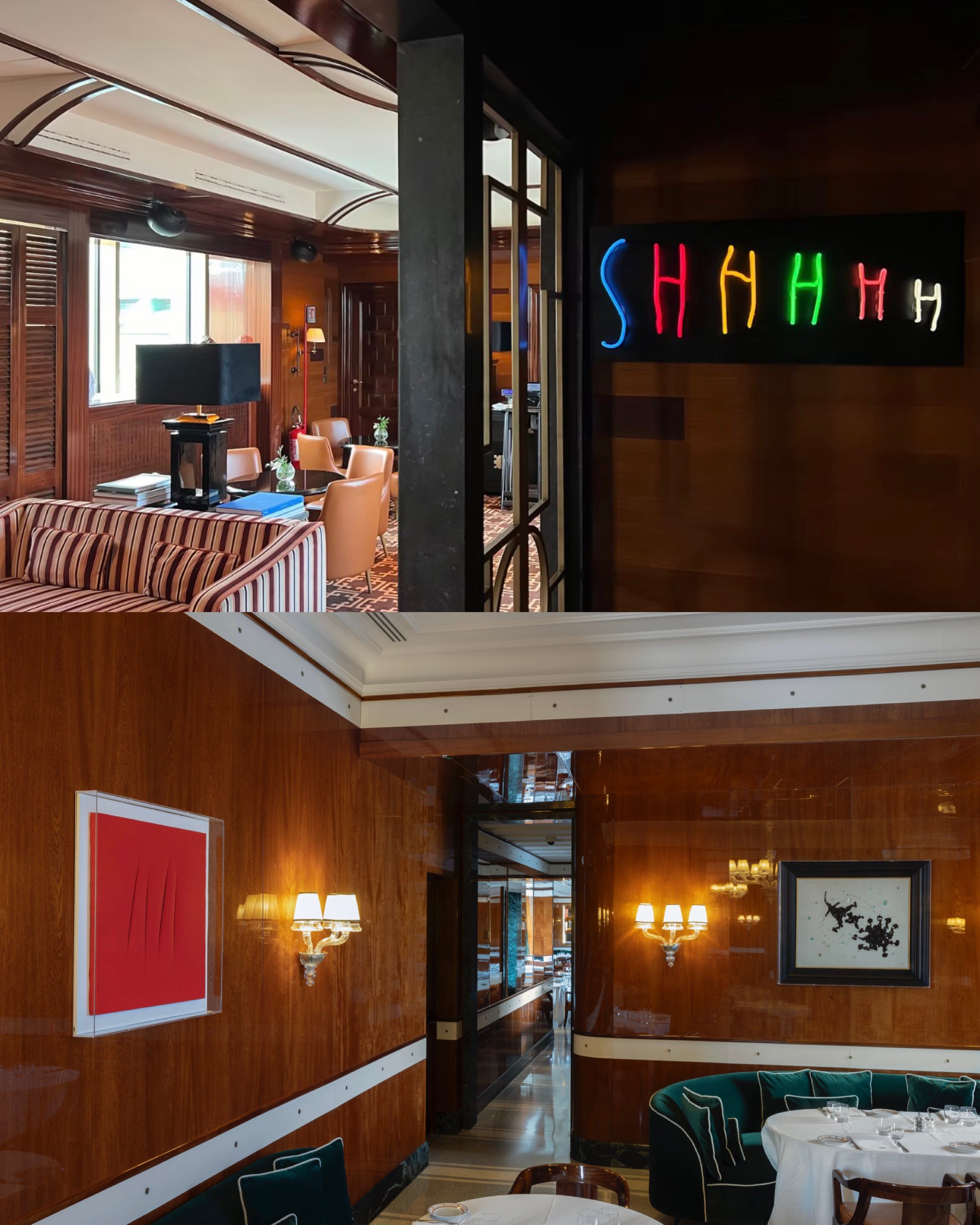
Casa Cipriani quietly operates as a curated environment rather than a simple hospitality space. It channels the cultural legacy of the original Harry’s Bar in Venice, where figures like Peggy Guggenheim, Andy Warhol, and Ernest Hemingway once gathered.
The Milan outpost has carried forward this tradition through initiatives such as Arte a Casa, which brought together Italian galleries to integrate works by artists like Agostino Bonalumi, Lucio Fontana, CB Hoyo and Monica Bonvicini throughout the club’s interiors.
Here you’re surrounded by pieces that speak to a certain vision of Italian cultural life, one where great food, great design, and great art aren’t separate categories but part of the same pursuit of beauty and quality.
8. Gallerie d’Italia — Caveau
One of Milan’s most overlooked exhibition spaces.
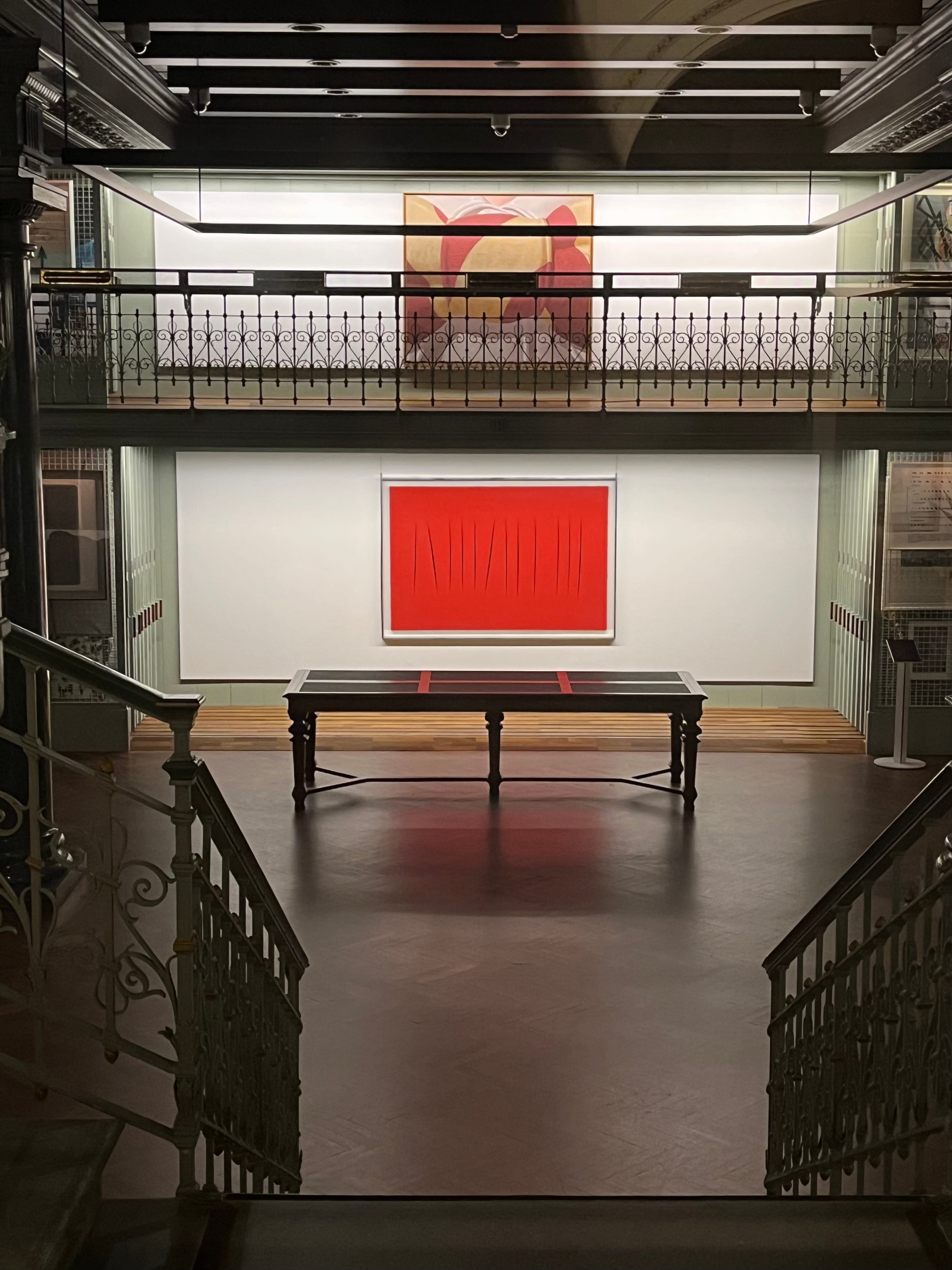
Gallerie d’Italia is worth visiting for the collection alone, but what makes the experience special is the contrast: the monumental, austere architecture framing both classical masterpieces together with modern and contemporary works. It’s intellectually very satisfying, but the Caveau is the real insider moment.
It opens once a month by appointment and it was the bank’s original vault, defined by heavy doors, reinforced walls and mid-century engineering. Where the safety deposit boxes once stood, around 500 Italian works from the second half of the 20th century are now held, with a selection shown on a rotating basis.
9. Casa Gregotti
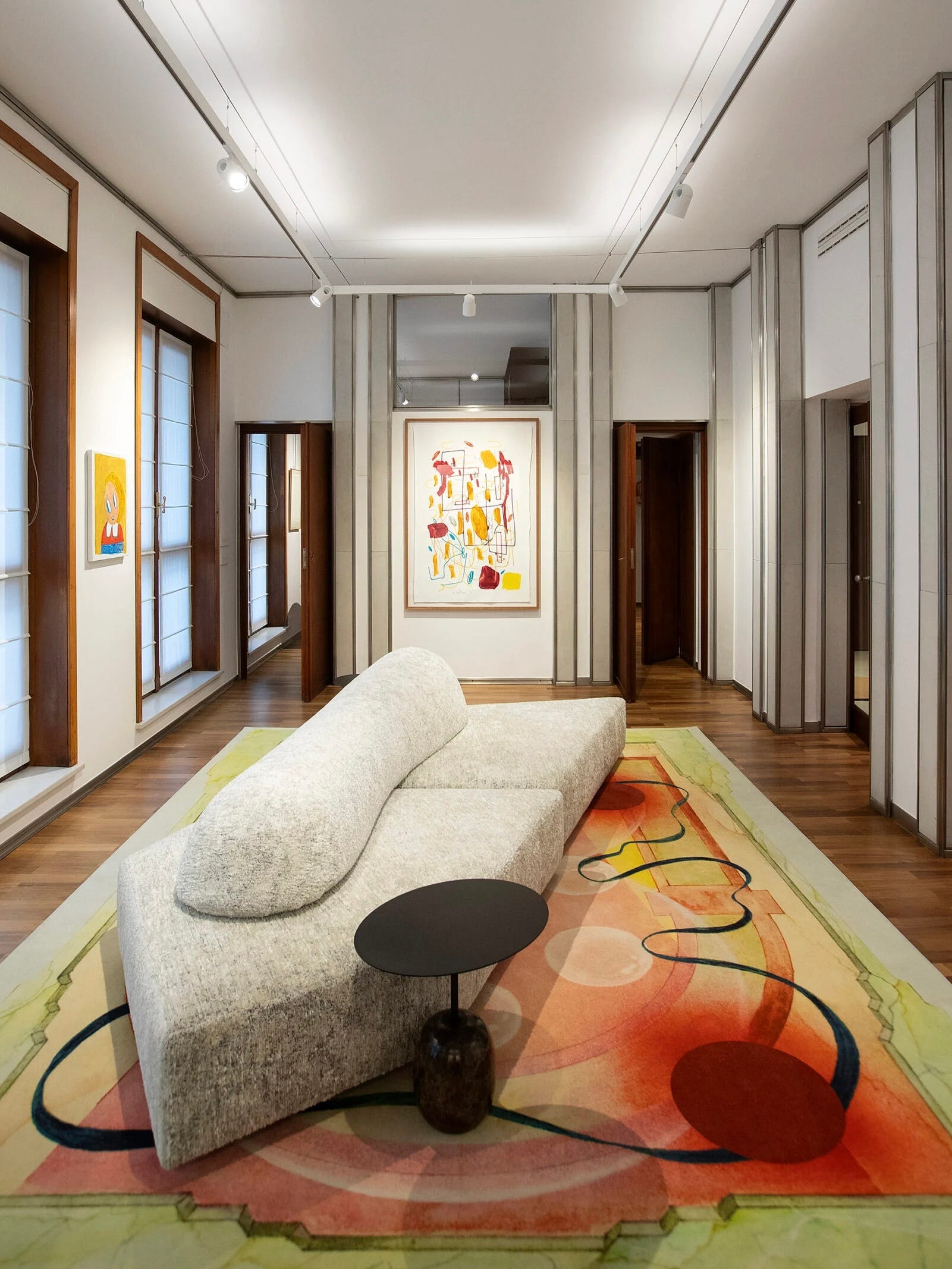
Casa Gregotti is a recently opened private home gallery that blends the intimacy of a historic residence with the vitality of a contemporary cultural space.
Housed in the former apartment of art collector Quinto Gregotti, redesigned in the 1960s with the help of his nephew, architect Vittorio Gregotti, the space has been carefully restored to host exhibitions, site-specific projects, talks and events that create a continuous dialogue.
Accessible by appointment, the space positions itself as a fresh and new cultural salon in the city.
10. Fondazione Prada
A necessary final stop.
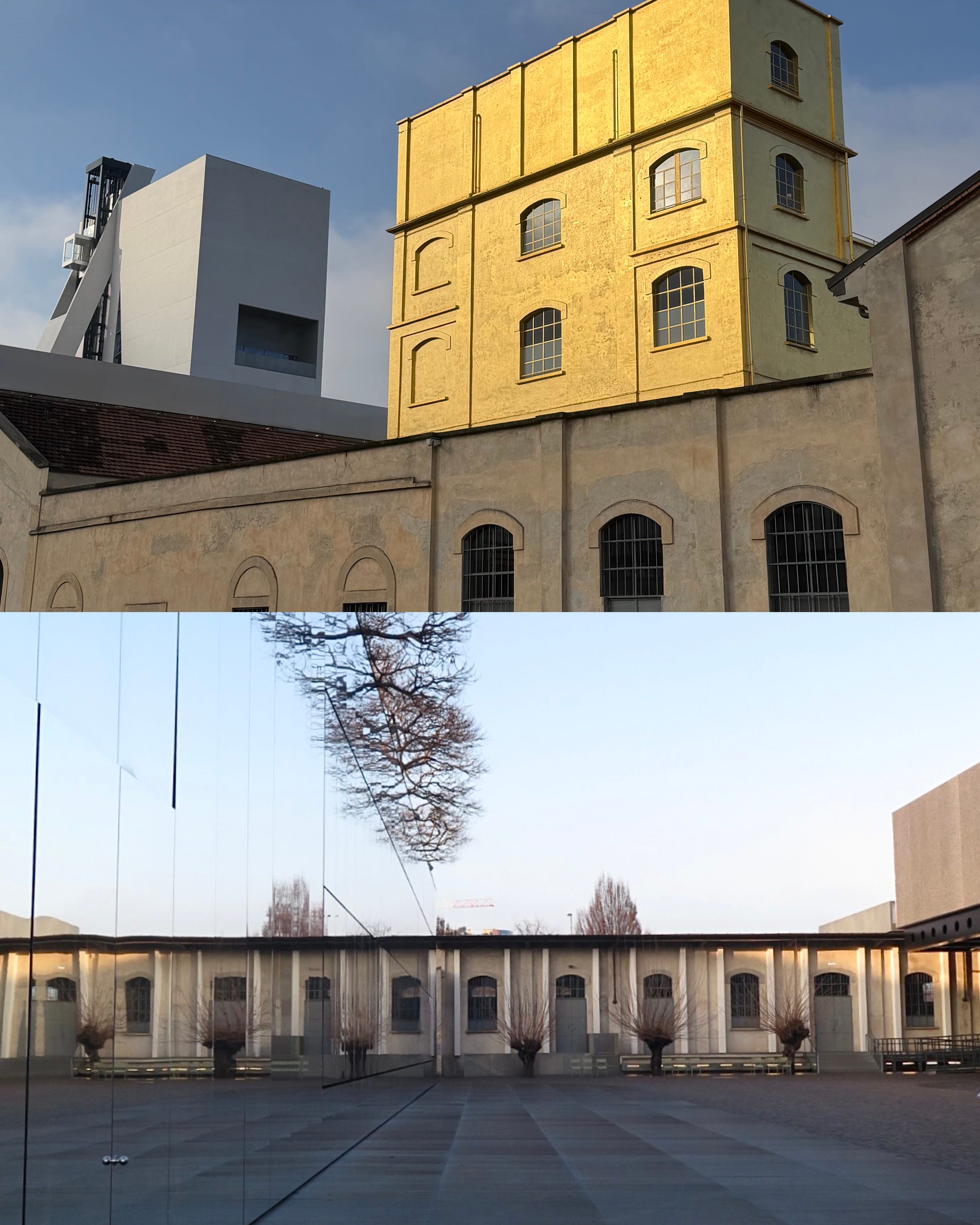
Founded by Miuccia Prada and Patrizio Bertelli, Fondazione Prada has become one of Europe’s most influential contemporary art institutions. It’s where Milan shows its most international, ambitious, and intellectually curious side.
The complex, designed by OMA under Rem Koolhaas, is a study in contrasts. Historic industrial buildings sit alongside new structures wrapped in gold leaf and the iconic Bar Luce designed by American film director Wes Anderson.
The exhibitions have included everything from major retrospectives to new installations that push boundaries. But even beyond what’s on view, the architecture itself rewards exploration.
Thanks for reading ! Subscribe to my newsletter for more and follow along on Instagram 💋
Excellent list, thank you! I still think about a Morandi I saw nestled in Villa Necchi.
i'm not in milan and won't be any time soon, but you did a phenomenal job on this! it made me feel so curious about all of these places <3